Healthcare and electricity in a remote off-grid village
In Rannu village there is only one healthcare professional serving the whole community. Learn about the difficulties of providing care to patients on an island with limited resources.
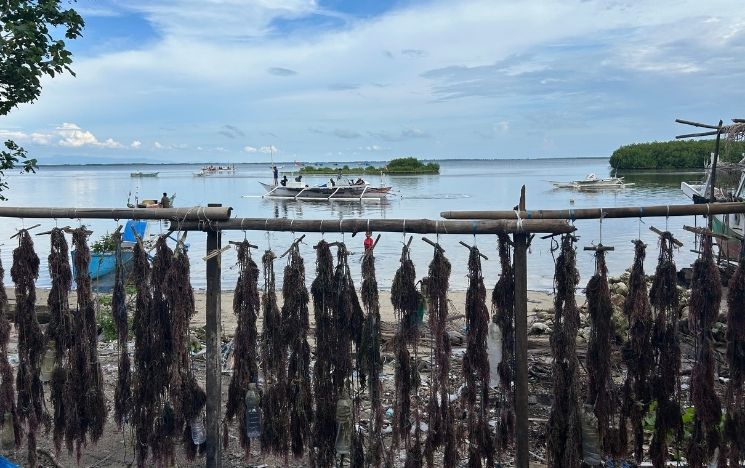
Looking out to sea beyond hanging seaweed from Rannu.
The challenges of childbirth without light
Daeng Lulu, a midwife in the Sulawesi island of Tamparang, recounted a troubling experience: “I assisted in childbirth alone, without proper lighting. This happened several times. I helped women who were risking their lives. It is challenging to assist with childbirth in the dark. I was worried and afraid of making mistakes due to poor visibility and concerned about complications. I feared that I wouldn’t be able to save both the mother and the baby. It is tough living on an island with limited resources, and not many people would be willing to take on this challenge.”
Healthcare in Rannu village
Daeng Lulu is the sole healthcare professional serving the area. Through the Pustu where she works, she manages all the residents’ medical needs on her own. In Indonesia, Puskesmas and Puskesmas Pembantu (Pustu) are national government initiatives that provide healthcare services at the community level in villages and sub-villages. The primary healthcare facility, known as Puskesmas, is typically located at the village level, while Puskesmas Pembantu (Pustu), the auxiliary community health provider, serves the sub-village level. In Rannu village, only the Pustu located in the Rp sub-village provides services to 932 people across 328 households.
Despite the limited facilities and lack of assistance, Daeng Lulu remains dedicated to providing care to those who seek medical help. A 34-year-old single woman, she graduated with a three-year diploma in midwifery from Graha Edukasi, a health college (Sekolah Tinggi Ilmu Kesehatan, or STIKes) in Makassar, the capital city of South Sulawesi Province. She has been working as a midwife since 2018. Daeng Lulu was assigned to Rannu and accepted the position, even though many other midwives declined due to the challenges they would face and the low salary relative to the heavy workload. She lives at the Pustu, but at night, after the communal generator shuts off, she goes to the house of Haji Badu, her neighbour, to sleep.
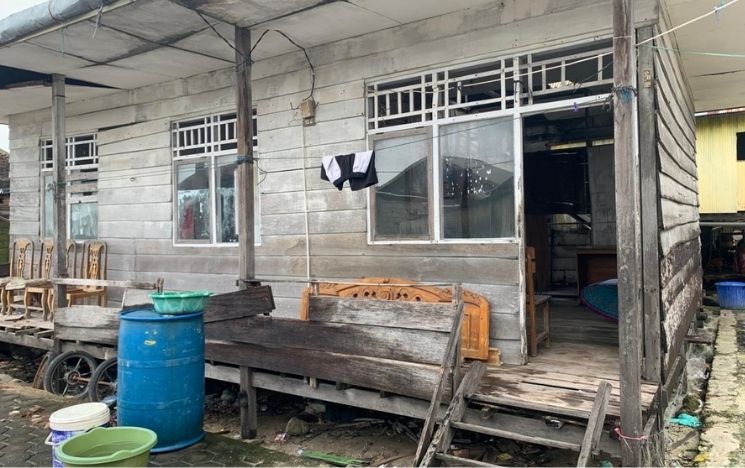
Community Health Centre exterior (Pustu) in Rannu.
Funding for infrastructure and electrical systems
The Pustu in the Rp sub-village has not received any budget or financial assistance from the government. Daeng Lulu earns a monthly salary of only IDR 500,000 from the head of the Puskesmas. There are no funds available for maintaining the facility or improving the electrical system. The building is in poor condition, with a leaking roof, decayed wooden pillars, cracked walls, and dirty surfaces. Daeng Lulu mentioned that if there are any electrical issues, the community must bear the costs themselves.
The examination room was equipped with only a few pieces of examination equipment, none of which operated on electricity. It contained an examination bed, a wooden desk, a table, a cabinet, and a partus (birthing) bed. The examination room lacks a door, which means that privacy cannot be guaranteed. Daeng Lulu explained that she typically buys her medications in Tk, located on the mainland, which she reaches by boat. Occasionally, she pays for the boat ride herself. Her patients in need can purchase the medicine from her for IDR 35,000.
Daeng Lulu assists with diagnoses, medication, health advice, the care of pregnant women during childbirth, infant weighing, and immunization administration. Always on call, she works around the clock and is prepared to visit homes or examine patients whenever necessary. Although she spends most of her time visiting patients in their homes, some patients come to Pustu.
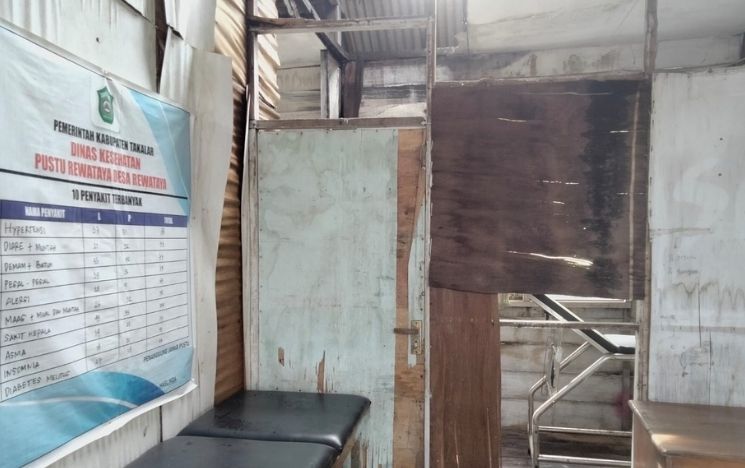
Community Health Centre interior (Pustu) in Rannu.
Providing care without electricity
She frequently relies on the flashlight feature of her cellphone to illuminate the delivery process and examine patients. She is often called to the homes of women in labor at night when the generator is off, and, because they lack solar power, she must use her phone's flashlight to assist with deliveries. Most women giving birth lack access to generators or solar panels, which further compounds the challenge. Daeng Lulu often walks alone in the dark at night, as she works independently. To complete her reports, she also relies on her cellphone flashlight. If a patient requires a cesarean section, Daeng Lulu accompanies her to the mainland or even Makassar, depending on the patient's condition. Health services are provided free of charge. She receives only IDR 150,000 for assisting a woman in delivering her baby, in addition to her monthly salary.
Access to electricity is essential for her work, especially in the evening when she requires bright lighting to complete medical reports, examine patients, and assist with deliveries. She found it difficult to perform her tasks without adequate lighting and expressed her frustration about the lack of 24-hour electricity. When electricity is only available from a communal generator, her ability to perform medical tasks and support patients is severely limited.
Daeng Lulu hopes there will be a programme to develop more reliable electricity sources, particularly those based on sustainable energy. Having sufficient electricity would ease her work as the village's sole healthcare provider and enable her to organize public campaigns promoting healthy lifestyles at any time, thereby significantly benefiting the community's health. She believes that with adequate electricity she could provide better healthcare services, ultimately improving villagers’ health status. She expressed, “With sufficient electricity, I could help more women give birth and ensure their safety.” Since many of her medical tasks are performed in people's homes, it is essential that electricity is accessible not only at the Pustu but throughout the entire community, including public spaces. This accessibility would make the place safer for Daeng Lulu as well as village residents who seek her help.
By Diah Irawaty and Irma Saraswati