The buzz of renewable energy
Our research involves scouting for possible locations for floating solar panels. For this we need to know more about the electricity uses and aspirations in off-grid villages.
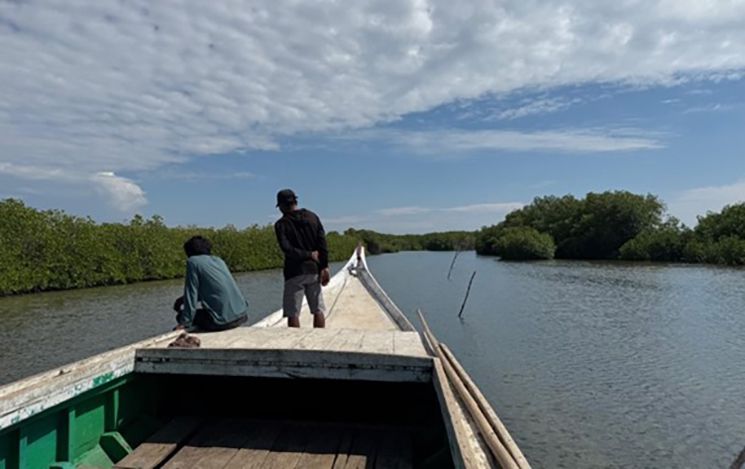
Scoping the waters around the off-grid island of Tamaparang for potential locations for floating solar units (floating photovoltaics). Photo by Raminder Kaur.
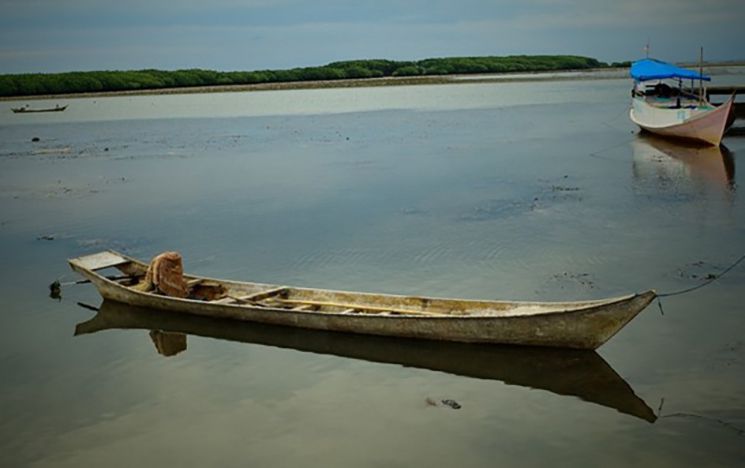
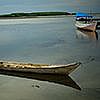
A small boat, jalepa, used for nearshore activities such as seaweed farming around the island of Tamparang. Photo by Muhammad Zamzam Fauzanafi.
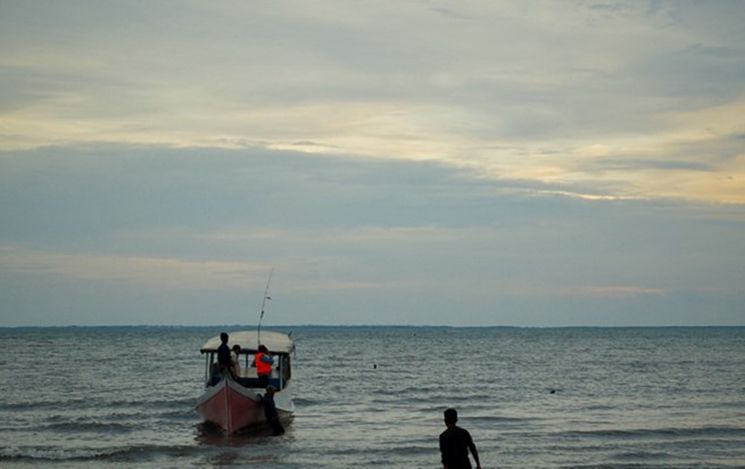
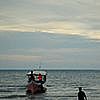
A fast and long boat, jelorok, as used by communities in the island of Tamparang to go to the Sulawesi mainland in Indonesia. Photo by Muhammad Zamzam Fauzanafi.
Finding potential for floating solar power
Rannu and Katinting are two locations in the off-grid Sulawesi island of Tamparang that have great potential for floating solar (floating photovoltaic or FPV) construction (all island location names are pseudonyms). This is subject to verification with an Environmental and Social Impact Assessment (ESIA) including technical and ecological feasibility studies. These two villages have no electricity and also have large seaweed farming activities that suit our research project’s aims.
The possible third location, Biyawasa, is a hamlet that has no electricity, but the seaweed business there is relatively small. Compared to the other two sites, it is in the open sea, making it a challenge to install FPV. But for research purposes, the feasibility of addressing these open-sea deployment challenges could be systematically evaluated and, if practicable, mitigated, particularly in light of the current absence of electricity supply. There is also the added bonus to increase the scope of seaweed farming here. Village-owned enterprises (Badan Usaha Milik Desa or BUMDes) have the potential to become institutions that house the related business units.
Potential uses of FPV
We discussed potential uses of FPV with village residents, these include:
- constructing marker lights for seaweed cultivation lines so boats can pass through them at night without causing any damage
- providing electricity for equipment to process seaweed into food and other goods for local consumption or trade between villages in Tamparang
- supporting electricity needs for the cultivation of land-based sea lettuce (Ulva)
- providing charging stations for e-boats or boats that are powered by a solar battery that could replace community reliance on diesel fuel for their boat activities.
The operational fuel requirements for small fishing vessels depend on their specific activities. For instance, seaweed cultivation with a small boat (jalepa) takes 1 litre of diesel per trip. This jalepa is also used for nearshore that consumes 2 litres per trip. Island circumnavigation on such a boat leads to 5 litres per trip. A one-way trip to the mainland, using a fast and long boat (jolloro), requires 10 litres per trip. The current fuel price is IDR 15,000/litre, money that could be saved and put to constructive use elsewhere.
By Muhammad Zamzam Fauzanafi, Mia Siscawati, Raminder Kaur and Bradley Parrish.