Coastal guardians of knowledge
Women make extensive contributions to coastal economies and are guardians of knowledge traditions. Local people with diverse livelihoods must coexist and be aware of the environmental impacts of their economic activities.
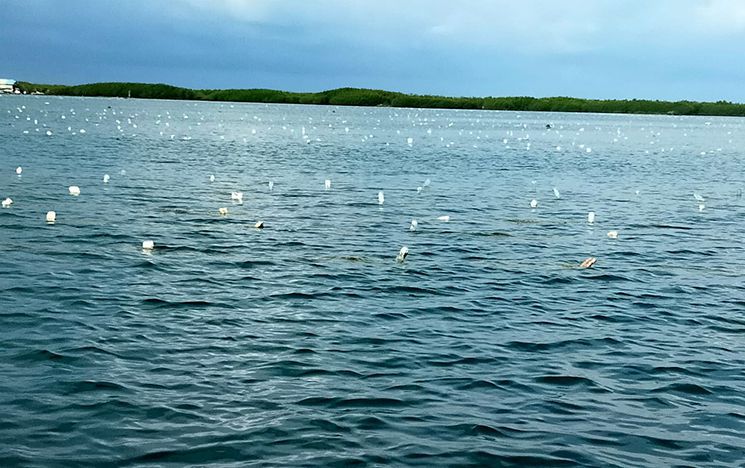
A seaweed farm near the shore of Rannu in Sulawesi.
The roles of women in seaweed farms
Many women in Rannu, a coastal village on Sulawesi island, work in seaweed farms. Their primary roles include collecting, selecting, cleaning, drying, tying, and untying seaweed. Their work is a crucial part of seaweed processing to get it ready for selling and marketing. By working in seaweed processing, women make extensive contributions to coastal economies. These skills also equip them with significant knowledge, economic know-how, and profound coastal awareness. These are entwined in their life stories, a treasure trove of thoughts, ideas, and learnt activities that need to be sustained and valued. Women are the guardians of coastal knowledge traditions, which, if lost, will have tremendous implications for younger generations and coastal communities in general.
Seaweed farming is not a year-round income
One fine morning towards the end of November, we – Diah, the researcher, and Irma, the research assistant – visited several households to learn about women’s experiences in seaweed farming. We met Salmia (a pseudonym) and asked her why she chose to work in seaweed farming. She replied:
“At this time, we don’t work with seaweed. The heavy tides and waves during the West season make the seaweed panraki (local Makassarese for 'broken'). We do nothing in this season. It is the season for catching crabs. Men work hard to catch fish and crabs. I want to start a business like making and selling cakes, so I can do something to make money.”
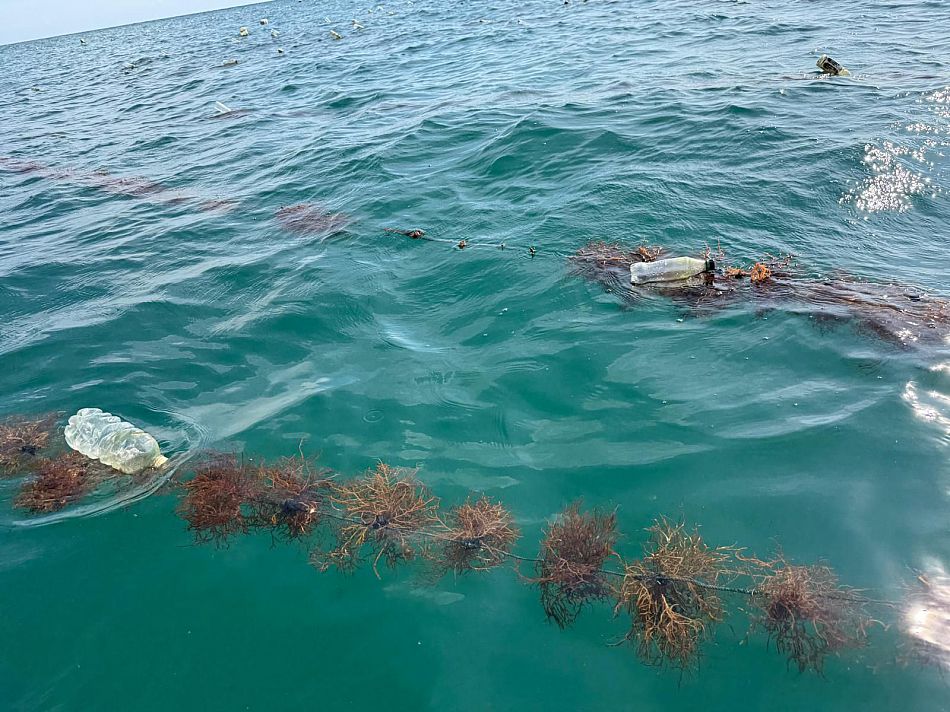
Lines of seaweed (bentang) that are usually tied by women and laid by men buoyed by recycled plastic bottles.
Women tie an average of 8 to 10 bentang (the length of the ropes used to tie the seaweed) per day, which amounts to a wage of around 25,000 IDR. They use their earnings to purchase food, internet data, cosmetics, snacks for their children, as well as treats for themselves. This income is an important financial resource for their families. However, as Salmia indicated, women cannot depend on seaweed farming as a year-round economic activity.
During the West season (Angin Barat which brings stronger winds and higher waves), they need to stop seaweed farming, especially the popular seaweed called SP. “Yeah, it is not a good time for doing seaweed.” Salmia underlined, looking disappointed. She felt disheartened knowing that the West season is around the corner.
Salmia's comments about the West season and its negative impacts on seaweed processing are also reiterated by many other experienced female farmers. It is embodied knowledge that cannot be taught in schools. “I learned it by doing, I learned from other women,” said Salmia, who graduated from a high school in Makassar, the capital city of South Sulawesi Province. Working in seaweed processing is itself a life school in seaweed, nature, and how to live in a coastal environment.
Coexisting with nature and others
Women know about traditional ways of processing seaweed. They don’t use machines, but their hands. So, the activity is environmentally friendly. They also know the impact of the West season. The seaweed is cut off from the ropes and scatters, panraki (broken) due to the heavy tides and waves. She recounted a story about a boat that got tangled in seaweed, whose ropes broke, and the seaweed was sliced and drifted away.
Indeed, on one of our last trips to the mainland, we, the POWERE team, took a boat ride. We left the island early in the morning, around 7am, so when we arrived on the mainland, the day was still bright. The boat got tangled with seaweed ropes on two occasions in seaweed-congested waters. The boat operator and his assistant tried to untangle the ropes, lifted the boat engine from underneath the sea level, and, with a pole, carefully managed the seaweed wrapped around the boat, without cutting it from the ropes or destroying the seaweed farms. Sensitivity to and care for a shared source of life and livelihood were prevalent amongst both men and women, demonstrating a learnt wisdom about coexisting with nature.
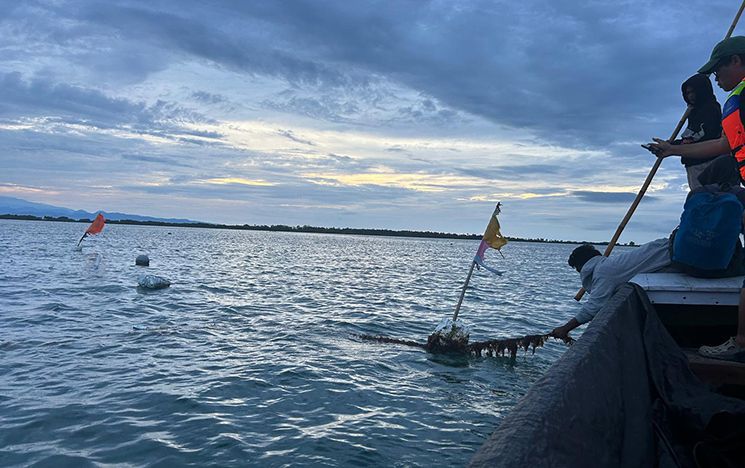
Navigating the seaweed farms carefully by boat in Sulawesi.
Environmental destruction impacts livelihoods
But not everyone cares. As long as their boats keep running, nothing else matters to them. Nabila and Masia, two women we talked to, expressed their disappointment and upset about the disruption and damage to the seaweed caused by boats running through the farms. Nabila stated, “There is a way for boats to run without disturbing the seaweed farming.” She knew that there should be something to be done to solve the problem.
Seaweed farmers and fishers rely on the “friendliness and kindness” (keramahan) of the sea. Local people with diverse livelihoods must coexist and be aware of the environmental impacts of their economic activities. They need to work together to address issues that could undermine the sustainability of their livelihoods. For women in Rannu, environmental destruction caused by human activities and ecological conditions challenge their ability to earn income from seaweed farming and processing.
Economic empowerment for women
However, they are not simply passive. They try to find alternative jobs. Salmia told us she wanted to start a business and take on other jobs, since she cannot work in seaweed farming during the West season. “The income from a self-employed small business may be small, but it is not seasonal. I can have income without being distracted by weather conditions”, she asserted. The women are always thinking, learning, and planning with a view to not just surviving in a coastal environment, but also to empower themselves and their families. They have the capacity to do so and to learn new knowledge and skills. Such evolving traditions need to be appreciated and documented.
Returning from the fieldwork one evening, we remembered the POWERE programme to support women’s economic empowerment. The plan really fits with the needs of many women in Rannu. Conversations with them gave us ideas for organising women’s groups for empowerment in the village, including providing skills in online marketing if they wanted to open a small business. We also felt that there should be a plan to develop stable internet services alongside the development of electric power. People here may live in a coastal area on a small island, but they are just as informed, creative, and deserving as anyone else in other parts of the connected world.
By Diah Irawaty and Andi Irma Saraswati