We are all one big family in this village
Our researchers find out what family life's like for villagers in Sulawesi.
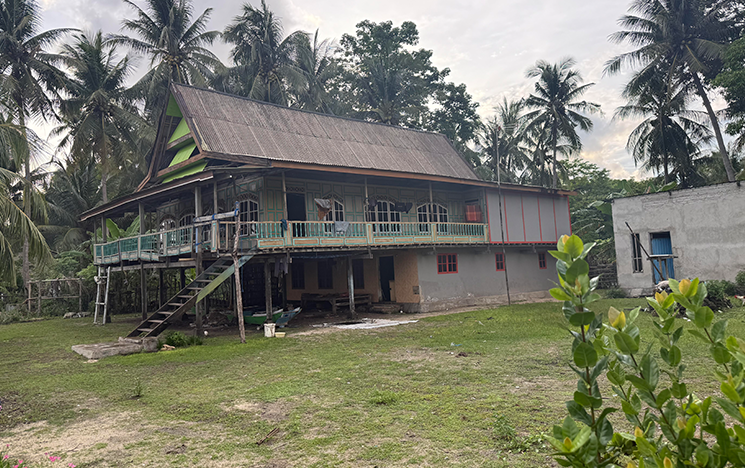
A wealthy household in Biyawasa.
Families in Sulawesi
We heard this comment a lot on the small remote island of Biyawasa in Sulawesi. At first, we thought it was a bland euphemism for bonhomie among the 130 households on the coastal strip. The island was indeed embraced by a sleepy and smiley atmosphere. But later as we got to know people, we found that in fact all the residents—rich and poor—were related to each other in some way or another.
Some were close kin living in separate households such as sons and daughters who set up their own home away from the parental home, often on the same piece of land. As we found in one case, a traditional wooden house was levelled to build two new concrete detached houses with the son and his family living next door to his parents.
The rich were also related to poor families, starkly revealed with the wealthiest family who owned several businesses in the fishing, squid and charcoal trade on the mainland including Sulawesi’s provincial capital, Makassar. They are cousins, two generations removed, to one of the poorer families who earn their income by the father and sons fishing in a small boat, and the mother collecting natural seaweed from May to August. During the East monsoon season known as timur, seaweed or as it is described in Biyawas, agar, grows on the rocks and can be collected at low tide on foot.
Naturally, family members can love as well as hate each other as lines of competition and enmity emerge. This is often linked to politico-economic factors. In one case, for instance, a punggawa (middleman) of fish, squid and sea snails, factioned off from the subvillage head. His distant cousin whose communal generator had broken down wanted the community to pay for its repair. The punggawa explained how this led to disagreements so that in 2023 he bought a new communal generator, and the cables from the broken solar power plant were split between two communal generators:
“The cable was disconnected inside. Then the cable was separated to the new connection. [The cable has] four strands, so it was divided into two.” Cables split alongside communities. The electricity from the 15-kilowatts generator was distributed to the poorer households at the southern end of the island at 80,000 IDR per month (approximately £4) cheaper than the electricity from the larger 40-kilowatt generator operated by the subvillage head who charged 90,000 IDR per month.
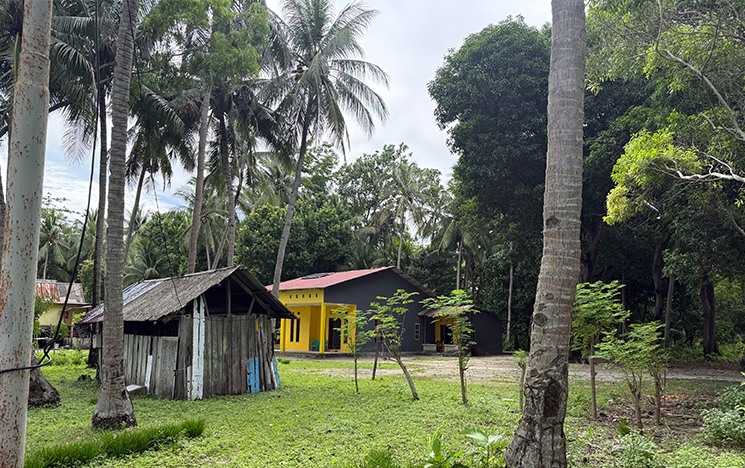
The first communal generator to the left, which now delivers electricity to about a third of the village in Sulawesi.
Community gifts and debts
While they came to a working arrangement with the cabling from the broken-down solar plant, communications were severed as they sought to maintain their electric fiefdoms with reciprocal benefits to electricity consumers. For instance, in exchange for electricity, the generator operators not only got an income but also buy-in for (sub)village elections. In return, they also gave out payment holidays, loans and other support to tide over any household that was financially struggling. But this generosity is time-sensitive. If a loan isn’t paid back in time, the operators can easily cut off the electricity, which indeed happened to one low-income household who could not pay their bills for two months to the subvillage head.
These cycles of gifts, debts and obligations—financial and otherwise—are intimately entwined with electricity supplies and demands. Anytime the communal generator breaks down, not only does the operator lose income but also trust is thrust asunder out of the cycles of reciprocity: hence the head’s desperation to get the generator fixed as soon as it malfunctions.
Island elections
Competition also comes to the fore when elections are fought. Development assets such as coastal walkways and affordable electricity supplies are a critical factor in such campaigns especially in villages that are underprovided. The punggawa recalled the run-up to the village head elections in 2024, a post that involved governing four subvillages including Biyawasa:
“During the change of the village head, everyone in the village was together. [Afterwards] they became hostile to each other [in Makassar language, Ri bahasamangkasara’, si musuh-musua] including the subvillage head’s family whose brother-in-law was also running [for village head elections]. I did not support them, because when my brother-in-law ran [for the post], he also didn't support him. It's the same thing.”
Even if they do not win elections, candidates and their close families harbour long-lasting grudges against each other. Previously, hospitality has turned into hostility. Other more distant relatives keep their distance.
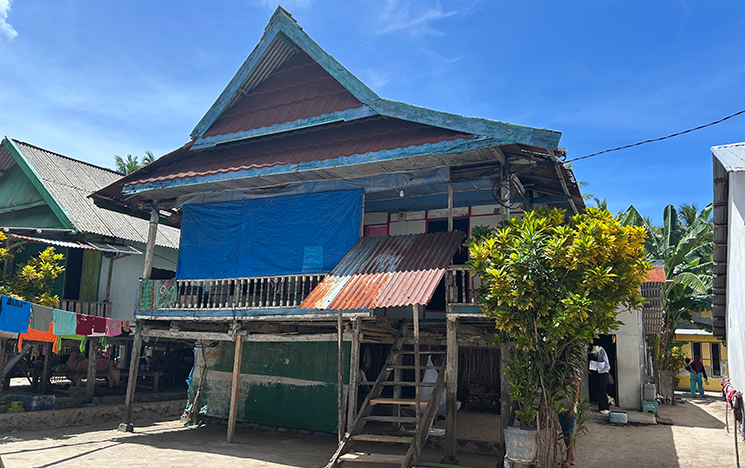
Low-income household on a remote off grid island in Sulawesi.
Migration
Due to limited land and declining fishing yields, adult members of the family often migrate away from Biyawasa, and are scattered across the oceans—working and living in the mainland, with some going further afield. Ship crew members migrate—and in one instance, a man exploring Taiwan as a destination for his son to pursue better employment opportunities after training in international business administration in Jakarta, where he would work as part of a larger fishing crew.
One woman’s husband works on a ship for a mining company in another Indonesian island, Kalimantan. She only sees him every four months for a few weeks, while she tries to manage the household and run a fishing equipment store, that at the time we met her, was out of stock. She was waiting for her husband to bring more supplies from the mainland before she could reopen.
The children would often stay on the island, usually a daughter and sometimes a son so they can continue to be close to their home and manage their parents’ and their own property and land—a concept of property that also extended to mangroves on the coast if the family grew it, recognising its vital role in keeping the sea at bay; and also if they had any, “land” related to seaweed farming, an enterprise which compared to the village of Rannu on the neighbouring island, is a fledgling one. This is largely because Biyawasa faces the open sea and does not have the sanctuary of a large bay-like expanse as does Rannu. In one case, one of the daughters returned to Biyawasa after her parents died bringing her husband and children with her from the Sulawesi mainland to start a coconut-selling enterprise on the island.
The contrast between the two villages does not end here: both the ecology and the economy configure Rannu’s population, where many of the children stay on the island to fish and work on the many seaweed farms in the large natural bay, even if the wealthy send their children to the mainland for education. In a few cases, some Rannu-based women have attained a graduate degree in teaching on the mainland, but this was with a view to return to either work in Rannu, or if a second income was not needed, just to glorify achievements in framed photographs on household walls. Education in Rannu isn’t necessarily a means to an end but an end in itself, while continuing to nurture family ties on the island. In Biyawasa the idea of return to the island was not always an option for the present, but more of a possibility for the future. While centred in the village with its factions and fissures, their sense of family stretched further afield across the oceans.
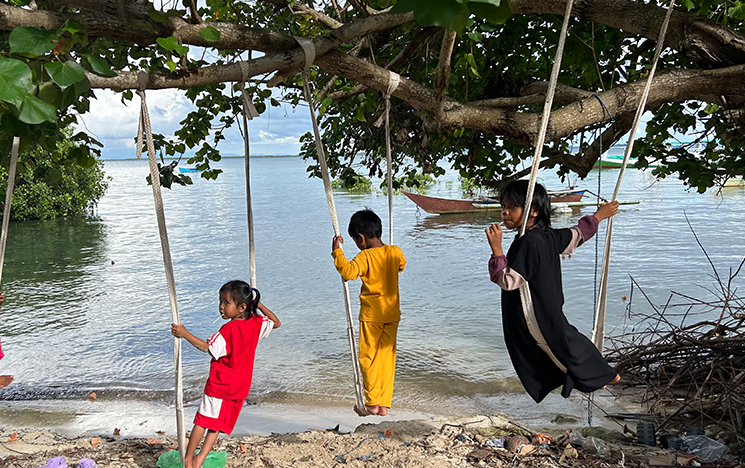
Children playing on the beach in Biyowasa.
By Raminder Kaur and Della Arlinda Birawa.