Living on the edge: women, everyday life and island communities
In coastal communities women's lives are shaped by a lifetime of daily tasks, as well as cultural and family expectations.
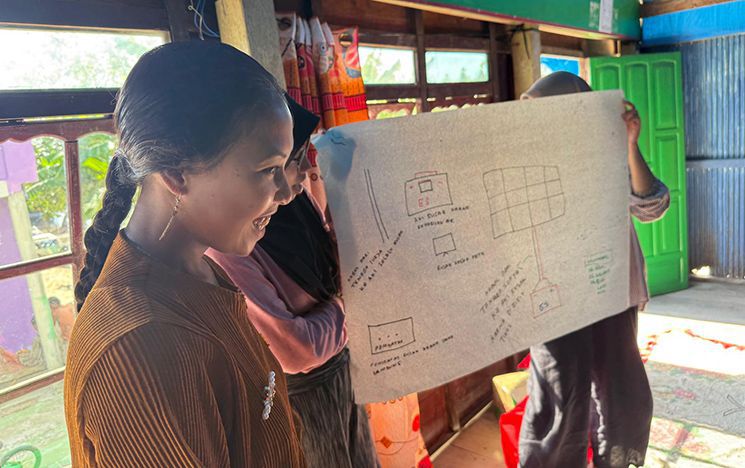
Workshop participants presenting their small-group discussions on village-level electricity challenges and the possible solutions.
Women carry the cultural weight of honour, responsibility and continuity
Life on a small island is shaped by tides, weather, and the slow but steady shifts of everyday routines. Yet within these rhythms lies a social world where women, especially young girls, carry the cultural weight of honour, responsibility, and continuity. In Sulawesi coastal communities like Katinting and Rannu, girls grow up not only as daughters, but also as bearers of siri – a deeply rooted value of dignity, respect, and moral standing. This expectation is passed down early, often absorbed as unquestioned truth: “kata orang tua,” or “that’s just how it is here.”
Identity formed through a lifetime of daily tasks
But girls’ identities are not shaped by abstract norms alone, they are formed through a lifetime of daily tasks. From childhood, girls are positioned as central members of the household. Parents fulfill their needs generously, and in return, girls begin learning the obligations woven into womanhood.
Mornings begin with cooking or sweeping if they are not at school. Midday brings another pause in their play or rest to ensure food is ready for fathers or brothers returning from the sea. Afternoons, thankfully, are theirs: a small window for gossip, stories, or shared frustrations with friends their age.
Despite these routines, what stands out most is their never-ending smiles, even as they intimately understand that their futures are not fully their own. Decisions about marriage, work, or study often circle back to a single emotional anchor: “kasian mamak” – I don’t want to burden my mother. When asked what they hope to do in life, many answer simply: “Saya tidak tahu, terserah orang tua” – I don’t know, it depends on my parents. To burden my mother. Dreams become negotiable, shaped by family expectations and the cultural protection of siri.
Wealth brings more choice
Class plays a decisive role. Girls from wealthier families enjoy more choices though still bounded by the rules of pannai (bridewealth) and prohibitions against kawin lari (eloping with their loved ones). Their needs, even luxuries like expensive smartphones, are easily met in such households.
Adolescent girls from middle- and lower-income households navigate life more pragmatically. Work becomes part of their adolescence: tying seaweed, collecting tuing-tuing (flying) fish eggs, or doing other forms of informal labour. For them, earning money is not shameful; it is a survival strategy in an increasingly pressured coastal economy. Their contributions support the household or help them buy modest personal items like a secondhand phone.
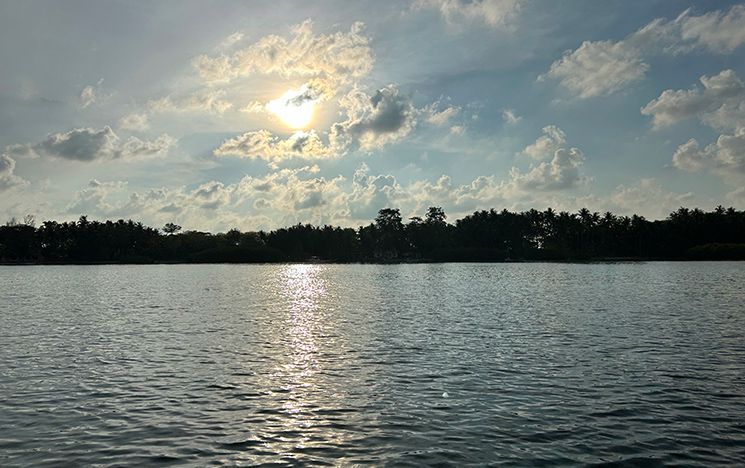
Sunset over the mangrove and seas around Tampurang Islands in Sulawesi.
Space for learning
Still, their aspirations are not extinguished. The cultural weight of siri might shape their pathways, but it does not erase curiosity or ambition. Whenever spaces for learning, workshops, discussions, or skill-building activities arise, the girls step forward, eager to expand their abilities.
We saw this when the POWERE team organised workshops on climate change, and women in science and technology in November, a series of workshops to kick start weekly engagements with them in learning spaces based on themes and issues that they deem important. These moments reveal that beneath the surface of routine and obligation, young women are seeking ways to understand the rapid changes affecting their islands and to find their place within them.
Navigating the balance of cultural obligation and personal hope
In this landscape of tides and traditions, Makassar women in Katinting and Rannu continue to embody resilience not through grand declarations, but through daily endurance, quiet negotiations with custom, and a persistent desire to grow. Living on the edge of land and sea, they navigate not only shifting coastlines but also the delicate balance between cultural obligation and duty and personal determination and hope.
By Runavia Mulyasari.