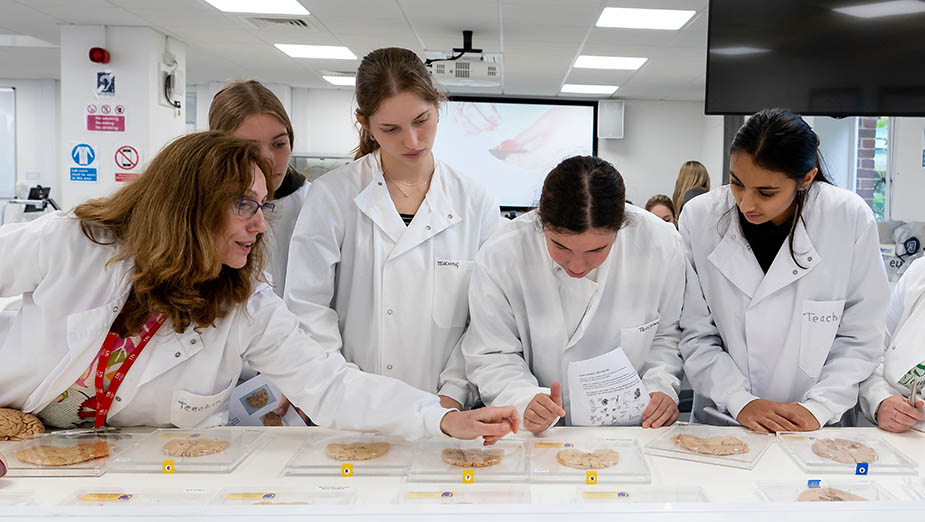
Autumn Open Day: Saturday 7 November 2026
Get a feel for campus life and learn more about your course. Join a campus Open Day, book a campus tour or visit us virtually.
Book your visit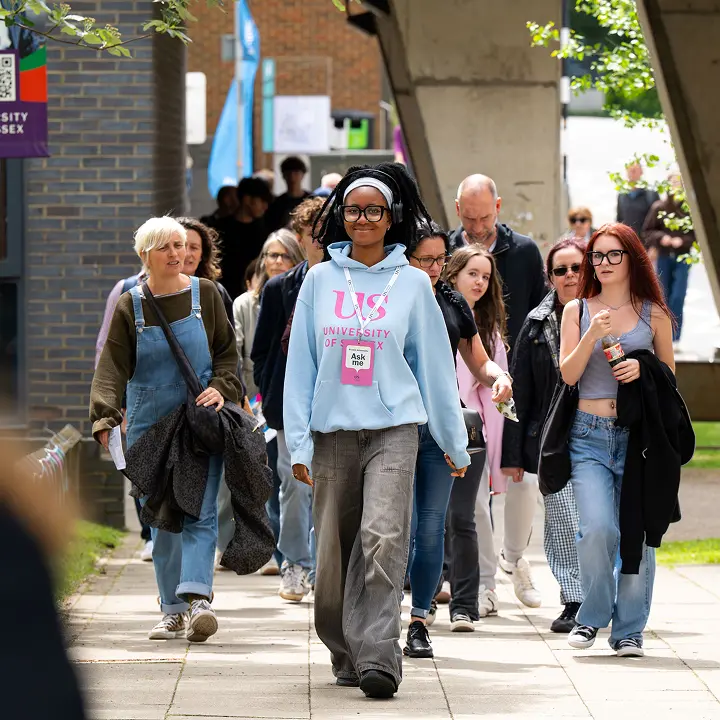
On campus - in person
You’ll study for this degree on our campus, joining our academics and fellow students. With in-person contact time, digitally supported educational resources, library collections and independent study, this course is designed to give you an inclusive education. Your learning experience may also include work placements, field trips, studying abroad and internationalisation experiences.
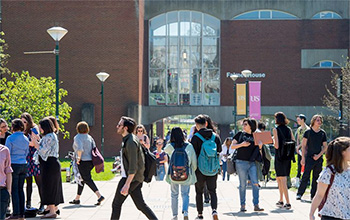
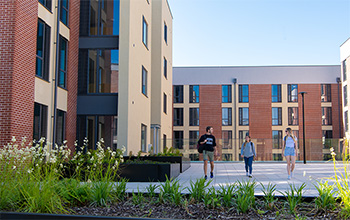
Find out about our beautiful campus
Virtual tour
Want to learn more about life at Sussex?
Our 360° virtual tour has been designed to introduce you to life in our diverse, supportive and inclusive community. Join our students for an immersive experience as they reveal why Sussex offers a space to follow your passions, find your voice, and discover people and places that will inspire you.
Begin your tour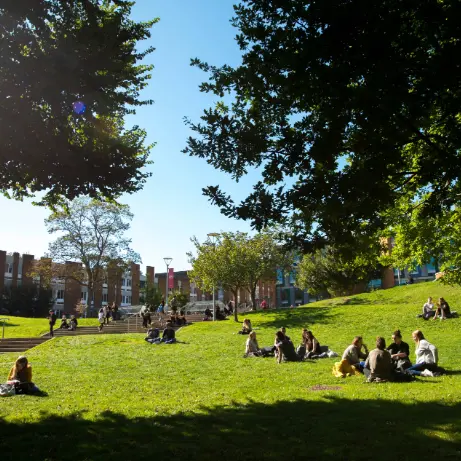

As a founding partner of ResearchPlus, a collaboration of research-focused universities, we engage with government, industry and civil society to support economic growth, prosperity and wellbeing across the whole of the UK.
Find out more
Modules
This is a single-honours course, allowing you to focus in depth on your core subject. Find out more from our guide to undergraduate study
-
 Silver
The student experience and student outcomes are typically very high quality.
Silver
The student experience and student outcomes are typically very high quality.
This rating was awarded in 2023, for four years. (Teaching Excellence Framework 2023)
Find out more about our approach to teaching and supporting you to thrive
-
Year 1 at Sussex
Your modules
Core modules
Core modules are taken by all students on the course. They give you a solid grounding in your chosen subject and prepare you to explore the topics that interest you most.
Autumn teaching
Spring teaching
- Biochemistry and Metabolism
- Cell and Molecular Biology
- Neuroscience and Behaviour
- Research Methods for Neuroscience
Your degree
In your first year you’ll build a solid foundation in the biosciences. You’ll learn about the biology of neural mechanisms at the level of molecules, cells and behaviour. You’ll get hands-on experience in laboratories, and in workshops on research methods and analysis.
Teaching
Teaching methods typically include lectures, seminars, workshops and practicals.

 60%: Lecture
 20%: Seminar
 20%: Practical
Assessment
Assessment methods typically include examinations and coursework.
Contact hours and workload
This year of study includes approximately 1,200 hours of work. This breaks down into about 230 hours of contact time and about 970 hours of independent study.
Engage and actively participate throughout your studies to get the most out of your course.
-
Year 2 at Sussex
Your modules
Core modules
Core modules are taken by all students on the course. They give you a solid grounding in your chosen subject and prepare you to explore the topics that interest you most.
Autumn teaching
- Human Genetics and Genomics
- Principles of Neuronal Function
- Research and Professional Skills I: Neuroscience
Spring teaching
Options
Alongside your core modules, you can choose options to broaden your horizons and tailor your course to your interests. This list gives you a flavour of our options, which are kept under review and may change, for example in response to student feedback or the latest research.
While it’s our aim for students to take their preferred combinations of options, this can’t be guaranteed and will be subject to timetabling. Options may be grouped and if so, students will be able to choose a set number of options from the selection available in any particular group.
Autumn teaching
Spring teaching
Your degree
In your second year you’ll focus on learning the central principles of neurobiology. You’ll gain experience in practical techniques and experimentation in our neuroscience teaching lab. You’ll develop your employable skills through a variety of activities such as a team coding challenge and a poster presentation.
Teaching
Teaching methods typically include lectures, practicals, workshops and seminars.
 70%: Lecture
5%: Seminar
25%: PracticalAssessment
Assessment methods typically include examinations and coursework.
Contact hours and workload
This year of study includes approximately 1,200 hours of work. This breaks down into about 210 hours of contact time and about 990 hours of independent study.
Engage and actively participate throughout your studies to get the most out of your course.
-
Experience Year
Study abroad (optional)
Apply to study abroad – you’ll develop an international perspective and gain an edge when it comes to your career. Find out where your course could take you
If your application to study abroad is successful, you’ll have to meet the academic requirements at Sussex and also at the partner university. Find out more about studying abroad as a Sussex student
Placement (optional)
To help you gain experience and increase your employability, you can apply for an optional placement as part of your course. You’ll be responsible for applying for and securing your placement. Our dedicated careers team can provide you with information and advice. If you’re successful in obtaining a placement, this will form part of your course.
Find out more about placements and internships
Recent Life Sciences students have gone on placements:
- AkzoNobel
- Pfizer
- the NHS.
Please note that if you’re receiving – or applying for – USA federal Direct Loan funds, you can’t transfer to the version of your course with an optional study abroad period in any country or optional placement in the USA if the number of credits for the placement/internship exceeds 25% of the total credits for your course. Find out more about American Student Loans and Federal Student Aid
-
Year 3 at Sussex
Your modules
Core modules
Core modules are taken by all students on the course. They give you a solid grounding in your chosen subject and prepare you to explore the topics that interest you most.
Autumn and spring teaching
Autumn teaching
Spring teaching
Options
Alongside your core modules, you can choose options to broaden your horizons and tailor your course to your interests. This list gives you a flavour of our options, which are kept under review and may change, for example in response to student feedback or the latest research.
While it’s our aim for students to take their preferred combinations of options, this can’t be guaranteed and will be subject to timetabling. Options may be grouped and if so, students will be able to choose a set number of options from the selection available in any particular group.
Autumn teaching
- Biological Psychology of Mental Health
- Cell Signalling and Therapeutics
- Communicating STEM
- Immunology in Health and Disease
- Intelligence in Animals and Machines
- Programming for Life Sciences
- Science of Memory
- Synaptic Communication
Spring teaching
- Animals in the Anthropocene
- Current Issues in AI and Cognitive Science
- Drugs, Brain and Behaviour
- Genomics and Bioinformatics
- Innovation in Bioscience and Medicine
- Manipulating Minds
- Molecular Neuropharmacology
Your degree
Year 3 is when you’ll be able to specialise, choosing from a broad range of advanced neuroscience topics. A highlight of the year is the individual research project, with a choice of different methods such as experimental work, data analysis, literature review or public outreach.
Teaching
Teaching methods typically include lectures, practicals, workshops, seminars and one-to-one meetings with a research supervisor.
 50%: Lecture
20%: Seminar
15%: Practical
 15%: One-to-one
Assessment
Assessment methods typically include examinations and coursework.
Contact hours and workload
This year of study includes approximately 1,200 hours of work. This breaks down into about 185 hours of contact time and about 1,015 hours of independent study.
Engage and actively participate throughout your studies to get the most out of your course.
-
Year 4 at Sussex
Your modules
Core modules
Core modules are taken by all students on the course. They give you a solid grounding in your chosen subject and prepare you to explore the topics that interest you most.
Autumn teaching
Spring teaching
Options
Alongside your core modules, you can choose options to broaden your horizons and tailor your course to your interests. This list gives you a flavour of our options, which are kept under review and may change, for example in response to student feedback or the latest research.
While it’s our aim for students to take their preferred combinations of options, this can’t be guaranteed and will be subject to timetabling. Options may be grouped and if so, students will be able to choose a set number of options from the selection available in any particular group.
Autumn teaching
Your degree
In Year 4 you’ll focus on developing your research skills. Half of the year is dedicated to your individual research project, which will be practical or analysis-based within one of the Sussex Neuroscience research groups. Taught modules support you in learning a variety of technical and academic skills relevant to research and other careers.
Teaching
Teaching methods typically include lectures, practicals, workshops, seminars and one-to-one meetings with a research supervisor.
 25%: Lecture
35%: Seminar
25%: Practical
15%: One-to-oneAssessment
Assessment methods typically include examinations and coursework.
Contact hours and workload
This year of study includes approximately 1,200 hours of work. This breaks down into about 100 hours of contact time and about 1,100 hours of independent study.
Engage and actively participate throughout your studies to get the most out of your course.
Spirit of Sussex Award
Feel involved in life at the University, make friends and enrich your experience with us – the Spirit of Sussex Award is our way of recognising your extracurricular and voluntary achievements.
-
Video transcript
Hi everyone! As I'm sure you've all heard by now, the Spirit of Sussex Award is now live.
Students across the Sussex community are already earning their points
What will you do to earn yours?
There's so many ways to get involved.
Head over to the website to start your Spirit of Sussex journey.
Text: The Spirit of Sussex Award is an exciting new programme designed to recognise and celebrate the things you do outside your course.
Participating in the Award makes it easy and fun for you to get involved and make the most of university life.
We regularly review our modules to incorporate student feedback, staff expertise, as well as the latest research and teaching methodology. We’re planning to run these modules in the academic year 2026/27. However, there may be changes to these modules in response to feedback, staff availability, student demand or updates to our curriculum. We’ll make sure to let you know of any material changes to modules at the earliest opportunity.
We’ll do our best to provide as much optional choice as we can, but timetabling constraints mean it may not be possible to take some module combinations. The structure of a small number of courses means that the order of modules or the streams you choose may determine whether modules are core or optional. This means that your core modules or options may differ from what’s shown here.
Check back in January 2027 for more details of the modules running in the academic year 2027/28.
Neuroscience is an exciting science with decades of discoveries ahead. And at Sussex, it benefits from the University’s interdisciplinary ethos.”Jethro Reeve
Neuroscience MSci
Our experts
I work on synapses — the connection sites between neurons. These fascinating structures are targets for diseases such as Alzheimer’s.”Professor Kevin Staras
Professor of Neuroscience
Study Neuroscience at the University of Sussex
- Video transcript
[Intro MUSIC: Gentle pop]
[Video footage of Dr Andy Penn in consultation with students, working in laboratories and posing for camera.]
[Name caption – Dr Andy Penn Assistant Professor in Neuroscience]
Andy Penn: Right now, I am working on a rare but devastating brain disorder.
So this is a gene that encodes Receptors in our brain. And when they go wrong, these patients have epilepsy or intellectual disability.
And what we want to understand is when would be the best time to treat them?
What excites me about this is what we find could contribute to supporting those patients. We can be potentially making a really big difference to these individuals.
[MUSIC fades]
[END CARD. University of Sussex, Brighton, logo]

Prof Leon Lagnado
Professor Of Neuroscience 'Royal Society Wolfson Research Merit Award holder'
Dr Sylvia Schroeder
Sir Henry Dale Senior Research Fellow Group Leader
Careers
- 86% of Sussex undergraduates have completed work experience by the end of their course (University of Sussex Career Readiness data at point of graduation 2023/24)
Our modules help you develop transferable skills in time management, communication and analysis. You gain laboratory skills and improve your problem-solving, independent thinking and teamwork abilities. You can go on to work in fields such as:
- the pharmaceutical and biotechnology sectors
- environment and health science
- research careers in neuropharmacology and neuropsychology.
Embedded employability
This course is designed to meet the latest demands of the working world. It’s informed by our Employer Advisory Panel of key organisations hiring our graduates.
Throughout your studies, you’ll develop research skills and professional competencies. Sessions with our Careers and Entrepreneurship Team will help you bolster your CV, train for interviews and map out career trajectories.
Where do our graduates work now?
Surveyed 15 months after finishing their courses, our recent Neuroscience graduates worked for employers including:
- Alzheimer's Research UK
- Apple
- Bank of America
- Elsevier
- Manhattan Associates
- Royal Sussex County Hospital
- Santander
- Sussex Police
- Thermo Fisher Scientific
- Wellcome Sanger Institute.
(Graduate Outcomes Survey 2017-2022)
What to do with a Neuroscience degree
Explore the careers you might be interested in after studying for a degree in Neuroscience
Working while you study
Our Careers and Entrepreneurship team can help you find part-time work while you study. Find out more about career development and part-time work
Sussex has given me the vital foundations I need to pursue my aspiration of becoming a mental health professional.”Prital Patel
Day Services Worker, St Thomas Fund, CRI
Design your future at Sussex
Taking the next step in your career can feel daunting, but we’ll help you to explore, connect and flourish throughout your studies and beyond.
As a Sussex student, you’ll learn how to tackle real-world challenges and have access to tailored programmes of careers support:
- our Career Lab helps you to explore your options, build key skills and connect with employers. Take part in internships, community consultancy projects and insight visits, where you can learn about life at organisations such as Brighton & Hove Albion Football Club, the Knepp Rewilding Project, and fashion brand Puig
- one-to-one appointments with your Faculty Careers Consultant can enable you to identify your career goals, write an effective CV and prepare for future interviews
- entrepreneurship initiatives like StartUp Sussex and Ideas Lab can empower you to turn your concepts into reality.
Explore how our Careers and Entrepreneurship team can support you
-
 Winner
Entrepreneurship Catalyst Award
National Enterprise Educator Awards 2024
Winner
Entrepreneurship Catalyst Award
National Enterprise Educator Awards 2024
-
 Winner
Supporting Student and Graduate Employability Award
AGCAS Awards for Excellence 2024
Winner
Supporting Student and Graduate Employability Award
AGCAS Awards for Excellence 2024
-
 Top 50
Best Universities for Work Experience in the UK
2025 Higherin Awards
Top 50
Best Universities for Work Experience in the UK
2025 Higherin Awards
Fees
Note that your fees, once they’re set, may be subject to an increase on an annual basis. Find details on our Tuition fees page.
Home students
£10,050 per year
Channel Islands and Isle of Man students
£10,050 per year
International students
£28,100 per year
Study abroad
Find out about grants and funding, tuition fees and insurance costs for studying abroad
Placement
Living costs
We know the rising cost of living is on everyone’s mind, and affects us all in different ways. Our guide to living costs has been designed to help you plan and budget for life as a Sussex student.
Learn more about typical living costs
Scholarships
Details of our scholarships are not yet set for entry in the academic year 2027/28.
Contact us
Ask a student
Chat to Sussex students online via the UniBuddy chat platform.
Enquiries
Contact us with any questions about your course:
+44 (0)1273 876787
Ask us a question
Find out more about the School of Life Sciences: Neuroscience
Prospectus
What do you want to do next?


Legal information
We understand that deciding where and what to study is a very important decision. We’ll make all reasonable efforts to provide you with the courses, services and facilities described in this prospectus. However, if we need to make material changes, for example due to government or regulatory requirements, or unanticipated staff changes, we’ll let you know as soon as possible.
A-level - contextual offer
BBB-BBC, including grade B in a relevant science subject.
Pearson BTEC Level 3 National Diploma and one A-level - contextual offer
Grade B in A-level and Disinction, Distinction in Pearson BTEC Level 3 National Diploma.
Pearson BTEC Level 3 National Extended Certificate and two A-levels - contextual offer
Grades BC in A-levels plus Distinction in BTEC Level 3 National Extended Certificate.
Pearson BTEC Level 3 National Extended Diploma (formerly BTEC Level 3 Extended Diploma) - contextual offer
DDM