Campus tours
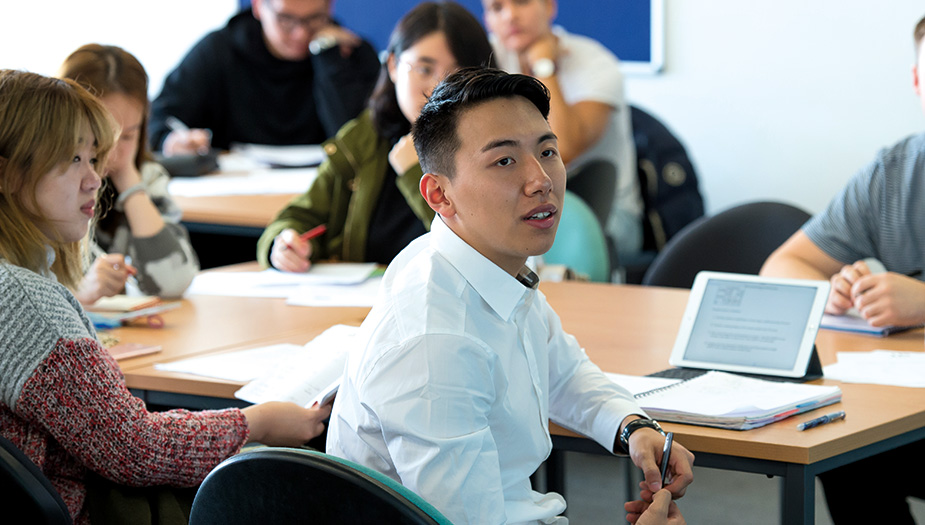
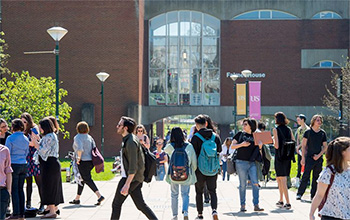
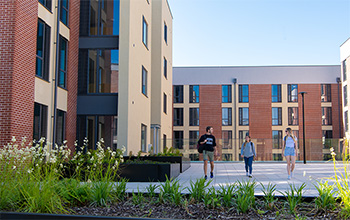
Join a campus tour this summer and get a feel for life at Sussex. With award-winning campus food, a National Park setting and buzzing Brighton on our doorstep, our location and facilities are hard to beat.
Book your visit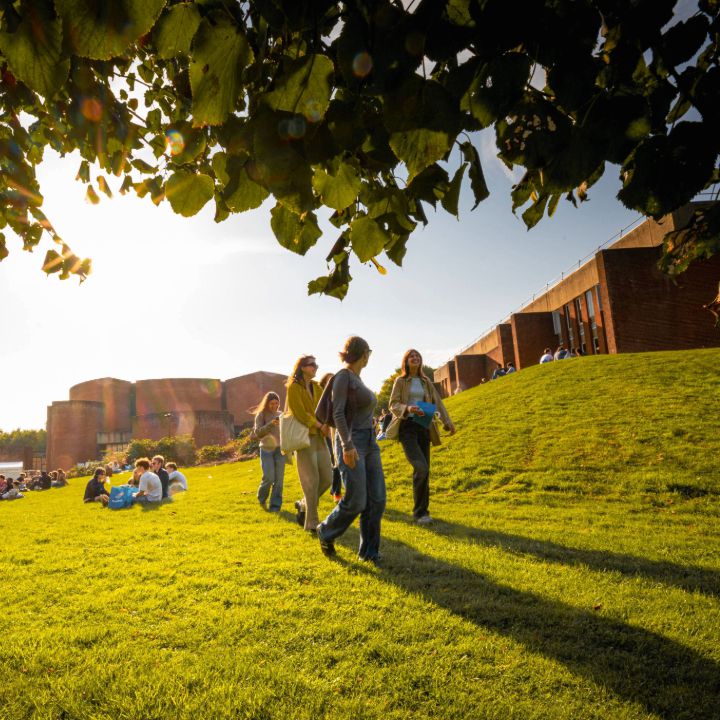
On campus - in person
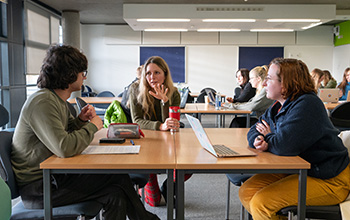
You’ll study for this degree on our campus, joining our academics and fellow students. With in-person contact time, digitally supported educational resources, library collections and independent study, this course is designed to give you an inclusive education. Your learning experience may also include work placements, field trips, studying abroad and internationalisation experiences.
Find out about our beautiful campus
Virtual tour
Want to learn more about life at Sussex?
Our 360° virtual tour has been designed to introduce you to life in our diverse, supportive and inclusive community. Join our students for an immersive experience as they reveal why Sussex offers a space to follow your passions, find your voice, and discover people and places that will inspire you.
Begin your tour

As a founding partner of ResearchPlus, a collaboration of research-focused universities, we engage with government, industry and civil society to support economic growth, prosperity and wellbeing across the whole of the UK.
Find out more
Modules
This is a joint-honours course, offering you a combinations of subjects, each taking up 50% of your time. Find out more from our guide to undergraduate study
-
 Silver
The student experience and student outcomes are typically very high quality.
Silver
The student experience and student outcomes are typically very high quality.
This rating was awarded in 2023, for four years. (Teaching Excellence Framework 2023)
Find out more about our approach to teaching and supporting you to thrive
-
Year 1 at Sussex
Your modules
Core modules
Core modules are taken by all students on the course. They give you a solid grounding in your chosen subject and prepare you to explore the topics that interest you most.
Autumn teaching
- Contemporary Economic Issues
- Introduction to Economics
- Introduction to Mathematics for Finance and Economics
- Programming Concepts
Spring teaching
- Applied Mathematics for Economists
- Business School Career Preparation
- Data Structures & Algorithms
- Macroeconomics 1
- Microeconomics 1
Your degree
You get introduced to the core principles of economics and strengthen your applied mathematical skills. Exploring programming concepts, you’ll learn about algorithmic problem solving. You’ll explore the fundamentals of data structures hands-on in lab learning.
Teaching
Teaching methods typically include lectures, seminars and practicals/workshops.
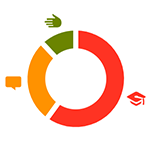
 60%: Lecture
 28%: Seminar
 12%: Practical
Assessment
Assessment methods typically include examinations and coursework.
Contact hours and workload
This year of study includes approximately 1,200 hours of work. This breaks down into about 240 hours of contact time and about 960 hours of independent study.
Engage and actively participate throughout your studies to get the most out of your course.
-
Year 2 at Sussex
Your modules
Core modules
Core modules are taken by all students on the course. They give you a solid grounding in your chosen subject and prepare you to explore the topics that interest you most.
Autumn teaching
Spring teaching
Options
Alongside your core modules, you can choose options to broaden your horizons and tailor your course to your interests. This list gives you a flavour of our options, which are kept under review and may change, for example in response to student feedback or the latest research.
While it’s our aim for students to take their preferred combinations of options, this can’t be guaranteed and will be subject to timetabling. Options may be grouped and if so, students will be able to choose a set number of options from the selection available in any particular group.
Autumn teaching
Spring teaching
Your degree
You’ll move on to more advanced study and explore real-world applications. Alongside developing your skills in statistics and econometrics, you can choose to study microeconomic or macroeconomic theory in more detail. You’ll continue your journey into data science, data coding and visualisation applications in economics, and applied machine learning techniques.
Teaching
Teaching methods typically include lectures, seminars and practicals/workshops.
 53%: Lecture
22%: Seminar
25%: PracticalAssessment
Assessment methods typically include examinations, coursework and a practicals/project.
Contact hours and workload
This year of study includes approximately 1,200 hours of work. This breaks down into about 240 hours of contact time and about 960 hours of independent study.
Engage and actively participate throughout your studies to get the most out of your course.
-
Placement
To help you gain experience and increase your employability, you can apply for an optional placement as part of your course. You’ll be responsible for applying for and securing your placement. Our dedicated careers team can provide you with information and advice. If you’re successful in obtaining a placement, this will form part of your course.
Find out more about placements and internships
Our careers team offers dedicated support to help you obtain a placement, including:
- finding an employer
- drafting an application
- preparing for interviews
- ongoing help throughout a placement.
Don’t worry if you’re not successful in securing a placement, you’ll simply transfer to a non-placement version of your course.
Please note that if you’re receiving – or applying for – USA federal Direct Loan funds, you can’t undertake your placement in the USA if the number of credits for the placement/internship exceeds 25% of the total credits for your course. Find out more about American Student Loans and Federal Student Aid
-
Year 3 at Sussex
Your modules
Core modules
Core modules are taken by all students on the course. They give you a solid grounding in your chosen subject and prepare you to explore the topics that interest you most.
Autumn and spring teaching
Autumn teaching
Spring teaching
Options
Alongside your core modules, you can choose options to broaden your horizons and tailor your course to your interests. This list gives you a flavour of our options, which are kept under review and may change, for example in response to student feedback or the latest research.
While it’s our aim for students to take their preferred combinations of options, this can’t be guaranteed and will be subject to timetabling. Options may be grouped and if so, students will be able to choose a set number of options from the selection available in any particular group.
Autumn teaching
- Experimental Economics: Markets, Games And Strategic Behaviour
- International Trade
- Topics in Growth and Inequality
Spring teaching
Your degree
Applied modules in economics and applications of data science, machine learning and text analysis will help you bring your skills and learning together. From growth and inequality to economics of crime, you’ll have the opportunity to broaden your knowledge in specialised areas. You’ll also write a dissertation on an applied topic.
Teaching
Teaching methods typically include lectures, seminars and practicals/laboratory.
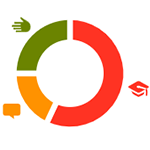 57%: Lecture
18%: Seminar
25%: PracticalAssessment
Assessment methods typically include examinations, coursework and a practicals/project.
Contact hours and workload
This year of study includes approximately 1,200 hours of work. This breaks down into about 200 hours of contact time and about 1,000 hours of independent study.
Engage and actively participate throughout your studies to get the most out of your course.
Spirit of Sussex Award
Feel involved in life at the University, make friends and enrich your experience with us – the Spirit of Sussex Award is our way of recognising your extracurricular and voluntary achievements.
-
Video transcript
Hi everyone! As I'm sure you've all heard by now, the Spirit of Sussex Award is now live.
Students across the Sussex community are already earning their points
What will you do to earn yours?
There's so many ways to get involved.
Head over to the website to start your Spirit of Sussex journey.
Text: The Spirit of Sussex Award is an exciting new programme designed to recognise and celebrate the things you do outside your course.
Participating in the Award makes it easy and fun for you to get involved and make the most of university life.
We regularly review our modules to incorporate student feedback, staff expertise, as well as the latest research and teaching methodology. We’re planning to run these modules in the academic year 2026/27. However, there may be changes to these modules in response to feedback, staff availability, student demand or updates to our curriculum. We’ll make sure to let you know of any material changes to modules at the earliest opportunity.
We’ll do our best to provide as much optional choice as we can, but timetabling constraints mean it may not be possible to take some module combinations. The structure of a small number of courses means that the order of modules or the streams you choose may determine whether modules are core or optional. This means that your core modules or options may differ from what’s shown here.
Our experts
Careers
- 86% of Sussex undergraduates have completed work experience by the end of their course (University of Sussex Career Readiness data at point of graduation 2023/24)
You’ll develop communication, analytical, software and numeracy skills. These skills mean you could go into a wide range of graduate jobs, including in:
- banking
- research institutions
- economic consultancies
- think tanks
- government policy advising
- the Civil Service.
Based in the University of Sussex Business School, you’ll get extensive career support. This includes connecting you with employers, alumni mentoring, networking, guest lectures and workplace skills development.
The University of Sussex Business School is home to the UK Trade Policy Observatory (UKTPO). This leading independent group analyses the UK’s trading future after Brexit. We also have the Bloomberg Financial Markets Lab where you can access real-time data from the Bloomberg Professional services platform.
The active Economics Society at Sussex also provides further networking opportunities. The Society invites guest speakers and runs events that bring together Economics students and others who share an interest in economics.
Where do our graduates work now?
Surveyed 15 months after finishing their courses, our recent graduates from the Department of Economics worked for employers including:
- American Express
- Barclays
- Bloomberg
- Deloitte
- Department for Business & Trade
- EDF
- Food Standards Agency
- Grant Thornton
- Home Office
- HSBC
- KPMG
- Kubrick
- Lloyds
- Nationwide
- Carbon Trust
- The Walt Disney Company
- Zurich.
(Graduate Outcomes Survey 2017-2022)
Working while you study
Our Careers and Entrepreneurship team can help you find part-time work while you study. Find out more about career development and part-time work
Student learn the latest tools and methodologies used in the field, making them more competitive and relevant in the job market.”Gabriella Cagliesi
Professor of Economics
Design your future at Sussex
Taking the next step in your career can feel daunting, but we’ll help you to explore, connect and flourish throughout your studies and beyond.
As a Sussex student, you’ll learn how to tackle real-world challenges and have access to tailored programmes of careers support:
- our Career Lab helps you to explore your options, build key skills and connect with employers. Take part in internships, community consultancy projects and insight visits, where you can learn about life at organisations such as Brighton & Hove Albion Football Club, the Knepp Rewilding Project, and fashion brand Puig
- one-to-one appointments with your Faculty Careers Consultant can enable you to identify your career goals, write an effective CV and prepare for future interviews
- entrepreneurship initiatives like StartUp Sussex and Ideas Lab can empower you to turn your concepts into reality.
Explore how our Careers and Entrepreneurship team can support you
-
 Winner
Entrepreneurship Catalyst Award
National Enterprise Educator Awards 2024
Winner
Entrepreneurship Catalyst Award
National Enterprise Educator Awards 2024
-
 Winner
Supporting Student and Graduate Employability Award
AGCAS Awards for Excellence 2024
Winner
Supporting Student and Graduate Employability Award
AGCAS Awards for Excellence 2024
-
 Top 50
Best Universities for Work Experience in the UK
2025 Higherin Awards
Top 50
Best Universities for Work Experience in the UK
2025 Higherin Awards
Entry requirements
This course is available in Clearing
CCall our Clearing hotline 01273 007825 to explore your options and speak to our specialist teams. Our phone lines are open Monday to Friday 9am to 5pm BST. You can also apply for this course online now.
Apply online for this course
Fees
Note that your fees, once they’re set, may be subject to an increase on an annual basis. Find details on our Tuition fees page.
Home students
£9,790 per year
Channel Islands and Isle of Man students
£9,790 per year
On 19 March 2026 the UK Parliament set out that the tuition fee cap for 2026 entry will be £9,790. As the University of Sussex keeps fees for Home students and Channel Islands and Isle of Man students in line with UK Government-approved levels, fees will be £9,790 in 2026. In line with our terms and conditions, the University charges fees at the maximum levels set by the UK Government.
International students
£23,500 per year
Placement
Find out about tuition fees for placements
Additional costs
Note about additional costs
Additional costs to your tuition fees may include field trips, equipment, materials, bench fees or studio hire. These costs are best estimates based on current market values which we review each year. These costs may be subject to change due to unforeseen circumstances where the University has limited control such as a change in a service provider or government guidance. We will let you know at the earliest opportunity if there is any change to these costs. We will also tell you if these costs are mandatory for passing your course or optional. Find out how to budget for student life.
Study visit abroad
This course has an optional study visit abroad for Year 3 students. The approximate contribution towards costs is £200 per student. If the study visit is undersubscribed, we may also offer the study visit to postgraduate students.
Placement
This course offers you the opportunity to apply for a placement. Find out about placement fees at Tuition fees. You’ll need to pay for your own travel costs to and from your placement.
Living costs
We know the rising cost of living is on everyone’s mind, and affects us all in different ways. Our guide to living costs has been designed to help you plan and budget for life as a Sussex student.
Learn more about typical living costs
Scholarships
Our goal is to ensure that every student who wants to study with us is able to regardless of financial barriers, so that we continue to attract talented and unique people.
-
Chancellor's International Scholarships
£5,000 in the first year of full-time study
-
Climate Leaders Scholarship
£3,000 cash per year of full time study.
Scholarships recipients will be supported to develop a high level project plan and provided with mentoring support.
-
Emily O Akinluyi Scholarship
£5,000 cash award
-
Sanctuary Scholarship (Undergraduate)
- Full 'Overseas' tuition fee waiver
- £16,440 per year of undergraduate study (up to 4 years)
- Sussexsport membership
- Guaranteed continuation of housing
-
Sussex Bursary
£1,000 in your first year of study (either Year 1 or Foundation Year).
£500 in your subsequent years of study.
-
Sussex Pakistan Scholarship (Undergraduate)
£4,000 discount on the first year of tuition fees
-
Sussex Türkiye Scholarship (Undergraduate)
£4,000 discount on the first year of tuition fees
-
Undergraduate Enrichment Award
£6,000 over 3 years of study
Contact us
Ask a student
Chat to Sussex students online via the UniBuddy chat platform.
Prospectus
What do you want to do next?


Legal information
We understand that deciding where and what to study is a very important decision. We’ll make all reasonable efforts to provide you with the courses, services and facilities described in this prospectus. However, if we need to make material changes, for example due to government or regulatory requirements, or unanticipated staff changes, we’ll let you know as soon as possible.