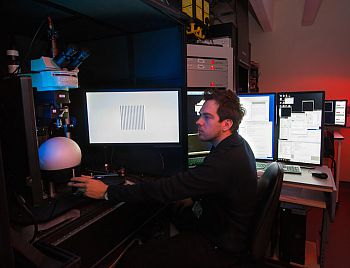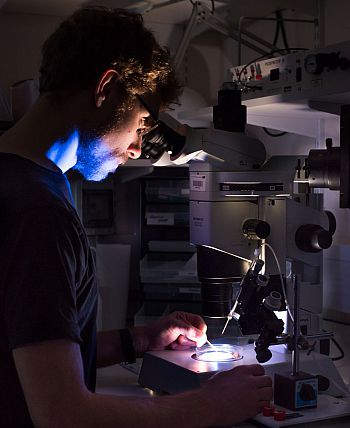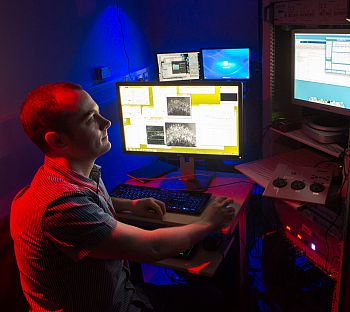
We investigate the mechanisms by which neural circuits process sensory information, with an emphasis on the contribution of synapses. We work on vision and, more recently, mechanosensation.
We have another website which is a bit slicker and has more info here!
The following questions represent some of the themes guiding our research:
- How do synapses work as machines?
- How do the properties of synapses determine the processing of visual signals in the retina and visual cortex?
- What are the circuit mechanisms that control “network adaptation” – changes in the way that visual stimuli are processed according to the recent history of the stimulus?
- What are the functional roles of different types of inhibitory interneuron during neural computations such as motion anticipation or predictive coding?
- How do neuromodulators alter synaptic function and reconfigure signal flow in the retina and higher visual centres?
- How do changes in behavioural state alter early sensory processing?
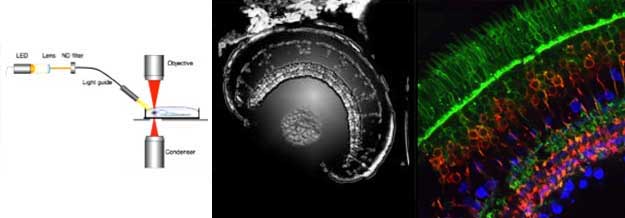
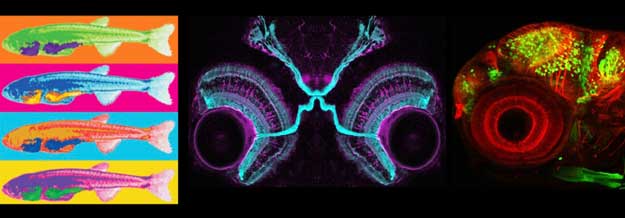
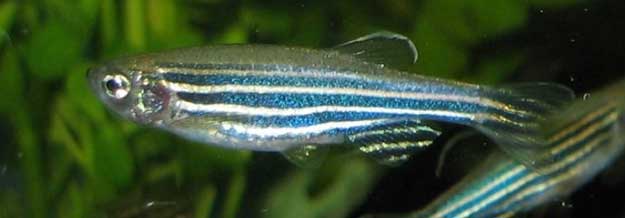
Much of our past work has utilized zebrafish, but we now also work with mice. We use fluorescent reporter proteins in combination with multiphoton microscopy and single-plane illumination microscopy (SPIM) to monitor circuit activity and manipulations such as optogenetics to test hypotheses. Projects often involve a combination of experimental and computational approaches. Please do contact us if you would like to know more about our research.
Click here for a broader overview of our research.