Software Engineering (with an industrial placement year) BSc (Hons)

Develop in-demand software skills and industry insight with a placement. Design, build and maintain computer systems to solve real-world engineering challenges.

Select your start date

Key information

Why choose this course at Sussex?

  • Develop the latest in-demand skills for diverse careers, including computing and software development, gaining industry insight with a placement.
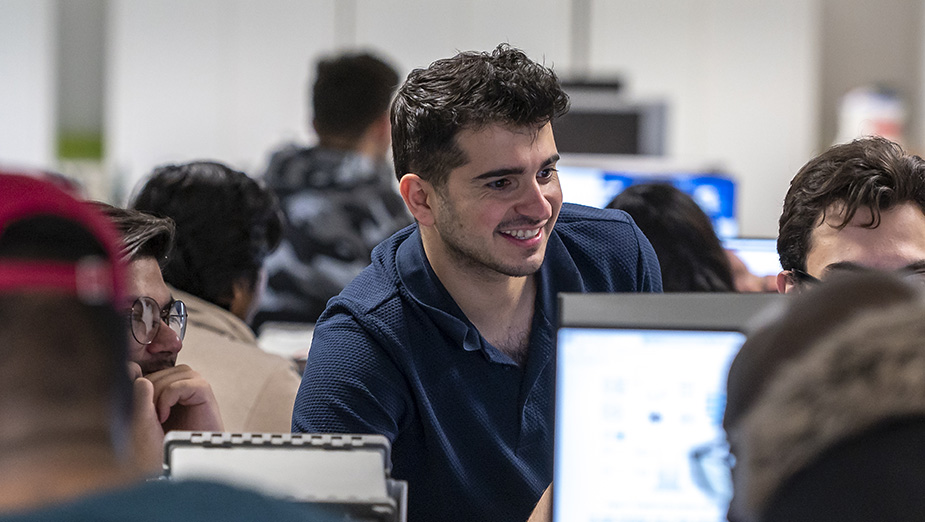
  • Work in specialised computing labs and tackle real engineering challenges with our professional tools and software, building practical experience for your future.
  • Learn how to design, build and maintain complex computer systems alongside multiple programming languages, and web and mobile development.

There is a demand for skilled software engineers who can design, build and maintain computer systems. On this BSc, you’ll build the skills needed to meet this demand.

This course is for anyone pursuing computer science or IT degrees who wants to specialise in software development. The course is also a good choice if you have a strong interest in problem-solving, but it does not matter if you are a beginner with basic coding knowledge.

On this course you’ll learn:

  • multiple programming languages
  • how to design, build, and maintain complex software systems
  • web and mobile development, database management, and software testing
  • development methodologies, version control, and project management.

Beyond technical skills, you’ll enhance your problem-solving abilities, critical thinking, teamwork and ability to present your ideas. We emphasise practical application, so you’ll work on real-world projects that simulate industry scenarios. You’ll graduate with the knowledge and hands-on experience to tackle diverse software engineering challenges.

We have connections with regional, national and global employers who promote their internship, placement and graduate vacancies on our student jobs board, attend our recruiter events, and/or host internships through our award-winning Career Lab Programme.

The Department of Informatics at Sussex has a long history of innovation in Computer Science and Artificial Intelligence. You’ll be taught by enthusiastic, research-active academics. You’ll also join a thriving student community with computing-related societies and regular student events, such as game jams and hackathons. The optional year in industry is a valuable opportunity to gain real work experience, while still being supported by our Department. You’ll develop the confidence, skills and experience for the next step in your career.

  • 100% of our research impact in Computer Science and Informatics was assessed to be world leading or internationally excellent (REF 2021) 
  • =1st in the UK for spend per student in Computer Science and Information Systems (The Guardian University Guide 2025)

Your optional placement

To help you gain experience and increase your employability, you can apply for an optional placement as part of your course. This can be a fantastic opportunity to gain real-life insight into industry as well as skills valued by employers. You’ll be responsible for applying for and securing your placement. Our dedicated careers team can help you:

  • find an employer
  • draft an application
  • prepare for interviews.

Don’t worry if you’re not successful, you’ll simply transfer to a non-placement version of your course.

Join our Open Day on 6 June 2026

Your future career starts
Right here. Right now.

Book your place

On campus - in person

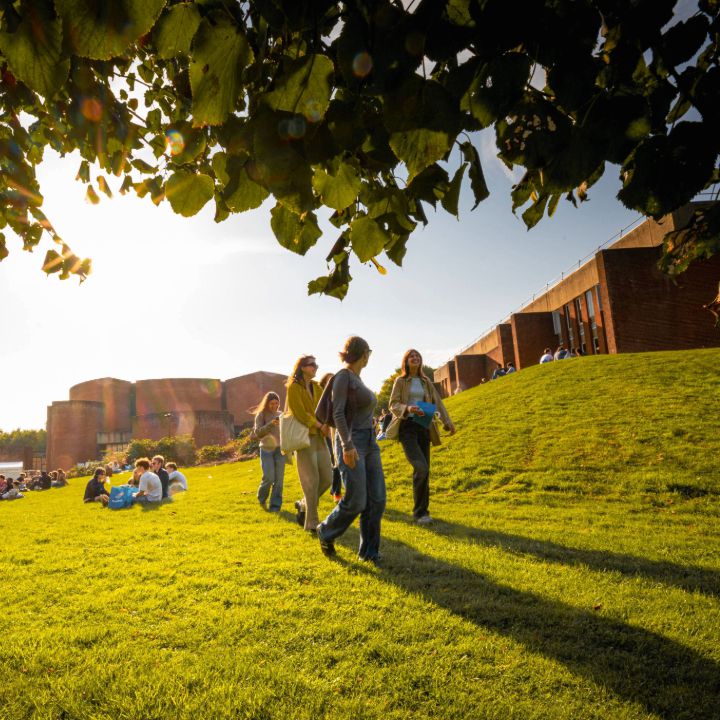
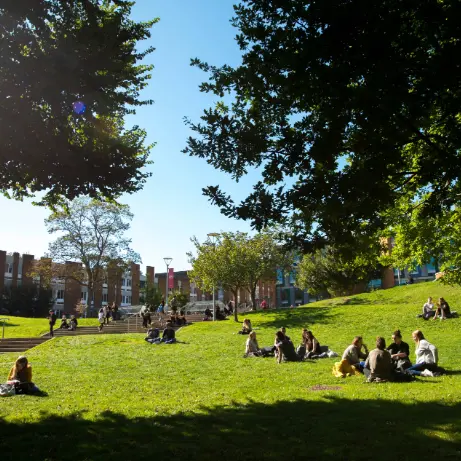
You’ll study for this degree on our campus, joining our academics and fellow students. With in-person contact time, digitally supported educational resources, library collections and independent study, this course is designed to give you an inclusive education. Your learning experience may also include work placements, field trips, studying abroad and internationalisation experiences.

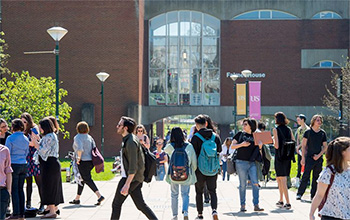
Find out about our beautiful campus

Virtual tour

Want to learn more about life at Sussex?

Our 360° virtual tour has been designed to introduce you to life in our diverse, supportive and inclusive community. Join our students for an immersive experience as they reveal why Sussex offers a space to follow your passions, find your voice, and discover people and places that will inspire you.

Begin your tour

ResearchPlus

As a founding partner of ResearchPlus, a collaboration of research-focused universities, we engage with government, industry and civil society to support economic growth, prosperity and wellbeing across the whole of the UK.

Find out more
Modules

This is a single-honours course, allowing you to focus in depth on your core subject. Find out more from our guide to undergraduate study.

  • Year 1 at Sussex

    Your modules

    Core modules

    Core modules are taken by all students on the course. They give you a solid grounding in your chosen subject and prepare you to explore the topics that interest you most.

    Autumn teaching
    Spring teaching
    Intersemester Week

    Your degree

    Practical and study skills will be included within and alongside your modules.

    Teaching

    Teaching methods typically include lectures, seminars and practicals.

    64%: Lecture
    6%: Seminar
    30%: Practical

    Assessment

    Assessment methods typically include exams.

    Contact hours and workload

    This year of study includes approximately 1,200 hours of work. This breaks down into about 269 hours of contact time and about 931 hours of independent study.

    Engage and actively participate throughout your studies to get the most out of your course.

  • Year 2 at Sussex

    Your modules

    Core modules

    Core modules are taken by all students on the course. They give you a solid grounding in your chosen subject and prepare you to explore the topics that interest you most.

    Autumn teaching
    Spring teaching

    Your degree

    Practical and study skills will be included within and alongside your modules.

    Teaching

    Teaching methods typically include lectures, seminars and practicals.

    65%: Lecture
    7%: Seminar
    28%: Practical

    Assessment

    Assessment methods typically include exams and coursework.

    Contact hours and workload

    This year of study includes approximately 1,200 hours of work. This breaks down into about 269 hours of contact time and about 931 hours of independent study.

    Engage and actively participate throughout your studies to get the most out of your course.

  • Placement

    An industrial placement gives you the chance to spend a year working with an organisation, in an area relevant to your course, while being paid. It’s a proven way to fast-track your career.

    Recent students in the Departments of Informatics have gone on placements at:

    • Curo Talent
    • Master of Malt
    • Feral Interactive.

    You develop your technical, team-working and transferable skills, and apply what you have learnt in your studies to a business environment.

    Find out more about placements and internships

    Our careers team offers dedicated support to help you obtain a placement, including:

    • finding an employer
    • drafting an application
    • preparing for interviews
    • ongoing help throughout a placement.

    Don’t worry if you’re not successful in securing a placement, you’ll simply transfer to a non-placement version of your course.

    Please note that if you’re receiving – or applying for – USA federal Direct Loan funds, you can’t undertake your placement in the USA if the number of credits for the placement/internship exceeds 25% of the total credits for your course. Find out more about American Student Loans and Federal Student Aid

  • Year 3 at Sussex

    Your modules

    Core modules

    Core modules are taken by all students on the course. They give you a solid grounding in your chosen subject and prepare you to explore the topics that interest you most.

    Autumn and spring teaching
    Autumn teaching
    Spring teaching

    Options

    Alongside your core modules, you can choose options to broaden your horizons and tailor your course to your interests. This list gives you a flavour of our options, which are kept under review and may change, for example in response to student feedback or the latest research.

    While it’s our aim for students to take their preferred combinations of options, this can’t be guaranteed and will be subject to timetabling. Options may be grouped and if so, students will be able to choose a set number of options from the selection available in any particular group.

    Autumn teaching
    Spring teaching

    Your degree

    Practical and study skills will be included within and alongside your modules.

    Teaching

    Teaching methods typically include lectures, seminars and practicals.

    56%: Lecture
    3%: Seminar
    41%: Practical

    Assessment

    Assessment methods typically include exams and coursework.

    Contact hours and workload

    This year of study includes approximately 1,200 hours of work. This breaks down into about 200 hours of contact time and about 1,000 hours of independent study.

    Engage and actively participate throughout your studies to get the most out of your course.

Spirit of Sussex Award

Feel involved in life at the University, make friends and enrich your experience with us – the Spirit of Sussex Award is our way of recognising your extracurricular and voluntary achievements.

Find out more about the Spirit of Sussex Award

  • Video transcript

    Hi everyone! As I'm sure you've all heard by now, the Spirit of Sussex Award is now live.

    Students across the Sussex community are already earning their points

    What will you do to earn yours?

    There's so many ways to get involved.

    Head over to the website to start your Spirit of Sussex journey.

    Text: The Spirit of Sussex Award is an exciting new programme designed to recognise and celebrate the things you do outside your course.

    Participating in the Award makes it easy and fun for you to get involved and make the most of university life.

We regularly review our modules to incorporate student feedback, staff expertise, as well as the latest research and teaching methodology. We’re planning to run these modules in the academic year 2026/27. However, there may be changes to these modules in response to feedback, staff availability, student demand or updates to our curriculum. We’ll make sure to let you know of any material changes to modules at the earliest opportunity.

We’ll do our best to provide as much optional choice as we can, but timetabling constraints mean it may not be possible to take some module combinations. The structure of a small number of courses means that the order of modules or the streams you choose may determine whether modules are core or optional. This means that your core modules or options may differ from what’s shown here.

Our experts

Careers

  • 86% of Sussex undergraduates have completed work experience by the end of their course (University of Sussex Career Readiness data at point of graduation 2023/24)

We aim to provide you with the practical foundations in computer science to enable you to start a career in computing. Our researchers’ specialisms include software systems, networks, artificial intelligence, human-computer interaction, natural language processing and digital media.

Examples of careers you might pursue after graduating include:

  • software development roles like software developer, software engineer or full-stack developer
  • front-end or back-end web development
  • mobile app development
  • iOS or Android Developer
  • e-commerce roles such as developing online retail platforms and payment systems.

Our Industry-aligned curriculum reflects current industry trends and technologies, ensuring you learn skills that are in high demand. You will work in specialised computing labs, gaining practical experience with industry-standard tools and software. The course covers areas of rapid growth, including AI and machine learning, preparing you for future trends in the field.

Software is a crucial part of almost every industry, including healthcare, finance, entertainment, and transportation. Moreover, the skills you learn in this course, including problem-solving, logical thinking and teamwork are valuable in many careers.

Where do our graduates work now?

Surveyed 15 months after finishing their courses, our recent graduates from the Department of Informatics worked for employers including:

(Graduate Outcomes Survey 2017-2022)

Working while you study

Our Careers and Entrepreneurship team can help you find part-time work while you study. Find out more about career development and part-time work

Design your future at Sussex

Taking the next step in your career can feel daunting, but we’ll help you to explore, connect and flourish throughout your studies and beyond.

As a Sussex student, you’ll learn how to tackle real-world challenges and have access to tailored programmes of careers support:

  • our Career Lab helps you to explore your options, build key skills and connect with employers. Take part in internships, community consultancy projects and insight visits, where you can learn about life at organisations such as Brighton & Hove Albion Football Club, the Knepp Rewilding Project, and fashion brand Puig
  • one-to-one appointments with your Faculty Careers Consultant can enable you to identify your career goals, write an effective CV and prepare for future interviews
  • entrepreneurship initiatives like StartUp Sussex and Ideas Lab can empower you to turn your concepts into reality.

Explore how our Careers and Entrepreneurship team can support you

Entry requirements

A-level

Extended Project Qualification

We take the EPQ into account when considering your application and it can be useful in the summer when your results are released if you have narrowly missed the conditions of your offer.  We do not routinely include the EPQ in the conditions of your offer but we sometimes offer alternative conditions that include the EPQ. If you wish to discuss this further please contact us

Additional UK qualifications

Additional international qualifications

Australia

Typical offer

Relevant state (Year 12) High School Certificate, and over 85% in the ATAR or UAI/TER/ENTER. Or a Queensland OP of 5 or below.

Please note

Our entry requirements are guidelines and we assess all applications on a case-by-case basis.

Austria

Typical offer

Reifeprüfung or Matura with an overall result of 2.2 or better for first-year entry. A result of 2.5 or better would be considered for Foundation Year entry.

Please note

Our entry requirements are guidelines and we assess all applications on a case-by-case basis.

Belgium

Typical offer

Certificat d'Enseignement Secondaire Supérieur (CESS) or Diploma van Hoger Secundair Onderwijs with a good overall average. 

Please note

Our entry requirements are guidelines and we assess all applications on a case-by-case basis.

Bulgaria

Typical offer

Diploma za Sredno Obrazovanie with excellent final-year scores (normally 5.5 overall with 6 in key subjects).

Please note

Our entry requirements are guidelines and we assess all applications on a case-by-case basis.

Canada

Typical offer

High School Graduation Diploma. Specific requirements vary between provinces.

Please note

Our entry requirements are guidelines and we assess all applications on a case-by-case basis.

China

Typical offer

If you have the Goakao, we will consider applications for direct entry to first year. You would normally need an overall average of 75%, including required subjects.

We are also pleased to consider applications if you are following a recognised International Foundation Year or you have one or more years of Higher Education in China at a recognised degree awarding institution.

The Senior High School Graduation alone would not be sufficient for entry to our undergraduate degrees, but you may be eligible to apply for our International Foundation Year. If you successfully complete an International Foundation Year, you can progress on to a relevant undergraduate course at Sussex.

Check which qualifications the International Study Centre accepts for the International Foundation Year.

Please note

Our entry requirements are guidelines and we assess all applications on a case-by-case basis.

Croatia

Typical offer

Maturatna Svjedodžba with an overall score of at least 4-5 depending on your degree choice.

Please note

Our entry requirements are guidelines and we assess all applications on a case-by-case basis.

Cyprus

Typical offer

Apolytirion of Lykeion with an overall average of at least 18 or 19/20 will be considered for first-year entry.

A score of 15/20 in the Apolytirion would be suitable for Foundation Year entry. Find out more about Foundation Years.

Please note

Our entry requirements are guidelines and we assess all applications on a case-by-case basis.

Czech Republic

Typical offer

Maturita with a good overall average.

Please note

Our entry requirements are guidelines and we assess all applications on a case-by-case basis.

Denmark

Typical offer

Højere Forberedelseseksamen (HF) or studentereksamen with an overall average of at least 7 on the new grading scale.

Please note

Our entry requirements are guidelines and we assess all applications on a case-by-case basis.

Greece

Typical offer

Apolytirion with an overall average of at least 18 or 19/20 will be considered for first-year entry.

A score of 15/20 in the Apolytirion would be suitable for Foundation Year entry. Find out more about Foundation Years.

Please note

Our entry requirements are guidelines and we assess all applications on a case-by-case basis.

Hong Kong

Typical offer

Hong Kong Diploma of Secondary Education (HKDSE) with grades of 5, 4, 4 from three subjects including two electives. 

Please note

Our entry requirements are guidelines and we assess all applications on a case-by-case basis.

Hungary

Typical offer

Erettsegi/Matura with a good average.

Please note

Our entry requirements are guidelines and we assess all applications on a case-by-case basis.

India

Typical offer

Standard XII results from Central and Metro Boards with an overall average of 75-80%. 

Please note

Our entry requirements are guidelines and we assess all applications on a case-by-case basis.

Iran

Typical offer

Where direct entry is unsuitable, we'll automatically consider you for one of our Foundation Years. Or you might want to apply to one of our International Foundation Years at the international Study Centre on Campus. Visit isc.sussex.ac.uk/our-courses/international-foundation-year or www.sussex.ac.uk/study/undergraduate/courses/foundation-years

Please note

Our entry requirements are guidelines and we assess all applications on a case-by-case basis.

Israel

Typical offer

Bagrut, with at least 8/10 in at least six subjects, including one five-unit subject.

Please note

Our entry requirements are guidelines and we assess all applications on a case-by-case basis.

Japan

Typical offer

Where direct entry is unsuitable, we'll automatically consider you for one of our Foundation Years. Or you might want to apply to one of our International Foundation Years at the international Study Centre on Campus. Visit isc.sussex.ac.uk/our-courses/international-foundation-year or www.sussex.ac.uk/study/undergraduate/courses/foundation-years

Please note

Our entry requirements are guidelines and we assess all applications on a case-by-case basis.

Kazakhstan

Typical offer

Applicants with Nazarbayev Intellectuals Schools (NIS) Grade 12 Certificate may be considered. The grades in the offer will match the published A level requirements for each course.

Additional requirements

Where courses have specific subject requirements, these will be expected to be studied at Advanced level.

Please note

Our entry requirements are guidelines and we assess all applications on a case-by-case basis.

Latvia

Typical offer

Atestats par Visparejo videjo Izglitibu with very good grades in state exams.

Please note

Our entry requirements are guidelines and we assess all applications on a case-by-case basis.

Lithuania

Typical offer

Brandos Atestatas including scores of 80-90% in at least three state examinations (other than English).

Please note

Our entry requirements are guidelines and we assess all applications on a case-by-case basis.

Luxembourg

Typical offer

Diplôme de Fin d'Etudes Secondaires.

Please note

Our entry requirements are guidelines and we assess all applications on a case-by-case basis.

Malaysia

Typical offer

Sijil Tinggi Persekolahan Malaysia (STPM) with grades of BBB, Matriculation with a least a grade of 3.0 or UEC with an overall average grade B4 (70%) from 6 subjects.

Please note

Our entry requirements are guidelines and we assess all applications on a case-by-case basis.

Netherlands

Typical offer

Voorereidend Wetenschappelijk Onderwijs (VWO), normally with an average of at least 7.

Please note

Our entry requirements are guidelines and we assess all applications on a case-by-case basis.

Nigeria

Typical offer

You are expected to have one of the following:

  • Higher National Diploma
  • One year at a recognised Nigerian University
  • Professional Diploma (Part IV) from the Institute of Medical Laboratory Technology of Nigeria
  • Advanced Diploma

You must also have a score of C6 or above in WAEC/SSC English.

Where direct entry is unsuitable, we'll automatically consider you for one of our Foundation Years. Or you might want to apply to one of our International Foundation Years at the international Study Centre on Campus. Visit isc.sussex.ac.uk/our-courses/international-foundation-year or www.sussex.ac.uk/study/undergraduate/courses/foundation-years

Please note

Our entry requirements are guidelines and we assess all applications on a case-by-case basis.

Pakistan

Typical offer

Bachelor (Pass) degree in arts, commerce or science.

Please note

Our entry requirements are guidelines and we assess all applications on a case-by-case basis.

Poland

Typical offer

Matura with three extended-level written examinations, normally scored within the 7th stanine.

Please note

Our entry requirements are guidelines and we assess all applications on a case-by-case basis.

Portugal

Typical offer

Diploma de Ensino Secundario normally with an overall mark of at least 16/20. 

Please note

Our entry requirements are guidelines and we assess all applications on a case-by-case basis.

Romania

Typical offer

Diploma de Bacalaureat with an overall average of 8.5-9.5 depending on your degree choice.

Please note

Our entry requirements are guidelines and we assess all applications on a case-by-case basis.

Russia

Typical offer

Applicants who have good grades in the Attestat o Srednem Obrazovami (Certificate of Secondary Education) and who have successfully completed the first year of a Russian University degree, with a minimum GPA of 4.0, will be considered for admission to the first year of our bachelor’s degree courses.

Please note

Our entry requirements are guidelines and we assess all applications on a case-by-case basis.

Singapore

Typical offer

A-levels, as well as certain certificates and diplomas.

Please note

Our entry requirements are guidelines and we assess all applications on a case-by-case basis.

Slovakia

Typical offer

Maturitna Skuska or Maturita with honours, normally including scores of 1 in at least three subjects.

Please note

Our entry requirements are guidelines and we assess all applications on a case-by-case basis.

Slovenia

Typical offer

Secondary School Leaving Diploma or Matura with at least 23 points overall.

Please note

Our entry requirements are guidelines and we assess all applications on a case-by-case basis.

South Africa

Typical offer

National Senior Certificate with very good grades. 

Please note

Our entry requirements are guidelines and we assess all applications on a case-by-case basis.

Sri Lanka

Typical offer

Sri Lankan A-levels.

Please note

Our entry requirements are guidelines and we assess all applications on a case-by-case basis.

Sweden

Typical offer

Fullstandigt Slutbetyg with good grades.

Please note

Our entry requirements are guidelines and we assess all applications on a case-by-case basis.

Switzerland

Typical offer

Federal Maturity Certificate.

Please note

Our entry requirements are guidelines and we assess all applications on a case-by-case basis.

Turkey

Typical offer

We'll consider students who have taken the Lise Diplomasi or Lise Bitirme, with a score of at least 4/5 or 80/100 in their final year, on a case by case basis for direct entry to year 1.

Where direct entry is unsuitable, we'll automatically consider you for one of our Foundation Years. Or you might want to apply to one of our International Foundation Years at the international Study Centre on Campus. Visit isc.sussex.ac.uk/our-courses/international-foundation-year or www.sussex.ac.uk/study/undergraduate/courses/foundation-years

Please note

Our entry requirements are guidelines and we assess all applications on a case-by-case basis.

USA

Typical offer

We look at your full profile taking into account everything you are studying. You must have your high school graduation diploma and we will be interested in your Grade 12 GPA. However, we will also want to see evidence of the external tests you have taken. Each application is looked at individually, but you should normally have one or two of the following:

  • APs (where we would expect at least three subject with 4/5 in each)
  • SAT Reasoning Tests (normally with a combined score of 1300) or ACT grades
  • and/or SAT Subject Tests (where generally we expect you to have scores of 600 or higher). 

We would normally require APs or SAT Subject Tests in areas relevant to your chosen degree course.

Please note

Our entry requirements are guidelines and we assess all applications on a case-by-case basis.

My country is not listed

If your qualifications aren’t listed or you have a question about entry requirements, contact us

English language requirements

IELTS (Academic)

7.0 overall, including at least 6.5 in each component

Check your IELTS qualification meets all of our language requirements

Find out more about IELTS

IELTS scores are valid for two years from the test date. You cannot combine scores from more than one sitting of the test. Your score must be valid when you begin your Sussex course.

We accept IELTS One Skills Retake.


Other English language requirements

Proficiency tests

Cambridge Advanced Certificate in English (CAE)

185 overall, including at least 176 in each skill.

 Check your Cambridge Advanced Certificate in English (CAE) qualification meets all of our language requirements

Find out more about Cambridge English: Advanced.

We would normally expect the CAE test to have been taken within two years before the start of your course.

You cannot combine scores from more than one sitting of the test.

Cambridge Certificate of Proficiency in English (CPE)

185 overall, including at least 176 in each skill

Check your Cambridge Certificate of Proficiency in English (CPE) qualification meets all of our language requirements

Find out more about Cambridge English: Proficiency.

We would normally expect the CPE test to have been taken within two years before the start of your course.

You cannot combine scores from more than one sitting of the test.

Pearson (PTE Academic)

67 overall, including at least 62 in all four skills.

Check your Pearson (PTE Academic) qualification meets all of our language requirements

Find out more about Pearson (PTE Academic).

Please refer to our English language requirements above, and as listed for each of our undergraduate courses, to find the appropriate English level for the course you are applying for.

PTE (Academic) scores are valid for two years from the test date. You cannot combine scores from more than one sitting of the test. Your score must be valid when you begin your Sussex course.

We do not accept the PTE Academic Online test.

TOEFL (iBT)

95 overall, including at least 22 in Listening, 23 in Reading, 23 in Speaking, 24 in Writing. 

Check your TOEFL qualification meets all of our language requirements

Find out more about TOEFL (iBT).

TOEFL (iBT) scores are valid for two years from the test date. You cannot combine scores from more than one sitting of the test. Your score must be valid when you begin your Sussex course.


The TOEFL Institution Code for the University of Sussex is 9166.

English language qualifications

Country exceptions

Select to see the list of exempt English-speaking countries

If you are a national of one of the countries below, or if you have recently completed a qualification equivalent to a UK Bachelors degree or higher in one of these countries, you will normally meet our English requirements. Note that qualifications obtained by distance learning or awarded by studying outside these countries cannot be accepted for English language purposes.

You will normally be expected to have completed the qualification within two years before starting your course at Sussex. If the qualification was obtained earlier than this we would expect you to be able to demonstrate that you have maintained a good level of English, for example by living in an English-speaking country or working in an occupation that required you to use English regularly and to a high level.

Please note that this list is determined by the UK’s Home Office, not by the University of Sussex.

List of exempt countries

  • Antigua and Barbuda
  • Australia
  • Bahamas
  • Barbados
  • Belize
  • Canada**
  • Dominica
  • Grenada
  • Guyana
  • Ireland
  • Jamaica
  • New Zealand
  • St Kitts and Nevis
  • St Lucia
  • St Vincent and the Grenadines
  • Trinidad and Tobago
  • United Kingdom
  • USA

** Canada: you must be a national of Canada; other nationals not on this list who have a degree from a Canadian institution will not normally be exempt from needing to provide evidence of English.

English language support

If you don’t meet the English language requirements for your degree, you may be able to take a pre-sessional course

If your qualifications aren’t listed or you have a question about entry requirements, contact us

Fees

Note that your fees, once they’re set, may be subject to an increase on an annual basis. Find details on our Tuition fees page.

Home students

£9,790 per year

Channel Islands and Isle of Man students

£9,790 per year

On 19 March 2026 the UK Parliament set out that the tuition fee cap for 2026 entry will be £9,790. As the University of Sussex keeps fees for Home students and Channel Islands and Isle of Man students in line with UK Government-approved levels, fees will be £9,790 in 2026. In line with our terms and conditions, the University charges fees at the maximum levels set by the UK Government.

International students

£27,300 per year

Placement

Find out about tuition fees for placements

Additional costs

Note about additional costs

Additional costs to your tuition fees may include field trips, equipment, materials, bench fees or studio hire. These costs are best estimates based on current market values which we review each year. These costs may be subject to change due to unforeseen circumstances where the University has limited control such as a change in a service provider or government guidance. We will let you know at the earliest opportunity if there is any change to these costs. We will also tell you if these costs are mandatory for passing your course or optional. Find out how to budget for student life.

Placement

This course offers you the opportunity to apply for a placement. Find out about placement fees at Tuition fees. You’ll need to pay for your own travel costs to and from your placement.

Living costs

We know the rising cost of living is on everyone’s mind, and affects us all in different ways. Our guide to living costs has been designed to help you plan and budget for life as a Sussex student.

Learn more about typical living costs

Scholarships

Details of our scholarships are not yet set for entry in the academic year 2026/27.

Contact us

Ask a student

Chat to Sussex students online via the UniBuddy chat platform.

Enquiries

Contact us with any questions about your course:

+44 (0)1273 876787
Ask us a question

Find out more about the Department of Informatics

Legal information

We understand that deciding where and what to study is a very important decision. We’ll make all reasonable efforts to provide you with the courses, services and facilities described in this prospectus. However, if we need to make material changes, for example due to government or regulatory requirements, or unanticipated staff changes, we’ll let you know as soon as possible.

Find out about our terms and conditions, including the student code of conduct and your cancellation rights

Find out about our complaints and appeals process

Return to top of page