Conservation ecology - Science for a sustainable future
 Our work ranges from defining conservation priorities of individual endangered species to understanding and addressing issues of Environmental Justice - from wildlife trafficking to human rights abuse.
Within the field of conservation ecology our research methods include the use of remote sensing to identify the rates and causes of deforestation, the development of innovative wildlife survey and monitoring techniques and new sound-based methods to monitor 'health' of tropical forests and marine environments.
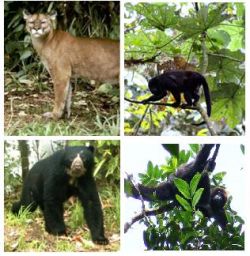
We currently work in Indonesia, Papua New Guinea and South America. In the lowlands of NW Ecuador we are focusing on the conservation of the critically endangered species such as the brown-headed spider monkey (Ateles fusciceps fusciceps).
Having identified one of the last healthy populations of the brown-headed spider monkey in the Chocoan forests of NW Ecuador we have established a protected area to conserve one of the top 25 most endangered primates globally. At this site we also work with the local community to identify sustainable livelihood alternatives and are working on a 'conservation chocolate project' with local farmers. We have established a field station at the site to generate further scientific information to underpin conservation action and investigate effectiveness of alternative conservation livelihood initiatives. For more details on how to get involved see our website www.tesororeserve.org.
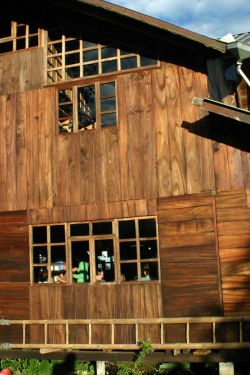
In the Andes we helped establish the Santa Lucia Cloudforest Research station in NW Ecuador where we have a field station in the reserve to study this mountain forest environment as part of a sustainable livelihoods project that aims to conserve the forest through 'scientific tourism' and research. The site hosts the Sussex University Ecuadorian Andes Fieldcourse and is set to expand as we create links with Ecuadorian and International Universities.
Our work is not restricted to NW Ecuador - we are also working to identify priority conservation sites in the Ecuadorian Amazon in the face of ongoing oil expolitation, developing sustainable livelihoods and health initiatives to support forest conservation in Papua New Guinea (Darwin Initiative Project) and investigating illegal trade in wildlife in the Amazonia triborder area (Peru/Brazil/Colombia). We are also exploring the potential of expanding the 'parabiologist training model' to the marine environment to address conflict between communities and conservation.