Laboratory of Apiculture and Social Insects (LASI)

The Laboratory of Apiculture and Social Insects (LASI) at the University of Sussex is the largest research group in the UK studying honey bees and other social insects. Social insects are the insects that live in a colony with a queen and workers like many bees, ants, wasps and termites. LASI research studies the honey bee and other social insects "in the round" addressing both applied and basic questions. The applied research is aimed at helping the honey bee and beekeepers, whilst the basic research studies how insect societies function.

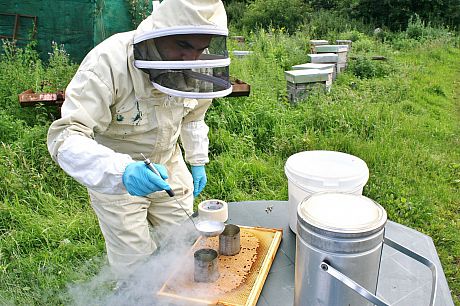
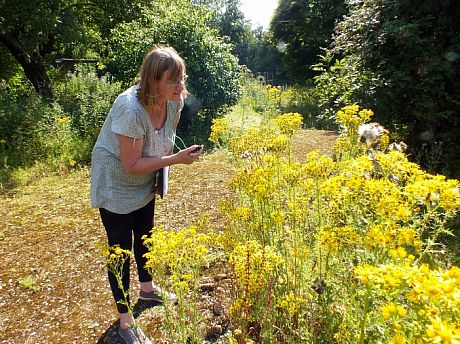
Applied research is focused on the Sussex Plan for Honey Bee Health and Well-Being, which started in October 2008. The Sussex Plan comprises four projects aimed at helping honey bees and beekeepers by breeding disease-resistant 'hygienic' honey bees, helping the honey bee and insect pollinators in urban areas, learning where honey bees gather pollen and nectar by decoding their communication dances, and helping bees and agricultural pollination in farm land.

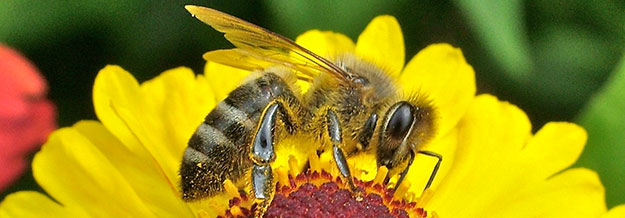
Honey bee on a crocus growing on the University campusHoney bee on a crocus growing on the University campus

There is currently a great deal of concern about honey bee health, with a large number of colonies reported dying in North America, Japan and Europe. In addition, the number of bee hives in Britain has diminished greatly in the last one hundered years. Our research by studying diseases and foraging aims to help the decline in Britain and maintain healthy bee hives. LASI basic research investigates how societies of bees, wasps and ants are organised and coordinated, how they resolve their internal conflicts over who works and who lays eggs, and how the workers that guard the nest entrance recognise nestmates from non-nestmates, and also how the workers use different sources of information in foraging. Research is carried out by undergraduate project students in their final year, graduate students, postdoctoral researchers, volunteers and visitors under the supervision of Professor Francis Ratnieks, who is the UK's only Professor of Apiculture.

Research uses a wide range of techniques ranging from studying behaviour to mathematical modelling. Most research is carried out at the main LASI facility on the University of Sussex campus on the edge of the South Downs National Park. LASI field work is also carried out in Brazil and other locations, and involves collaboration with researchers worldwide.


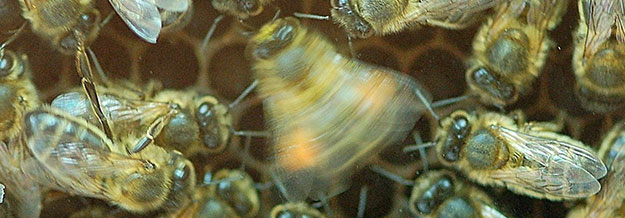
Professor Francis Ratnieks describes a research project being carried out at LASI which is decoding honey bee waggle dances to determine the movement of honey bees in apple orchards in order to understand apple pollination better. This project is part of Nick Balfour's PhD on "Helping Bees and Agricultural Pollination in Farm Land" which is part of the "Sussex Plan for Honey Bee Health & Well Being".

Contact

Professor Francis Ratnieks

E F.Ratnieks@sussex.ac.uk
T +44 1273 872954

Dr Karin Alton

E Karin.Alton@sussex.ac.uk
T +44 1273 872587

LASI on Twitter

The iconic Twitter bird

Laboratory of Apiculture and Social Insects at the University of Sussex, England

Will neonicotinoid moratorium save the bees?researchresearch.com/index.php?opti…

Poppies galore at Sussex University! sussex.ac.uk/staff/newsande…

Short-haired bumblebee introduction to Kent independent.co.uk/environment/na…

RT @Love_plants: WILDFLOWER OF THE WEEK: Red Campion. A common sight on our verges at the moment. ow.ly/lE0y7 ow.ly/i/2gs8d

Plant wildflower meadows this year shar.es/wc5ad via @ShareThis

Visit LasiBee on Twitter