Research Stories
Apes
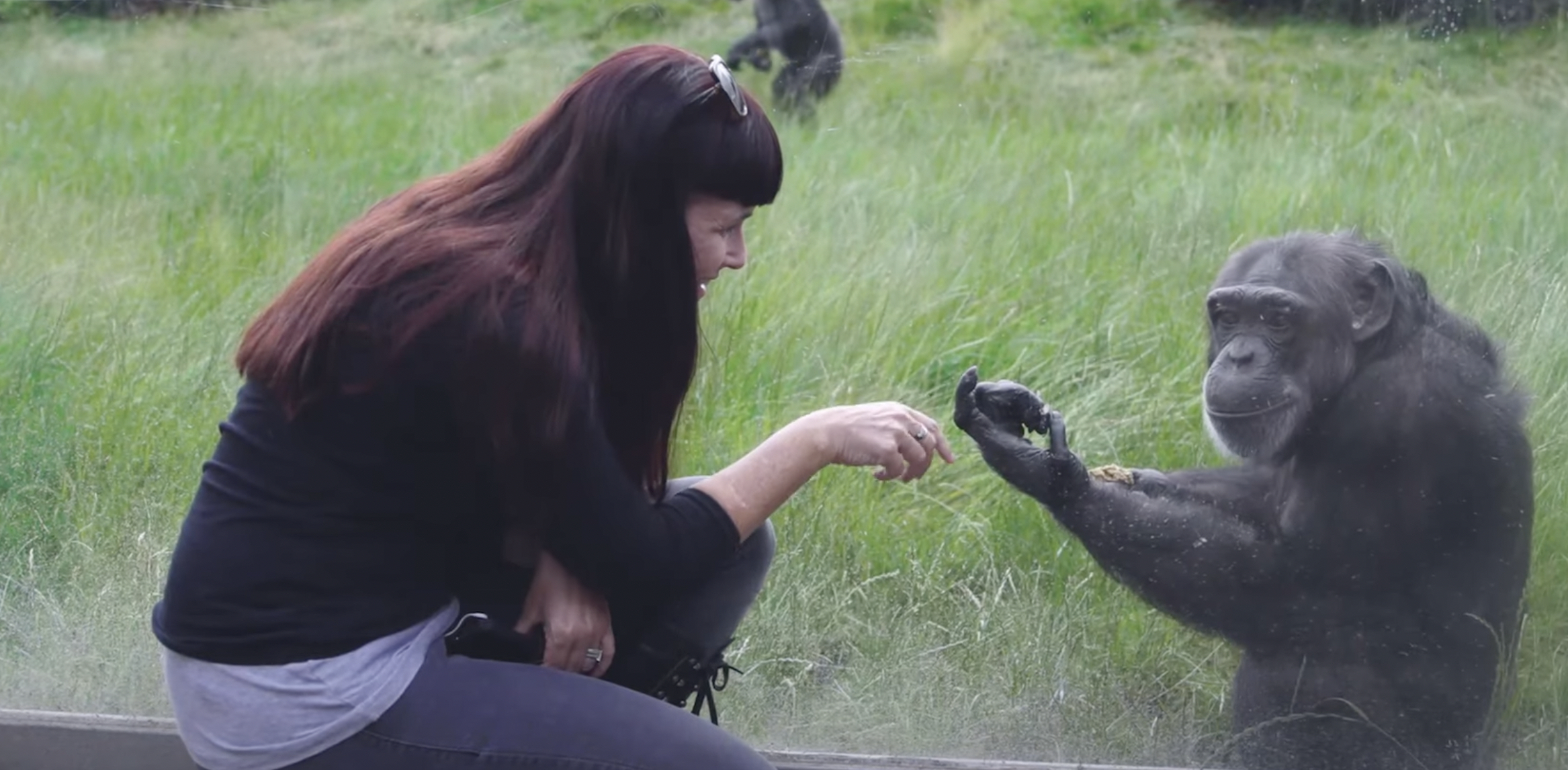

However, her research reveals that apes use their hands and bodies to communicate in ways that mirror the structural foundations of language.
“Whether you sign as a deaf speaker or speak verbally, language is a set of motor actions that must be sequenced correctly to make sense” she says. “Tool use also involves a hierarchical sequence of motor actions.”
Neural imaging supports this connection, showing that the same brain regions are activated during tool use, problem-solving, and both verbal and gestural communication.
It started with a sign
“Archaeological evidence suggests that we didn’t start out speaking,” Professor Forrester notes. “We were gesturers - using our hands, bodies, rhythm, dance, postures, and signals to convey meaning. Over time, these may have evolved into more symbolic gestures.”
She believes that all our behaviours and brain functions have evolutionary precursors, developed gradually over millions of years. Through close observation of the behaviours of our primate cousins, we can begin to understand this evolution.
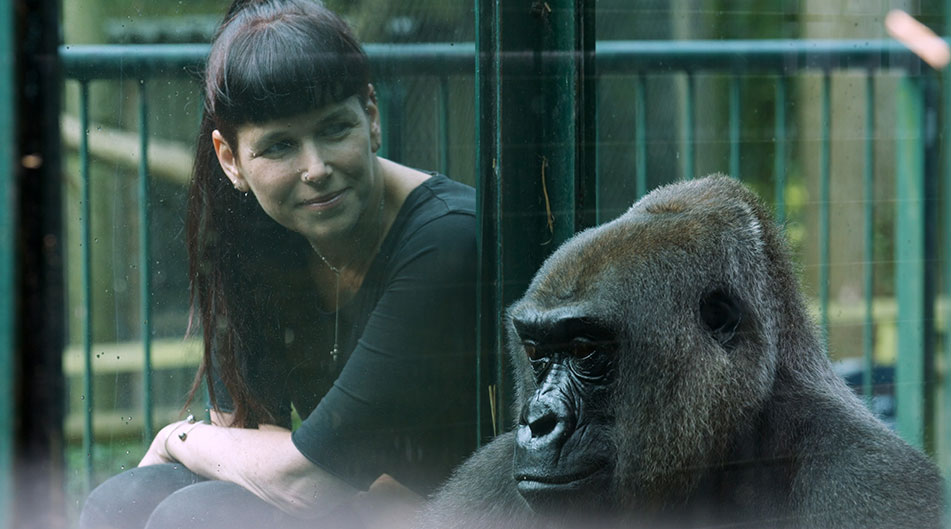
Since 2004 she has been studying families of western lowland gorillas living at Port Lympne Safari Park in Kent, which is a breeding sanctuary for endangered species. Over the years some individuals have even been successfully released into a nature reserve in Gabon in 2015.
In addition to observing their communication interactions, she has begun to develop scientifically-based measures of great ape wellbeing. Gorillas are supersensitive, which means that when they are stressed their immune systems plummet. This makes them more susceptible to respiratory disease than humans, which can be fatal for them.
Her research often begins with studying humans. She then applies the same principles and techniques to great apes.
When science and creativity merge
“We know how humans respond to stress – in particular, our heart rate and respiration increase” she says. “But we now also know that blood flow to our face changes when we are stressed.”
In an experiment involving apes and now humans, she and her team used thermal imaging equipment to show that, when under stress – such as carrying out mental arithmetic or public speaking – blood flow is increased to the eyes and decreases to the nose.
“The theory is that blood increase to the eyes is for vigilance, to keep you safe,” she says. “Vision is the primary sensory channel for primates,” she says. “Even if people say they feel calm, the blood flow changes show what they are really feeling.
“This is a window into your arousal system without you using language to complicate the matter. What’s lovely about it is that it translates between human and non-human primates.”
This technology is now being used to monitor stress in other primates, offering new ways to develop interventions based on human mental health therapies.
The Nose Knows — Visualising stress with thermal imaging
-
Video transcript
birdsong and wind rustling leaves - no dialogue
More about our research
Our research is contributing new knowledge, ideas and solutions, which is making a difference to people’s lives.
Research at Sussex newsletter
From exploring distant planets to protecting our own, Sussex researchers are pioneering breakthroughs that matter. Receive the latest news and insights straight to your inbox.
The Sussex Lectures
From law to medicine and the arts to the sciences, you'll find something to inspire you.