Sussex AI seminar: Moinul Zaber
By: Aleks Kossowska
Last updated: Wednesday, 12 November 2025
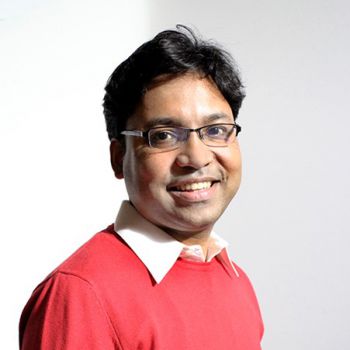
Dr Moinul Zaber
Title: 'Why AI Remains Unreliable for Development Studies — and How Epistemic Disalignment Reveals Deeper Failures of Knowledge Representation in Low-Resource Language Models'.
Abstract:
Artificial intelligence holds great promise for advancing development research, yet current systems remain unreliable when applied to low-resource contexts. This talk examines epistemic disalignment—a deeper representational failure where language models’ internal knowledge structures diverge from the socio-linguistic realities they aim to model. Using evidence from Bangla and other under-represented languages, I show how these systems exhibit semantic drift and inferential overreach, producing outputs that appear coherent yet epistemically unsound. The discussion situates this within broader questions of data inequality and knowledge representation, outlining computational and sociotechnical approaches toward building epistemically aligned AI for global development.
BIO:
Moinul Zaber is a Research Fellow in the Digital and Technology Cluster at the world-renowned Institute of Development Studies (IDS), Brighton, U.K., and a Visiting Academic Fellow at the Department of Computer Science and Technology, University of Cambridge, U.K. He is a computational social scientist with over 19 years of interdisciplinary experience in artificial intelligence, machine learning, human-centred design, and public policy. His work focuses on Human-Centred AI (HCAI)—developing inclusive, context-aware technologies and shaping governance frameworks for their responsible use in emerging economies with limited resources.
Dr. Zaber holds a Ph.D. in Engineering and Public Policy from Carnegie Mellon University and a background in computer science and engineering. His research addresses challenges in public service delivery and urban infrastructure—including telecommunications, energy, and transportation—as well as education and social protection, combining technical innovation with design thinking and public governance.
He is currently Professor (on leave) of Computer Science and Engineering at the University of Dhaka, and also holds visiting positions at Reitaku University (Japan) and INTI International University (Malaysia). He has previously served as Senior Academic Fellow at the United Nations University (UNU-EGOV), Portugal, Research Fellow at Chalmers University (Sweden) and LIRNEasia (Sri Lanka), and Visiting Associate Professor at the University of Tokyo. Dr. Zaber has worked with international organizations including the United Nations, ISSA, BRAC, and national digital authorities to co-design AI tools, shape inclusive policies, and lead digital transformation initiatives. He is the founding director of the Data and Design Lab (dndlab.org) at the University of Dhaka and serves on the editorial board of Telecommunications Policy (Elsevier).
Alongside his academic and policy work, Dr. Zaber is also an active artist and writer. His art practice explores AI, data, and identity in the new world, and his exhibitions engage critically with the intersections of technology, society, and selfhood. He regularly writes on art, artists, and design in national and international media, extending his interdisciplinary voice into cultural and creative discourse.
He has authored numerous peer-reviewed journal articles, white papers, and op-eds on AI governance, digital inclusion, and technology policy. A frequent speaker and panellist at global forums, he also leads webinars and public discussions on communications technology and its societal impact.
Talk delivered as part of Sussex AI seminar series on 22nd October 2025. You can watch the recording on our YouTube.