Md. Manirul Islam
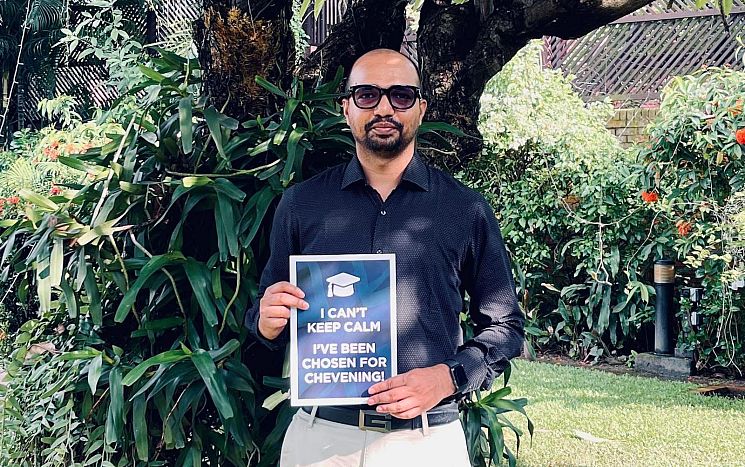
Meet Chevening Scholar Md. Manirul Islamour, Chevening Scholar and graduate of the MA in Corruption and Governance.
What made you apply to Sussex?
Before coming to Sussex, I had worked for several years at Bangladesh Bank and the Financial Intelligence Unit, where my interest in the broader institutional and governance dimensions of corruption grew. The MA in Corruption and Governance stood out for its strong connection between research and real-world policy challenges, as well as its excellent faculty. It was also an informed choice: I knew two alumni from Bangladesh who had completed the programme and had heard very positive things about their experience at Sussex.
What were your first impressions of Sussex?
My first impression was of a very international, open and intellectually stimulating environment. I particularly enjoyed being in a classroom with people from different professional and national backgrounds, as discussions about corruption and governance can look very different depending on the country or institution you come from. I also liked how approachable the faculty were and how much the course encouraged us to question assumptions, appreciate the nuances of corruption, and move beyond simple or one-size-fits-all answers.
What was a standout memory from your time on the course?
One of my standout memories was the study trip to Berlin. It was a great opportunity to step outside the classroom, engage with institutions and practitioners, and discuss corruption and governance issues in a different setting with classmates and faculty. More generally, some of my most memorable moments came from the classroom discussions where academic concepts connected directly with situations I had encountered professionally.
What are you doing now, or what are your next plans?
I have recently returned to Bangladesh after completing my year at Sussex and will be rejoining the Financial Intelligence Unit at the central bank. My work has involved anti-money laundering, financial intelligence, supervision, policy development and inter-agency cooperation. I hope to bring some of the perspectives I gained at Sussex into my professional work, particularly in understanding institutional weaknesses, illicit financial flows and the relationship between corruption, financial crime and governance. I also hope to remain involved in research and, in the longer term, explore opportunities in teaching and further academic study.
What skills did you develop at Sussex that you think will help you in your career?
One of the most important things Sussex gave me was a stronger ability to look beyond individual cases of wrongdoing and examine the institutions, incentives and power structures behind them. It also helped me think more systematically about issues such as state capture, institutional independence, illicit financial flows and anti-corruption reform. I believe these perspectives will be particularly useful in my work in financial intelligence and financial sector integrity.
Is there any advice you would give to someone considering applying for the course?
Come with curiosity and be ready to question what you think you already know. I joined Sussex after years of working on anti-money laundering and financial crime, but the course still challenged many of my assumptions. For instance, I was initially struck by the idea that laws can sometimes be bent to make corrupt practices legal, even when they clearly cause public harm. What I particularly valued was how Sussex connected these ideas to real cases and practical policy challenges. My advice is to bring your professional experience into the classroom, but stay open to rethinking it.