Mathematics with Statistics MMath

Gain statistical expertise and mathematical problem-solving skills, with an integrated masters year to prepare you for technical and research-focused careers.

Which course is right for me?

Select your start date

Key information

  • Duration

    4 years full time

  • Typical A-level offer

    AAB, including grade A in Mathematics. 

  • UCAS code

    G1GC

  • Start date

    September 2027

  • Location

    On campus - in person

Why choose this course at Sussex?

  • This accredited course aligns with industry demands and will equip you with highly sought-after skills for your career.
  • Learn to use statistical methods to draw reliable conclusions from data and make informed decisions.
  • Develop strong logical reasoning and problem-solving skills.

Develop the mathematical and statistical skills to understand our rapidly changing world.

You might explore:

  • how infectious diseases spread
  • how flood risk is predicted
  • how ideas circulate on social media
  • how data helps organisations make decisions under uncertainty.

At Sussex, you’ll join a friendly and supportive Mathematics community. Your lecturers will help you get the most from your degree.

In your first two years, you’ll build a strong foundation in mathematics and statistics. Later, you’ll tailor your studies around the topics that interest you most. You’ll also complete a Maths Matters project, using mathematics and statistics to tackle real-world challenges.

Throughout your degree, you’ll also develop valuable analytical, coding and modelling skills using industry-standard tools such as Python and R. There is also a career submodule that will help you think about your employability, develop CV writing skills and prepare for job interviews.

During your integrated Masters year, you’ll study advanced topics and complete a major research project with expert supervision. This is excellent preparation for technical and research-focused careers.

You’ll graduate with highly valued skills in:

  • data analysis
  • coding
  • logical reasoning
  • problem solving
  • teamwork and communication.

Our graduates go on to careers in areas including data science, finance, software development, statistics, research and academia.

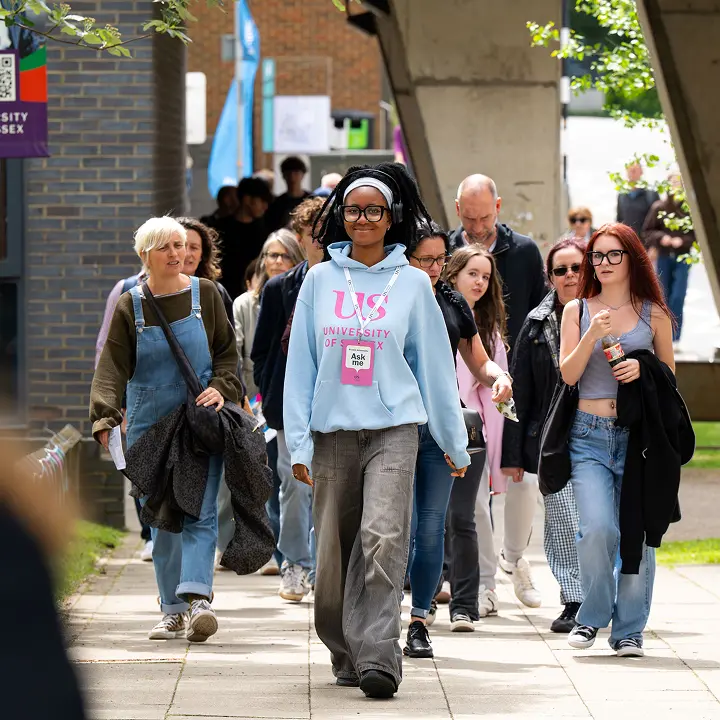
Join our Open Day on 6 June 2026

Your future career starts
Right here. Right now.

Book your place

On campus - in person

You’ll study for this degree on our campus, joining our academics and fellow students. With in-person contact time, digitally supported educational resources, library collections and independent study, this course is designed to give you an inclusive education. Your learning experience may also include work placements, field trips, studying abroad and internationalisation experiences.

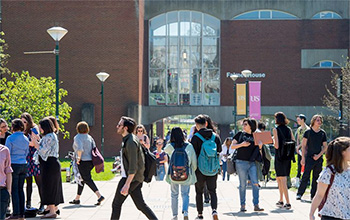
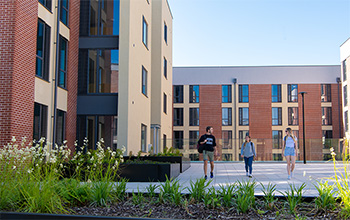
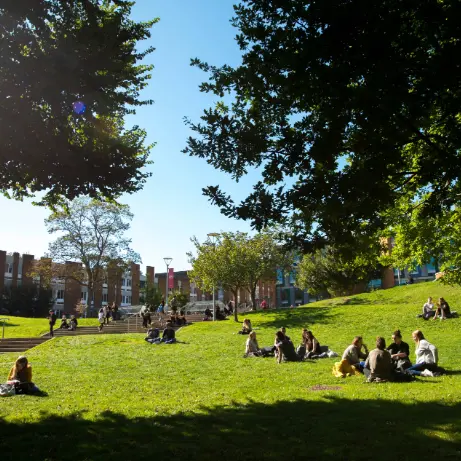
Find out about our beautiful campus

Virtual tour

Want to learn more about life at Sussex?

Our 360° virtual tour has been designed to introduce you to life in our diverse, supportive and inclusive community. Join our students for an immersive experience as they reveal why Sussex offers a space to follow your passions, find your voice, and discover people and places that will inspire you.

Begin your tour

ResearchPlus

As a founding partner of ResearchPlus, a collaboration of research-focused universities, we engage with government, industry and civil society to support economic growth, prosperity and wellbeing across the whole of the UK.

Find out more
Modules

This is a major/minor course, enabling you to study in depth in a core area (your major subject: taking up 75% of your time), while also exploring an additional area (your minor subject: taking up 25% of your time). Find out more from our guide to undergraduate study

  • Year 1 at Sussex

    Your modules

    Core modules

    Core modules are taken by all students on the course. They give you a solid grounding in your chosen subject and prepare you to explore the topics that interest you most.

    Autumn teaching
    • Analysis 1
    • Computational Mathematics
    • Fundamentals of Mathematics
    • Linear Algebra 1
    Spring teaching
    • Analysis 2
    • Discrete Mathematics
    • Introduction to Statistics and AI
    • Linear Algebra 2

    Your degree

    In your first year, you’ll explore the fundamentals of mathematics along with an introduction to statistics. You’ll study analysis and linear algebra, and you’ll get an introduction to computational mathematics, statistics and AI.

    Teaching

    Teaching methods typically include lectures, seminars and practicals.

    70%: Lecture
    10%: Seminar
    20%: Practical

    Assessment

    Assessment methods typically include unseen examinations, projects and coursework.

    Contact hours and workload

    This year of study includes approximately 1,200 hours of work. This breaks down into about 260 hours of contact time and about 940 hours of independent study.

    Engage and actively participate throughout your studies to get the most out of your course.

  • Year 2 at Sussex

    Your modules

    Core modules

    Core modules are taken by all students on the course. They give you a solid grounding in your chosen subject and prepare you to explore the topics that interest you most.

    Autumn teaching
    • Calculus of Several Variables
    • Introduction to Probability
    • Ordinary Differential Equations
    • Statistics and Introductory Econometrics
    Spring teaching
    • Numerical Analysis
    • Probability and Statistics
    • Real Analysis

    Options

    Alongside your core modules, you can choose options to broaden your horizons and tailor your course to your interests. This list gives you a flavour of our options, which are kept under review and may change, for example in response to student feedback or the latest research.

    While it’s our aim for students to take their preferred combinations of options, this can’t be guaranteed and will be subject to timetabling. Options may be grouped and if so, students will be able to choose a set number of options from the selection available in any particular group.

    Spring teaching
    • Applied Statistics for Finance and Econometrics
    • Differential Equations with Modelling

    Your degree

    In your second year, you’ll:

    • continue to develop your skills in analysis
    • be introduced to probability theory
    • build on your computational skills studying numerical analysis
    • further your knowledge in applied and theoretical statistics.

    Employability is at the heart of Year 2. You’ll strengthen your skills with dedicated sessions on careers and employability, where you’ll interact directly with business partners. The Careers and Entrepreneurship team will also help you plan your ideal professional placement, should you choose to earn valuable working experience during your studies.

    Teaching

    Teaching methods typically include lectures, seminars and practicals.

    80%: Lecture
    10%: Seminar
    10%: Practical

    Assessment

    Assessment methods typically include unseen examinations, projects and coursework.

    Contact hours and workload

    This year of study includes approximately 1,200 hours of work. This breaks down into about 260 hours of contact time and about 940 hours of independent study.

    Engage and actively participate throughout your studies to get the most out of your course.

  • Experience Year

    Study abroad (optional)

    Apply to study abroad – you’ll develop an international perspective and gain an edge when it comes to your career. Find out where your course could take you

    If your application to study abroad is successful, you’ll have to meet the academic requirements at Sussex and also at the partner university. Find out more about studying abroad as a Sussex student

    Placement (optional)

    To help you gain experience and increase your employability, you can apply for an optional placement as part of your course. You’ll be responsible for applying for and securing your placement. Our dedicated careers team can provide you with information and advice. If you’re successful in obtaining a placement, this will form part of your course.

    Find out more about placements and internships

    Please note that if you’re receiving – or applying for – USA federal Direct Loan funds, you can’t transfer to the version of your course with an optional study abroad period in any country or optional placement in the USA if the number of credits for the placement/internship exceeds 25% of the total credits for your course. Find out more about American Student Loans and Federal Student Aid

  • Year 3 at Sussex

    Your modules

    Core modules

    Core modules are taken by all students on the course. They give you a solid grounding in your chosen subject and prepare you to explore the topics that interest you most.

    Autumn teaching
    • Linear Statistical Models
    • Probability Models
    Spring teaching
    • Machine Learning and Statistics for Health
    • Maths Matters (Project)
    • Monte Carlo Simulations
    • Statistical Inference

    Options

    Alongside your core modules, you can choose options to broaden your horizons and tailor your course to your interests. This list gives you a flavour of our options, which are kept under review and may change, for example in response to student feedback or the latest research.

    While it’s our aim for students to take their preferred combinations of options, this can’t be guaranteed and will be subject to timetabling. Options may be grouped and if so, students will be able to choose a set number of options from the selection available in any particular group.

    Autumn teaching
    • Applied Numerical Analysis
    • Computing for Data Analytics and Finance
    • Data Science Research Methods
    • Financial Mathematics
    • Functional Analysis
    • Introduction to Mathematical Biology
    • Partial Differential Equations

    Your degree

    In your third year, you’ll study linear statistical models, probability models, Monte Carlo simulations and statistical inference. You will undertake a project aimed at further improving your employability skills. This year is all about flexibility – you’ll have the opportunity to discover new areas or build on existing knowledge with a variety of options.

    Teaching

    Teaching methods typically include lectures, seminars and practicals.

    75%: Lecture
    20%: Seminar
    5%: Practical

    Assessment

    Assessment methods typically include unseen examinations, projects, coursework, presentations and written assessment.

    Contact hours and workload

    This year of study includes approximately 1,200 hours of work. This breaks down into about 240 hours of contact time and about 960 hours of independent study.

    Engage and actively participate throughout your studies to get the most out of your course.

  • Year 4 at Sussex

    Your modules

    Core modules

    Core modules are taken by all students on the course. They give you a solid grounding in your chosen subject and prepare you to explore the topics that interest you most.

    Autumn and spring teaching
    • MMath Project

    Options

    Alongside your core modules, you can choose options to broaden your horizons and tailor your course to your interests. This list gives you a flavour of our options, which are kept under review and may change, for example in response to student feedback or the latest research.

    While it’s our aim for students to take their preferred combinations of options, this can’t be guaranteed and will be subject to timetabling. Options may be grouped and if so, students will be able to choose a set number of options from the selection available in any particular group.

    Autumn teaching
    • Applied Numerical Analysis
    • Data Science Research Methods Autumn
    • Financial Mathematics
    • Functional Analysis
    • Introduction to Mathematical Biology
    • Partial Differential Equations
    Spring teaching
    • Complex Analysis
    • Data Science Research Methods Spring
    • Dynamical Systems
    • Numerical Solution of Partial Differential Equations

    Your degree

    In your final year, you’ll work on a substantial year-long project, guided by experts in an area of mathematics with statistics of your choice.

    Teaching

    Teaching methods typically include lectures, seminars and practicals.

    80%: Lecture
    5%: Seminar
    15%: Practical

    Assessment

    Assessment methods typically include unseen examinations, coursework, practical, presentations and written assessment.

    Contact hours and workload

    This year of study includes approximately 1,200 hours of work. This breaks down into about 180 hours of contact time and 1,020 hours of independent study.

Spirit of Sussex Award

Feel involved in life at the University, make friends and enrich your experience with us – the Spirit of Sussex Award is our way of recognising your extracurricular and voluntary achievements.

Find out more about the Spirit of Sussex Award

  • Video transcript

    Hi everyone! As I'm sure you've all heard by now, the Spirit of Sussex Award is now live.

    Students across the Sussex community are already earning their points

    What will you do to earn yours?

    There's so many ways to get involved.

    Head over to the website to start your Spirit of Sussex journey.

    Text: The Spirit of Sussex Award is an exciting new programme designed to recognise and celebrate the things you do outside your course.

    Participating in the Award makes it easy and fun for you to get involved and make the most of university life.

This course is currently subject to validation, in line with our procedures for assuring the quality of our degrees. This means that some course detail and content may change as we develop this new course. The validation process will be finished before your course starts. Keep an eye out for exciting developments to this course.

Our experts

Careers

  • 86% of Sussex undergraduates have completed work experience by the end of their course (University of Sussex Career Readiness data at point of graduation 2023/24)

On this accredited degree, you’ll gain skills that will prepare you for a wide range of careers.

You’ll study a dedicated career-focused submodule, helping you to think about and prepare for your career after graduating. You’ll gain skills in CV writing and preparing for a job interview, keeping your career options open. It involves working as a group on an industry-led project, teaching you valuable teamwork skills.

Many students also choose to explore careers in industry or research. Our graduates have gone to work in roles such as:

  • business analyst
  • data scientist
  • software developer
  • game designer
  • statistician
  • academic.

Where do our graduates work now?

Surveyed 15 months after finishing their courses, our recent graduates from the Department of Mathematics worked for employers including: 

(Graduate Outcomes Survey 2017-2022) 

What to do with a Mathematics degree

Explore the careers you might be interested in after studying for a degree in Mathematics

Working while you study

Our Careers and Entrepreneurship team can help you find part-time work while you study. Find out more about career development and part-time work

Design your future at Sussex

Taking the next step in your career can feel daunting, but we’ll help you to explore, connect and flourish throughout your studies and beyond.

As a Sussex student, you’ll learn how to tackle real-world challenges and have access to tailored programmes of careers support:

  • our Career Lab helps you to explore your options, build key skills and connect with employers. Take part in internships, community consultancy projects and insight visits, where you can learn about life at organisations such as Brighton & Hove Albion Football Club, the Knepp Rewilding Project, and fashion brand Puig
  • one-to-one appointments with your Faculty Careers Consultant can enable you to identify your career goals, write an effective CV and prepare for future interviews
  • entrepreneurship initiatives like StartUp Sussex and Ideas Lab can empower you to turn your concepts into reality.

Explore how our Careers and Entrepreneurship team can support you

Entry requirements

A-level

Typical offer

AAB, including grade A in Mathematics. 

Contextual offerView contextual offer

Not everyone has the same support to get to higher education – we help you reach your potential. When we receive applications through UCAS, we consider all factors and will sometimes make contextual offers as part of our Access and Participation Plan

Subjects

A-levels must include Mathematics, see individual offers for grades needed.

GCSEs

You should have a broad range of GCSEs grade 9-4 (A*-C), including good grades in relevant subjects.

Extended Project Qualification

We take the EPQ into account when considering your application and it can be useful in the summer when your results are released if you have narrowly missed the conditions of your offer.  We do not routinely include the EPQ in the conditions of your offer but we sometimes offer alternative conditions that include the EPQ. If you wish to discuss this further please contact us

Additional UK qualifications

International Baccalaureate

Typical offer

34 points overall from the full IB Diploma.

Subjects

Higher Levels must include Mathematics, with a grade of 6.

For entry, either Mathematics: Analysis and Approaches or Mathematics: Applications and Interpretation at Higher Level will be accepted.

Pearson BTEC Level 3 National Extended Certificate and two A-levels

Typical offer

Grades AB in A-levels and Distinction in Pearson BTEC Level 3 National Extended Certificate.

Contextual offerView contextual offer

Not everyone has the same support to get to higher education – we help you reach your potential. When we receive applications through UCAS, we consider all factors and will sometimes make contextual offers as part of our Access and Participation Plan

Subjects

A-levels must include Mathematics at grade A.

GCSEs

You should have a broad range of GCSEs grade 9-4 (A*-C), including good grades in relevant subjects. 

Scottish Highers

Typical offer

AAABB

Subjects

Highers must include Mathematics, grade A. Ideally, you will also have an Advanced Higher in Mathematics (grade A).

Welsh Baccalaureate Advanced

Typical offer

AAB from the Advanced Welsh Baccalaureate Skills Challenge Certificate and two A-levels


Subjects

A-levels or the Advanced Welsh Baccalaureate Skills Challenge Certificate must include Mathematics grade A.

GCSEs

You should have a broad range of GCSEs grade 9-4 (A*-C), including good grades in relevant subjects.

International Baccalaureate

Typical offer

34 points overall from the full IB Diploma.

Subjects

Higher Levels must include Mathematics, with a grade of 6.

For entry, either Mathematics: Analysis and Approaches or Mathematics: Applications and Interpretation at Higher Level will be accepted.

European Baccalaureate

Typical offer

Overall result of at least 80%

Additional requirements

Evidence of existing academic ability in Mathematics to the highest level is essential (normally with a final grade of at least 8).

Additional international qualifications

Australia

Typical offer

Relevant state (Year 12) High School Certificate, and over 85% in the ATAR or UAI/TER/ENTER. Or a Queensland OP of 5 or below.

Please note

Our entry requirements are guidelines and we assess all applications on a case-by-case basis.

Austria

Typical offer

Reifeprüfung or Matura with an overall result of 2.2 or better for first-year entry. A result of 2.5 or better would be considered for Foundation Year entry.

Please note

Our entry requirements are guidelines and we assess all applications on a case-by-case basis.

Belgium

Typical offer

Certificat d'Enseignement Secondaire Supérieur (CESS) or Diploma van Hoger Secundair Onderwijs with a good overall average. 

Please note

Our entry requirements are guidelines and we assess all applications on a case-by-case basis.

Bulgaria

Typical offer

Diploma za Sredno Obrazovanie with excellent final-year scores (normally 5.5 overall with 6 in key subjects).

Please note

Our entry requirements are guidelines and we assess all applications on a case-by-case basis.

Canada

Typical offer

High School Graduation Diploma. Specific requirements vary between provinces.

Please note

Our entry requirements are guidelines and we assess all applications on a case-by-case basis.

China

Typical offer

If you have the Goakao, we will consider applications for direct entry to first year. You would normally need an overall average of 75%, including required subjects.

We are also pleased to consider applications if you are following a recognised International Foundation Year or you have one or more years of Higher Education in China at a recognised degree awarding institution.

The Senior High School Graduation alone would not be sufficient for entry to our undergraduate degrees, but you may be eligible to apply for our International Foundation Year. If you successfully complete an International Foundation Year, you can progress on to a relevant undergraduate course at Sussex.

Check which qualifications the International Study Centre accepts for the International Foundation Year.

Please note

Our entry requirements are guidelines and we assess all applications on a case-by-case basis.

Croatia

Typical offer

Maturatna Svjedodžba with an overall score of at least 4-5 depending on your degree choice.

Please note

Our entry requirements are guidelines and we assess all applications on a case-by-case basis.

Cyprus

Typical offer

Apolytirion of Lykeion with an overall average of at least 18 or 19/20 will be considered for first-year entry.

A score of 15/20 in the Apolytirion would be suitable for Foundation Year entry. Find out more about Foundation Years.

Please note

Our entry requirements are guidelines and we assess all applications on a case-by-case basis.

Czech Republic

Typical offer

Maturita with a good overall average.

Please note

Our entry requirements are guidelines and we assess all applications on a case-by-case basis.

Denmark

Typical offer

Højere Forberedelseseksamen (HF) or studentereksamen with an overall average of at least 7 on the new grading scale.

Please note

Our entry requirements are guidelines and we assess all applications on a case-by-case basis.

Greece

Typical offer

Apolytirion with an overall average of at least 18 or 19/20 will be considered for first-year entry.

A score of 15/20 in the Apolytirion would be suitable for Foundation Year entry. Find out more about Foundation Years.

Please note

Our entry requirements are guidelines and we assess all applications on a case-by-case basis.

Hong Kong

Typical offer

Hong Kong Diploma of Secondary Education (HKDSE) with grades of 5, 4, 4 from three subjects including two electives. 

Please note

Our entry requirements are guidelines and we assess all applications on a case-by-case basis.

Hungary

Typical offer

Erettsegi/Matura with a good average.

Please note

Our entry requirements are guidelines and we assess all applications on a case-by-case basis.

India

Typical offer

Standard XII results from Central and Metro Boards with an overall average of 75-80%. 

Please note

Our entry requirements are guidelines and we assess all applications on a case-by-case basis.

Iran

Typical offer

Where direct entry is unsuitable, we'll automatically consider you for one of our Foundation Years. Or you might want to apply to one of our International Foundation Years at the international Study Centre on Campus. Visit isc.sussex.ac.uk/our-courses/international-foundation-year or www.sussex.ac.uk/study/undergraduate/courses/foundation-years

Please note

Our entry requirements are guidelines and we assess all applications on a case-by-case basis.

Israel

Typical offer

Bagrut, with at least 8/10 in at least six subjects, including one five-unit subject.

Please note

Our entry requirements are guidelines and we assess all applications on a case-by-case basis.

Japan

Typical offer

Where direct entry is unsuitable, we'll automatically consider you for one of our Foundation Years. Or you might want to apply to one of our International Foundation Years at the international Study Centre on Campus. Visit isc.sussex.ac.uk/our-courses/international-foundation-year or www.sussex.ac.uk/study/undergraduate/courses/foundation-years

Please note

Our entry requirements are guidelines and we assess all applications on a case-by-case basis.

Kazakhstan

Typical offer

Applicants with Nazarbayev Intellectuals Schools (NIS) Grade 12 Certificate may be considered. The grades in the offer will match the published A level requirements for each course.

Additional requirements

Where courses have specific subject requirements, these will be expected to be studied at Advanced level.

Please note

Our entry requirements are guidelines and we assess all applications on a case-by-case basis.

Latvia

Typical offer

Atestats par Visparejo videjo Izglitibu with very good grades in state exams.

Please note

Our entry requirements are guidelines and we assess all applications on a case-by-case basis.

Lithuania

Typical offer

Brandos Atestatas including scores of 80-90% in at least three state examinations (other than English).

Please note

Our entry requirements are guidelines and we assess all applications on a case-by-case basis.

Luxembourg

Typical offer

Diplôme de Fin d'Etudes Secondaires.

Please note

Our entry requirements are guidelines and we assess all applications on a case-by-case basis.

Malaysia

Typical offer

Sijil Tinggi Persekolahan Malaysia (STPM) with grades of BBB, Matriculation with a least a grade of 3.0 or UEC with an overall average grade B4 (70%) from 6 subjects.

Please note

Our entry requirements are guidelines and we assess all applications on a case-by-case basis.

Netherlands

Typical offer

Voorereidend Wetenschappelijk Onderwijs (VWO), normally with an average of at least 7.

Please note

Our entry requirements are guidelines and we assess all applications on a case-by-case basis.

Nigeria

Typical offer

You are expected to have one of the following:

  • Higher National Diploma
  • One year at a recognised Nigerian University
  • Professional Diploma (Part IV) from the Institute of Medical Laboratory Technology of Nigeria
  • Advanced Diploma

You must also have a score of C6 or above in WAEC/SSC English.

Where direct entry is unsuitable, we'll automatically consider you for one of our Foundation Years. Or you might want to apply to one of our International Foundation Years at the international Study Centre on Campus. Visit isc.sussex.ac.uk/our-courses/international-foundation-year or www.sussex.ac.uk/study/undergraduate/courses/foundation-years

Please note

Our entry requirements are guidelines and we assess all applications on a case-by-case basis.

Pakistan

Typical offer

Bachelor (Pass) degree in arts, commerce or science.

Please note

Our entry requirements are guidelines and we assess all applications on a case-by-case basis.

Poland

Typical offer

Matura with three extended-level written examinations, normally scored within the 7th stanine.

Please note

Our entry requirements are guidelines and we assess all applications on a case-by-case basis.

Portugal

Typical offer

Diploma de Ensino Secundario normally with an overall mark of at least 16/20. 

Please note

Our entry requirements are guidelines and we assess all applications on a case-by-case basis.

Romania

Typical offer

Diploma de Bacalaureat with an overall average of 8.5-9.5 depending on your degree choice.

Please note

Our entry requirements are guidelines and we assess all applications on a case-by-case basis.

Russia

Typical offer

Applicants who have good grades in the Attestat o Srednem Obrazovami (Certificate of Secondary Education) and who have successfully completed the first year of a Russian University degree, with a minimum GPA of 4.0, will be considered for admission to the first year of our bachelor’s degree courses.

Please note

Our entry requirements are guidelines and we assess all applications on a case-by-case basis.

Singapore

Typical offer

A-levels, as well as certain certificates and diplomas.

Please note

Our entry requirements are guidelines and we assess all applications on a case-by-case basis.

Slovakia

Typical offer

Maturitna Skuska or Maturita with honours, normally including scores of 1 in at least three subjects.

Please note

Our entry requirements are guidelines and we assess all applications on a case-by-case basis.

Slovenia

Typical offer

Secondary School Leaving Diploma or Matura with at least 23 points overall.

Please note

Our entry requirements are guidelines and we assess all applications on a case-by-case basis.

South Africa

Typical offer

National Senior Certificate with very good grades. 

Please note

Our entry requirements are guidelines and we assess all applications on a case-by-case basis.

Sri Lanka

Typical offer

Sri Lankan A-levels.

Please note

Our entry requirements are guidelines and we assess all applications on a case-by-case basis.

Sweden

Typical offer

Fullstandigt Slutbetyg with good grades.

Please note

Our entry requirements are guidelines and we assess all applications on a case-by-case basis.

Switzerland

Typical offer

Federal Maturity Certificate.

Please note

Our entry requirements are guidelines and we assess all applications on a case-by-case basis.

Turkey

Typical offer

We'll consider students who have taken the Lise Diplomasi or Lise Bitirme, with a score of at least 4/5 or 80/100 in their final year, on a case by case basis for direct entry to year 1.

Where direct entry is unsuitable, we'll automatically consider you for one of our Foundation Years. Or you might want to apply to one of our International Foundation Years at the international Study Centre on Campus. Visit isc.sussex.ac.uk/our-courses/international-foundation-year or www.sussex.ac.uk/study/undergraduate/courses/foundation-years

Please note

Our entry requirements are guidelines and we assess all applications on a case-by-case basis.

USA

Typical offer

We look at your full profile taking into account everything you are studying. You must have your high school graduation diploma and we will be interested in your Grade 12 GPA. However, we will also want to see evidence of the external tests you have taken. Each application is looked at individually, but you should normally have one or two of the following:

  • APs (where we would expect at least three subject with 4/5 in each)
  • SAT Reasoning Tests (normally with a combined score of 1300) or ACT grades
  • and/or SAT Subject Tests (where generally we expect you to have scores of 600 or higher). 

We would normally require APs or SAT Subject Tests in areas relevant to your chosen degree course.

Please note

Our entry requirements are guidelines and we assess all applications on a case-by-case basis.

My country is not listed

If your qualifications aren’t listed or you have a question about entry requirements, contact us

English language requirements

IELTS (Academic)

7.0 overall, including at least 6.5 in each component

Check your IELTS qualification meets all of our language requirements

Find out more about IELTS

IELTS scores are valid for two years from the test date. You cannot combine scores from more than one sitting of the test. Your score must be valid when you begin your Sussex course.

We accept IELTS One Skills Retake.


Other English language requirements

Proficiency tests

Cambridge Advanced Certificate in English (CAE)

185 overall, including at least 176 in each skill.

 Check your Cambridge Advanced Certificate in English (CAE) qualification meets all of our language requirements

Find out more about Cambridge English: Advanced.

We would normally expect the CAE test to have been taken within two years before the start of your course.

You cannot combine scores from more than one sitting of the test.

Cambridge Certificate of Proficiency in English (CPE)

185 overall, including at least 176 in each skill

Check your Cambridge Certificate of Proficiency in English (CPE) qualification meets all of our language requirements

Find out more about Cambridge English: Proficiency.

We would normally expect the CPE test to have been taken within two years before the start of your course.

You cannot combine scores from more than one sitting of the test.

Pearson (PTE Academic)

67 overall, including at least 62 in all four skills.

Check your Pearson (PTE Academic) qualification meets all of our language requirements

Find out more about Pearson (PTE Academic).

Please refer to our English language requirements above, and as listed for each of our undergraduate courses, to find the appropriate English level for the course you are applying for.

PTE (Academic) scores are valid for two years from the test date. You cannot combine scores from more than one sitting of the test. Your score must be valid when you begin your Sussex course.

We do not accept the PTE Academic Online test.

TOEFL (iBT)

95 overall, including at least 22 in Listening, 23 in Reading, 23 in Speaking, 24 in Writing. 

Check your TOEFL qualification meets all of our language requirements

Find out more about TOEFL (iBT).

TOEFL (iBT) scores are valid for two years from the test date. You cannot combine scores from more than one sitting of the test. Your score must be valid when you begin your Sussex course.


The TOEFL Institution Code for the University of Sussex is 9166.

English language qualifications

Country exceptions

Select to see the list of exempt English-speaking countries

If you are a national of one of the countries below, or if you have recently completed a qualification equivalent to a UK Bachelors degree or higher in one of these countries, you will normally meet our English requirements. Note that qualifications obtained by distance learning or awarded by studying outside these countries cannot be accepted for English language purposes.

You will normally be expected to have completed the qualification within two years before starting your course at Sussex. If the qualification was obtained earlier than this we would expect you to be able to demonstrate that you have maintained a good level of English, for example by living in an English-speaking country or working in an occupation that required you to use English regularly and to a high level.

Please note that this list is determined by the UK’s Home Office, not by the University of Sussex.

List of exempt countries

  • Antigua and Barbuda
  • Australia
  • Bahamas
  • Barbados
  • Belize
  • Canada**
  • Dominica
  • Grenada
  • Guyana
  • Ireland
  • Jamaica
  • New Zealand
  • St Kitts and Nevis
  • St Lucia
  • St Vincent and the Grenadines
  • Trinidad and Tobago
  • United Kingdom
  • USA

** Canada: you must be a national of Canada; other nationals not on this list who have a degree from a Canadian institution will not normally be exempt from needing to provide evidence of English.

English language support

If you don’t meet the English language requirements for your degree, you may be able to take a pre-sessional course

If your qualifications aren’t listed or you have a question about entry requirements, contact us

Fees

Fees are not yet set for the academic year 2027/28 – please check back in September 2026. Note that your fees, once they’re set, may be subject to an increase on an annual basis.

Living costs

We know the rising cost of living is on everyone’s mind, and affects us all in different ways. Our guide to living costs has been designed to help you plan and budget for life as a Sussex student.

Learn more about typical living costs

Scholarships

Details of our scholarships are not yet set for entry in the academic year 2027/28.

Contact us

Ask a student

Chat to Sussex students online via the UniBuddy chat platform.

Enquiries

Contact us with any questions about your course:

+44 (0)1273 876787
Ask us a question

Find out more about the Department of Mathematics

Legal information

We understand that deciding where and what to study is a very important decision. We’ll make all reasonable efforts to provide you with the courses, services and facilities described in this prospectus. However, if we need to make material changes, for example due to government or regulatory requirements, or unanticipated staff changes, we’ll let you know as soon as possible.

Find out about our terms and conditions, including the student code of conduct and your cancellation rights

Find out about our complaints and appeals process

A-level - contextual offer

BBB, including grade B in Mathematics.

Pearson BTEC Level 3 National Extended Certificate and two A-levels - contextual offer

Grades BC in A-levels plus Distinction in BTEC Level 3 National Extended Certificate, including grade B in Mathematics. 

Return to top of page