Research news
University of Sussex researchers among team selected for landmark NASA Mission
Posted on behalf of: Lauren Ellis
Last updated: Friday, 25 September 2026
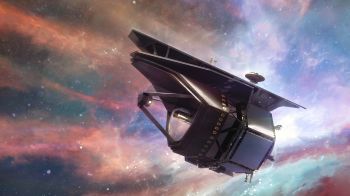
University of Sussex researchers are to play a leading role in a pioneering NASA mission to explore the history and evolution of the universe.
The mission - known as the Probe Mission for Far-Infrared Astrophysics (PRIMA) - will use a 1.8 metre telescope that sees far-infrared wavelengths to reveal parts of the universe that are impossible to observe with ordinary telescopes.
This space telescope will conduct deep, sensitive surveys of the universe in far-infrared light to help address a wide range of questions about the universe. This includes the origins of planets outside our solar system, how galaxies and their black holes have grown and evolved over cosmic history, and how dust and heavy elements have built up in the universe over time – all helping paint a better picture of why the universe looks the way it does today.
Nicky Fox, associate administrator, Science Mission Directorate, NASA Headquarters in Washington, said: “The PRIMA mission is humanity’s next window into the deep universe. It will unveil the obscure across cosmic time to better understand the formation of planets, stars, black holes, and even how water on Earth came to be.”
If confirmed, PRIMA’s project cost is capped at $1.2 billion, not including launch and other non-project costs, according to NASA. The selection of PRIMA marks a major milestone for the international collaboration and builds on more than four decades of pioneering far-infrared space astronomy at Sussex.
Seb Oliver, Professor of Astrophysics at the University of Sussex, is one of 27 international Co-Investigators on the PRIMA science team and leads the UK's contribution to the mission, said: "I am immensely proud of the team at Sussex and of the contributions they have made in helping bring PRIMA to this important milestone. The approval of the mission is the culmination of years of effort by colleagues across the UK and around the world.
"Sussex has a long history in far-infrared astronomy, and PRIMA builds on a remarkable heritage that includes IRAS, ISO, Spitzer, AKARI and Herschel. The UK's contributions in instrumentation, calibration and mission operations demonstrate the strength of our national capability, while our software developments at Sussex have helped show that PRIMA can deliver the transformational science that motivated the mission.
"It is a tremendous honour to be part of such an exceptional international team. We are delighted that Sussex and the UK will play a leading role in delivering this exciting new mission."
The University of Sussex played a particularly important role in creating the PRIMA mission concept, specifically calling for the development of software techniques that would enhance the resolution of PRIMA observations. These methods were instrumental in envisioning how PRIMA can achieve many of its headline scientific goals.
A key part of this work has been carried out by James Donnellan, a PhD researcher at Sussex, and Borja Pautasso, a former Sussex undergraduate and Master's student who is now a pre-doctoral Research Associate. Their contributions have been instrumental in developing and validating the resolution-enhancement techniques that underpin much of the mission's anticipated scientific capability.
Supported by the UK Space Agency, the UK's PRIMA team brings together expertise from the University of Sussex, Cardiff University, Imperial College London, STFC’s RAL Space and Celtic Terahertz Technologies. Collectively, these institutions will provide critical technologies and capabilities that are central to the mission's success.
Vice-Chancellor and President of the University of Sussex, Professor Sasha Roseneil said: "This is a fantastic achievement by everyone involved in PRIMA, around the world, in the UK, and at Sussex. NASA's decision to advance the mission to the next stage is a testament to the world-leading research and innovation being driven by our academics. We are hugely proud that a Sussex academic is leading the UK-contribution to this ambitious international project, and that Sussex researchers are so key to its realisation. As PRIMA moves into its next phase, we share the excitement of the team and look forward to seeing this mission bring new insights into some of the biggest questions about our universe."
Space Minister Liz Lloyd said: "NASA’s PRIMA will lift the veil on parts of the universe that are incredibly difficult to probe, even through the most powerful telescopes, allowing us to better understand how planets, stars and black holes are formed.
“It is fantastic that a consortium led by the University of Sussex is developing technology and software critical to the mission, backed by £3.3m in Government funding. It is another testament to Britain's proud record in space science, helping uncover the secrets of deep space to benefit people around the world."
This is the latest addition to a growing specialism in space science at the University of Sussex. Sussex academics are also playing pivotal roles in the James Webb Space Telescope data analysis and in many major international
collaborations, including the Dark Energy Survey, the Hubble Space Telescope, the Herschel Space Observatory.
In addition, Sussex astrophysics alumna Dr Rosemary Coogan also became the UK’s third astronaut, following her selection by the European Space Agency as an astronaut trainee in 2022.
The Astronomy Centre at the University of Sussex is a leading hub for research and postgraduate education in cosmology, astrophysics, and galaxy evolution. The University offers courses in Physics, Physics and Astronomy and Physics with Astrophysics and was recently ranked joint 1st in the world for research impact in Physics and joint 17th overall in the UK for Physics in the 2026 Shanghai Global Ranking of Academic Subjects (GRAS).