Nature Sense
A University of Sussex initiative for monitoring the state of nature and the benefits nature provides people across the South Coast counties.
- Video transcript
[Opening aerial shot of the South Downs]
[Montage of people working on monitoring stations in nature, walking around trees and in fields and using drones and computer mappings of nature sites]
Chris Sandom voiceover: We're in a world where we need multifunctional landscapes and we've got land managers trying to deliver that need.
Nature Sense is a new initiative from the University of Sussex for monitoring the state of nature and the benefits nature provides people across the South Coast counties.
Whether you're providing food production or biodiversity benefits or carbon benefits, land managers have this incredibly complex task of meeting all the needs of people and all the needs of nature and Nature Sense is helping them make the best decisions possible to meet those needs while also running a successful business themselves.
[Closes with the University of Sussex logo against a dark blue background]
About us
Nature Sense aims to apply the diverse expertise, skills, and resources within the University to provide targeted, sustained, and professional data collection, analysis, and interpretation services for the counties of the South Coast. It recognises the values of transitioning to a sustainable future, acknowledging that short-term research projects have limited effectiveness in tackling wickedly complex challenges like creating sustainable landscapes.
Our vision is to establish a South Coast regional network of long-term monitoring stations covering the major land uses, management strategies and habitat types in the region. We are funded by the Higher Education Innovation Fund and Mark Leonard Trust.
Take a look at some of the work we've shared on our Instagram and LinkedIn and reach out to us for collaboration below.
Our offer
We tackle key environmental issues in our work. We have worked on projects to:
- establish biodiversity and soil health baselines and analyse trends over time
- monitor specific species' composition, structure, and functioning of taxonomic groups
- record details about priority and iconic species, community metrics such as species richness and diversity, and will allow abundance estimates (or proxies) to provide more responsive ecosystem health trends over time
- gather land management data, in combination with ecosystem functioning data in order to explain the drivers of change over time.
Monitoring stations are crucial to our work at Nature Sense. By setting up monitoring stations across the South Coast we plan to gather data on:
- the main productive land uses (arable, pastoral, orchard, plantation forestry)
- nature recovery strategies (agroecological and regenerative agriculture, targeted habitat restoration, passive rewilding, trophic rewilding, and sustainable forestry)
- priority semi-natural habitats (Lowland Mixed Oak and Ash Wood, Lowland Dry Oak and Birch Wood, Beech Wood, Wood Pasture, Lowland Calcareous Grassland, Lowland Dry Acid Grassland, Lowland Meadow and Pasture, Mixed Scrub, Lowland Dry Heath, Lowland Wet Heath).
If you're a researcher at the University of Sussex looking to perform field work in our local region, Nature Sense may be able to help facilitate this. Get in touch and let us know what kind of system or site you are looking for.
Sign up to take part in one of our regular ecological surveying events.
Our projects
- Knepp Wildlands
The Knepp Estate is arguably the best-known rewilding project in southeast England. We have a long-running working relationship with the estate and an array of monitoring stations capturing evidence of the impacts of the varied rewilding practices happening within the northern and southern blocks on the estate. We have provided training to Knepp volunteers for butterfly and pollinator surveys and run earthworm survey days.
- William Robinson Gravetye Charity Estate
The Gravetye Estate was gifted to the nation in the will of one of the UKs first ‘modern’ gardeners, William Robinson. As requested in Robinson’s will, the estate is both a functioning timber estate, and a space for public enjoyment. The charity which administers the estate do a fantastic job at boosting biodiversity and working with local communities to foster public engagement in nature recovery. We work closely with the WRGC team and have two permanent monitoring stations on the estate, as well as a roving camera trap. Throughout the year we help to run earthworm, butterfly and pollinator surveying events, training up citizen scientists to be able to generate valuable ecological data. Our recordings of lesser spotted woodpeckers on the estate were reported on by BBC Sussex.
- University of Sussex
We have two permanent monitoring stations set up on the university campus at the Love Your Scrub area and the Forest Food Garden. At these sites we capture evidence of the healthy badger population which the campus is home to. We have also run earthworm survey days with students, which have been reported on by BBC Sussex.
- Great Dixter Estate
Great Dixter is one of the UKs leading horticultural schools. Beyond the formal gardens lies a substantial estate containing ancient pasture and historic coppices. We are providing ecological monitoring on this estate and capturing the impacts of the estate's sensitive management practices on biodiversity.
- Wiston Estate
Straddling the South Downs, the Wiston Estate is a wonderful example of a farming estate which is balancing the needs of nature and of people. With some areas of the estate managed by the Steyning Downland Scheme, and others still used for arable farming, we can record the impacts of the estate's substantial nature recovery practices biodiversity.
- Somerset Wildlands
We've presented bioacoustic and ecoacoustic assessments of four rewilding sites owned by Somerset Wildlands. Rather than actively managing nature to restore it to a target vegetation community, Somerset Wildlands is allowing nature to develop freely. It hopes these patches of nature will become important stepping-stone havens for wildlife while also helping to engage the wider community with nature.
Our experts in the field
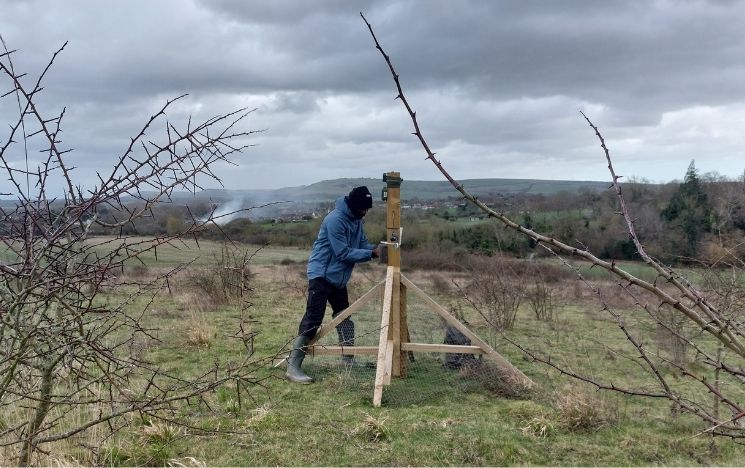
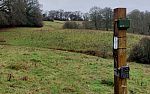
Adrian Kaluka performing maintenance on one of our ecological monitoring stations on the Wiston estate
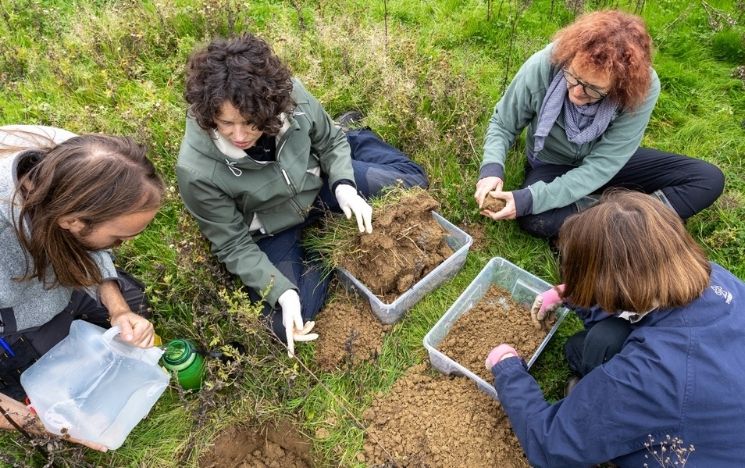
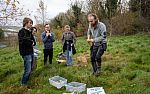
Performing an earthworm survey on the Knepp estate with Knepp volunteers
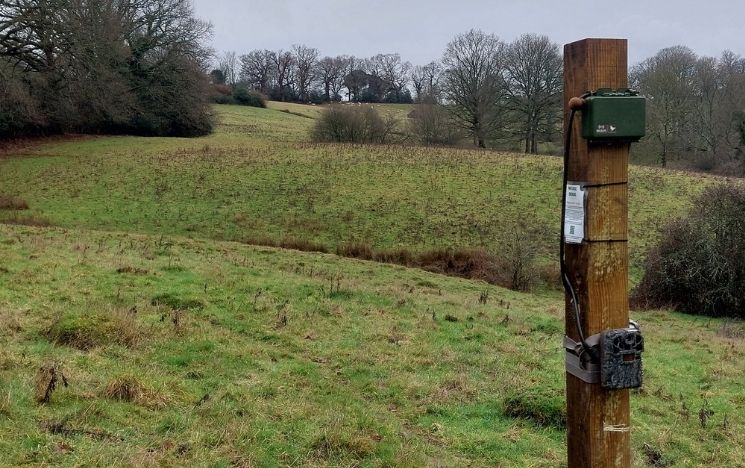
One of our ecological monitoring stations on the Great Dixter estate
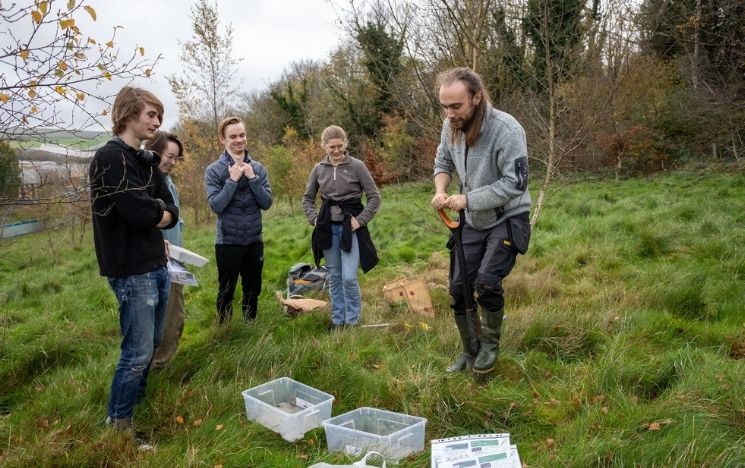
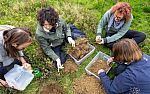
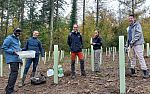
Preparing a soil pit for earthworm survey day with students on the University of Sussex campus
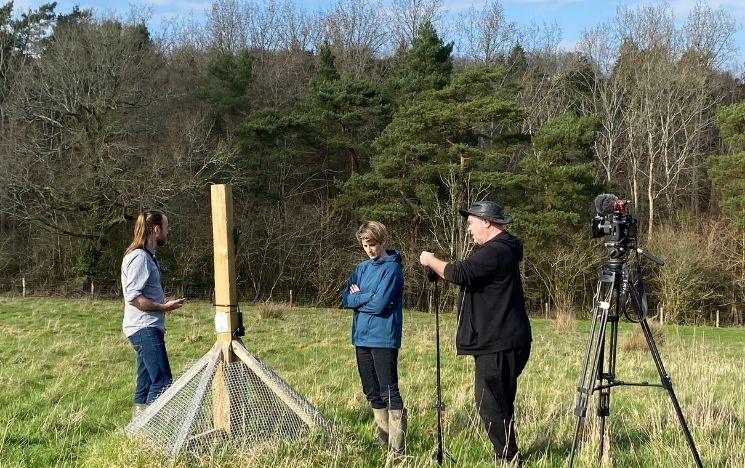
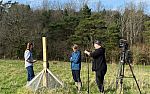
Filming with BBC South East Today following our recording of lesser spotted woodpeckers on the Gravetye Estate
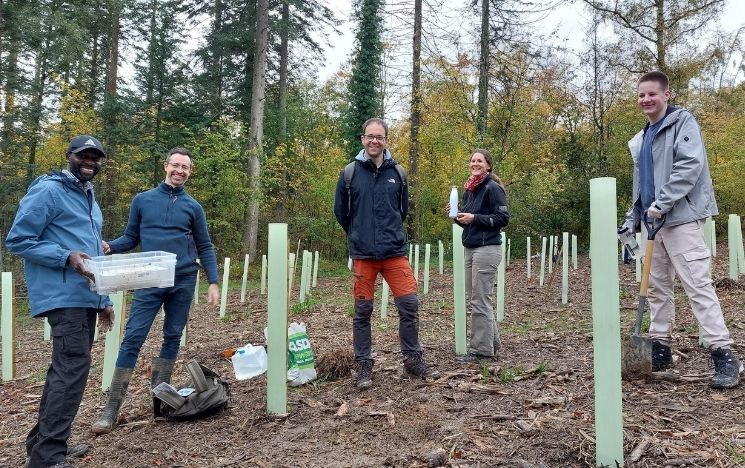
Performing earthworm surveys on the William Robinson Gravetye Estate with the House Martins volunteers
Contact
We provide nature monitoring services through state of the art sensor technology, aiming to support land managers to take an evidence-based approach to caring for the environment.
Contact us at: nature.sense@sussex.ac.uk.