Opportunities and challenges for impact evaluation and analysis of local and regional policies
By: Mariam Zubair
Last updated: Friday, 19 December 2025
Policy evaluation poses significant challenges for local government, but there are also real opportunities to improve services and drive growth and wellbeing for local communities.
Evaluating policies robustly is crucial to learn and improve, but there are numerous barriers for local government to do so, from constrained resources to a lack of skills and experience. This is a threat to realising the benefits from devolution in England. However, these challenges can be overcome through creativity and collaboration between various stakeholders and practitioners.
You may have missed it, but a quiet revolution is happening in England: unprecedented powers and responsibilities are being devolved from central to existing and newly established Mayoral Strategic Authorities, creating a new tier of government with the power to make a difference for local communities. If all goes to plan, Brighton and Sussex, together with a number of other places in England, will elect the first regional mayor next year.
Historically, England has been an unusually centralised state, with the devolution process set to redress this and bring decision power closer to communities that are being affected. The hope is that local leaders will be better able to respond to local challenges and champion local causes to redress regional inequalities. There is also an opportunity for experimentation, trying innovative solutions to knotty problems, and cities and regions learning from each other.
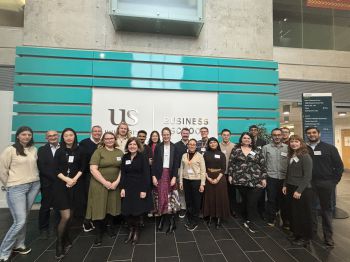
However, there is a catch: how do we know what works, which policies really make a difference, and what is the best way to implement them? To answer these questions, policies need to be robustly evaluated. The challenges and opportunities for policy evaluation in local and regional government were the topic of a recent workshop at the Science Policy Research Unit, organised by Dr Carolin Ioramashvili and funded by a grant from the British Academy.
The workshop brought together academics and practitioners from local government, consultancy and research organisations. We heard about the challenges facing practitioners implementing evaluations. Yadira Gomez-Hernandez (London School of Economics & University of Bath) discussed data challenges when evaluating programmes that have impacts at narrowly defined spatial scales, and how impact estimates can differ depending on the size of geographical units studied. Emily Rainsford (Insights North East) and Rebecca Wilson (Newcastle City Council) discussed the challenges of evaluating interventions where data collection is tricky, such as a current pilot project for food waste collection in Newcastle, facing both difficulties in recruiting participants for qualitative research as well as the need to build a data infrastructure from scratch to collect quantitative data on collection times and locations. Wenchao Jin (Greater London Authority) explained how complex programmes implemented by many providers and different pathways for individuals to access them, such as adult skills policy make it harder to clearly define an intervention and define a control group accordingly.
But we also heard of opportunities for evaluation to make a differences and creative ways to work around challenges. Shafiq Pandor (CEPA) presented work utilising previous evaluation studies and conducting analysis across them to glean further insights for policy. In a similar vein, Maria Brackin (Innovation Growth Lab) discussed analysis of legacy evaluations that combined data gathered from previous evaluation studies, combining this with newly available data. She also highlighted how different analytical methods yielded strikingly different results. Han Wang (University of Southampton) demonstrated the use of fine-grained administrative data to evaluate impacts of changes in local government processes on service speeds. Max Nathan (University College London) and Ignacio Aravena Gonzalez (London School of Economics) demonstrated opportunities for academics to engage in policy evaluation by using publicly available data, even without formal collaborations with policymakers.
A panel discussion rounded of a lively debate and opportunities, challenges, the purpose and importance of evaluation. The discussion was framed by insights from Abigail Taylor (City-REDI, University of Birmingham) on challenges faced by officials in Mayoral Combined Authorities in implementing robust evaluation. Rebecca Wilson (Newcastle City Council), Vivek Seth (Technopolis Group) and Kevin Mulligan (Queen’s University Belfast) responded with their experience from working in local government, conducting evaluations as a consultant and supporting evaluations for the devolved administration in Norther Ireland. Abigail highlighted operational, systemic and structural challenges that hinder evaluation, while Rebecca emphasised that unrealistic and unsuitable evaluation approaches lead to resentment of frontline staff and render evaluation a ‘box ticking’ exercise.
However, in discussion with the audience, the panel also identified opportunities for progress. Partnership working with external stakeholders and multilevel collaboration between local, regional and national level all help to diffuse knowledge and augment local resources. There are also opportunities to engage earlier on, engage with delivery and contribute to monitoring, which in turn improves data quality. Importantly, there was near unanimous agreement that local areas value evaluation for the evidence it creates, enabling better decision making, and can be a driver of community pride if it allows positive impacts to be showcased.
Further reading
Ioramashvili, C. (2025). Does this work here? Evaluation and evidence for local industrial strategy and policy. Contemporary Social Science, 1–17. https://doi.org/10.1080/21582041.2025.2578378
Bio
Dr Carolin Ioramashvili is Assistant Professor in Innovation Policy at the Science Policy Research Unit at the University of Sussex Business School, University of Sussex. Her research tries to uncover why some regions are more prosperous than others and how policy can foster local growth and development. This research was funded by a British Academy Innovation Fellowship.