Sussex and BSMS secure £4 Million in Mental Health and Social Care funding
Posted on behalf of: University of Sussex
Last updated: Tuesday, 2 December 2025
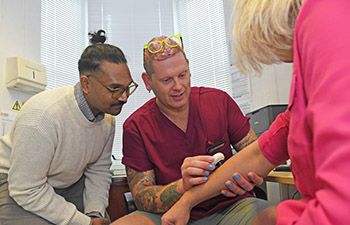
The University of Sussex has won a share of a £10.6 million funding award - as part of the National Institute for Health and Care Research's (NIHR)'s national investment - to continue to host an NIHR Applied Research Collaboration (ARC) in Kent Surrey and Sussex.
Hosted By Sussex Partnership NHS Foundation Trust (SPFT) and led by the ARC KSS Director, Professor Stephen Peckham at the University of Kent and ARC KSS Co-Director, Professor Clara Strauss from the School of Psychology and Deputy Director of Research, Sussex Partnership NHS Foundation Trust), the ARC in Kent, Surrey and Sussex is one of 10 regional ARCs across England selected to drive forward applied health and care research that responds directly to the most urgent health and care issues within our communities.
Over the next five years, the renewed funding will support the ARCs mission to continue to deliver high-impact, inclusive research that improves outcomes, reduces health inequalities and strengthens the resilience of service across the region.
Starting in April 2026, the award represents a major investment in regional health research and will support critical work across mental health, early years support, primary care, and health data analysis. In addition, it will help increase the number of applied health and social care researchers in the region, by working collaboratively with health and care providers and members of the public to ensure that research findings are effectively implemented, ultimately enhancing health and care across the entire region.
Researchers from the School of Psychology, the School of Education and Social Work, and the Brighton and Sussex Medical School have been awarded funding for four research themes. Collectively, the research that Sussex will be leading will span the three transformational themes of our new strategy - Sussex 2035: Creating Progressive Futures - flourishing, sustainability and progress for the whole world. Our transformational themes focus on human flourishing, environmental sustainability and digital and data futures.
Vice-Chancellor, Professor Sasha Roseneil, said: “I was delighted to hear the news of this major award for research on mental health and social care. These truly interdisciplinary projects exemplify the spirit and aspirations of Sussex 2035, demonstrating our strength in applied health research, and our commitment to addressing regional healthcare challenges, whilst also building research capacity for the future. Congratulations to everyone involved in the submission; I will be closely following the progress of these important projects.”
About the projects
Mental Health Innovation and Implementation
Led by Professor Kathryn Greenwood (School of Psychology) with support from Dr Claire Rosten (Health Innovation Network) and coordinated through the Sussex Mental Health Research Centre, this programme will partner with NHS and academic institutions across Kent, Surrey and Sussex to deliver impact across three key areas:
- Mental health during critical life transitions in education, occupation, parenting and health for adolescents and young adults
- Mental health comorbidities with physical conditions including asthma, diabetes and cancer
- Mental health support for underserved populations including neurodiverse individuals, LGBTQ+ communities, refugees, and Black and minority ethnic groups.
The key objectives include supporting PhD students and Early Career Researchers, building sustainable regional research capacity, and enabling national impact through new and existing partnerships.
Early years and parenting
Professor Michelle Lefevre and Dr Jeri Damman (both from the School of Education and Social Work) will lead research co-producing new knowledge to improve social care practice with vulnerable and marginalised families whose needs are currently insufficiently heard or understood. The programme will focus on three critical areas:
- Increasing accessibility of early years universal services for diverse families to strengthen family life, parenting capacity, and social inclusion
- Identifying and evaluating 'early help' interventions for families with multiple complex needs or limited contact with services
- Effective safeguarding where young children face increased risk of exposure to chronic family need and cumulative harm.
The core Sussex team includes Professor Lisa Holmes, Dr Henry Smith, Dr Jeongeun Park and Dr Ali Lacey (all from School of Education and Social Work), with additional expertise from Dr Hayley Preston-Smith (School of Education and Social Work), Professor Robin Banerjee (Pro-Vice-Chancellor, Global and Civic Engagement), Dr Abby Dunn (School of Psychology), and Dr Anna Cox (University of Surrey). The programme will partner closely with local authority children's services in East Sussex, Brighton & Hove, West Sussex and Kent.
Primary and community healthcare
Led by Professor Carrie Llewellyn and Professor Dunx Shrewsbury (both BSMS), this programme responds to complex regional needs and sustainability challenges in primary care. Working with voluntary, community and social enterprise sector organisations to engage underserved and under-researched communities, the work addresses four key challenges:
- Improving the delivery of integrated neighbourhood-first primary and community care
- Promoting sustainable and greener primary care practices
- Optimising healthy ageing, with particular focus on women and trans and non-binary adults
- Increasing research capacity within academic primary care across Kent, Surrey and Sussex.
The programme will collaborate with academic and integrated care systems partners across the region to create sustainable, accessible healthcare delivery models.
Data driven research on inequalities
Dr Liz Ford (BSMS) with Dr Mel Rees-Roberts (NIHR Research Programme Manager - Kent) will lead work using NHS and administrative routinely collected data to improve health outcomes and reduce inequalities. The programme will leverage linked data sources to investigate core drivers of health inequalities, contributing to greater inclusivity, fairness and healthier, economically resilient local communities.
Key objectives include:
- gaining comprehensive understanding of current system needs based on real-world data
- supporting prevention of ill-health in underserved or marginalised groups
- developing methods to identify conditions earlier, including prediction models
- collaborating with other ARC programmes to support implementation and evaluation of interventions
- working closely with NHS England and DHSC national data infrastructure to position the Kent/Surrey/Sussex region at the leading edge of using routinely collected data.
The programme will increase regional capacity in health data analytics through training and resource creation, and establish sustainable partnerships between patients, researchers, clinicians, industry and end-users of health data technologies.