Technology and the (Future) Human in War
Find out about the Leverhulme-funded research project Technology and the (Future) Human in War.
Project overview
War is fundamentally a human endeavour involving the killing and injuring of human bodies. Yet contemporary conflict is increasingly mediated by emerging military technologies such as artificial intelligence (AI), lethal autonomous weapons systems (LAWS), drones, cyber operations, and technologically enhanced soldiers. As these innovations reshape how wars are fought, they also raise profound questions about what they mean for soldiers, civilians, combatants, non-combatants, and society, and how they transform our understanding of “the human” in war.
Technology and the (Future) Human in War is a Leverhulme-funded research project (£923,639) based at the University of Sussex that examines how emerging military technologies are reshaping understandings of humanity, agency, responsibility, ethics, and political violence. Rather than treating technology as an external tool that simply changes warfare, the project asks how technological change transforms the relationships between humans, machines, institutions, and conflict itself.
Drawing on perspectives from International Relations, critical military studies, philosophy, Science and Technology Studies, ethics, and related disciplines, the project combines conceptual inquiry with empirical research to explore how technological innovation is experienced, contested, and governed across different contexts of armed conflict. Through interdisciplinary collaboration, international workshops, and case-study research, the project seeks to develop new ways of understanding the evolving relationship between technology and the human experience of war.
Research aims
The project investigates how technological innovation is transforming the relationship between warfare and the human. It asks how emerging technologies alter not only military practice but also the ways in which people understand agency, responsibility, vulnerability, and political violence.
The research will:
-
develop an interdisciplinary framework for understanding the human dimensions of technologically mediated warfare
-
examine how artificial intelligence, lethal autonomous weapons systems (LAWS), drones, cyber operations, and technologically enhanced soldiers are reshaping contemporary armed conflict
-
explore how soldiers, civilians, policymakers, humanitarian actors, and other stakeholders experience and respond to technological transformations in war
-
analyse how emerging technologies challenge existing understandings of ethics, accountability, responsibility, and international security
-
produce empirically grounded case studies that connect theoretical debates with contemporary conflicts and security practices
-
foster dialogue between researchers, practitioners, and policy communities through collaborative workshops and international engagement generate research that informs academic debate while contributing to wider public and policy discussions on the future of war.
Through these aims, the project seeks to move beyond viewing technology simply as a driver of military innovation. Instead, it explores how technological change reshapes the very meaning of the human in contexts of organised violence, opening new avenues for thinking about conflict, ethics, and security in the twenty-first century.
Technologies
The project looks at five areas of technological development that are changing how contemporary wars are fought: lethal autonomous weapons systems (LAWS), artificial intelligence (AI), drones, cyber operations and technologically enhanced soldiers. Looking across these technologies allows the project to explore different relationships between humans and technology in war. In some cases, technology can reduce direct human involvement in decisions and actions, while in others it becomes much more closely connected to, or even part of, the human body. The project is interested in what these different relationships mean both for those using these technologies and for those experiencing their effects.
- Lethal Autonomous Weapons Systems (LAWS)
LAWS use algorithms to operate autonomously on the battlefield without direct human input at the point of operation. This raises important questions about how much human involvement and control remains when decisions and actions are increasingly carried out by autonomous systems. It also raises wider questions about who is responsible for their actions, particularly when it comes to targeting and the use of lethal force.
- Artificial Intelligence (AI) in war
AI is already being used in different areas of warfare and can also form part of other military technologies, including autonomous weapons. One particularly important area is the use of algorithms to support the identification and selection of targets. The project looks at what this means for human judgement and decision-making, and what happens to ideas of agency and responsibility when decisions about people are increasingly mediated by AI.
- Drones
Drones are remotely piloted aerial systems that can be used for a range of purposes and can be either armed or unarmed. Although a human operator remains involved, drones create physical distance between the person operating the technology and the people and places being observed or targeted. The project is interested in what this distance means for those operating drones, but also for civilians and others who live with their presence and their effects.
- Cyber operations
Cyber operations bring another dimension to technologically mediated warfare because their effects can extend beyond the physical battlefield. The project considers both sophisticated cyber programmes that can produce war-like effects on targets and disinformation campaigns intended to shape public attitudes towards military action. This opens up questions about how people experience conflict when information, communication and digital spaces themselves become part of warfare.
- Technologically enhanced soldiers
Technologically enhanced soldiers bring the relationship between humans and technology directly to the body. This can include biological, chemical or neurological interventions intended to enhance the capacities of soldiers. Here, the distinction between the human and the technology becomes less straightforward. The project considers what these interventions might mean for the human body, the experience of soldiers, and our wider understanding of what it means to be human in war.
These five technologies are not developing separately from one another. AI can be incorporated into autonomous weapons and drones, cyber operations can interact with other forms of military activity, and technological developments can shape both how people make decisions in war and what human bodies are capable of doing. Looking at them together allows the project to explore these overlaps rather than treating each technology as an isolated development.
Across all five, the human remains central. The project considers both the people who use technologies to conduct war and the people who experience their consequences. This makes it possible to ask not only what new technologies can do, but what their growing use means for human agency, bodies, vulnerability and experiences of war.
Case studies
The project investigates three contemporary case studies—Israel, Ukraine, and Yemen, —to examine how emerging military technologies are reshaping the human conduct and experience of war. Together, these cases provide diverse geopolitical, strategic, and socio-political contexts through which the project explores the interactions between technology, conflict, and humanity, generating comparative insights into the future of technologically mediated warfare..
Meet the research team
Dr. Lindsay Clark
Dr. Lindsay Clark is the Principal Investigator and recipient of the Leverhulme Leadership Research Grant, for the project “Technology and the (Future) Human in War.” She is also a Lecturer in International Relations at the University of Sussex. Together with Research Assistant Khulood Al-Labani, Lindsay leads research on drones, lethal autonomous weapons systems (LAWS), and the use of artificial intelligence in conflict (Work Package 2), as well as the Yemen case study.
Read more
Email: lindsay.clark@sussex.ac.uk
Dr. Lena Moore
Dr. Lena Moore is a Research Fellow on Technology and the (Future) Human in War and leads research on Israel and technologically enhanced soldiers (Work Package 4). She holds a PhD from the University of Cambridge Centre for Gender Studies and an MSc in Transnational Security Studies from Royal Holloway, University of London. She was also an ESRC Postdoctoral Fellow in the Department of Sociology at the University of Cambridge.
Read more
Email: lena.moore@sussex.ac.uk
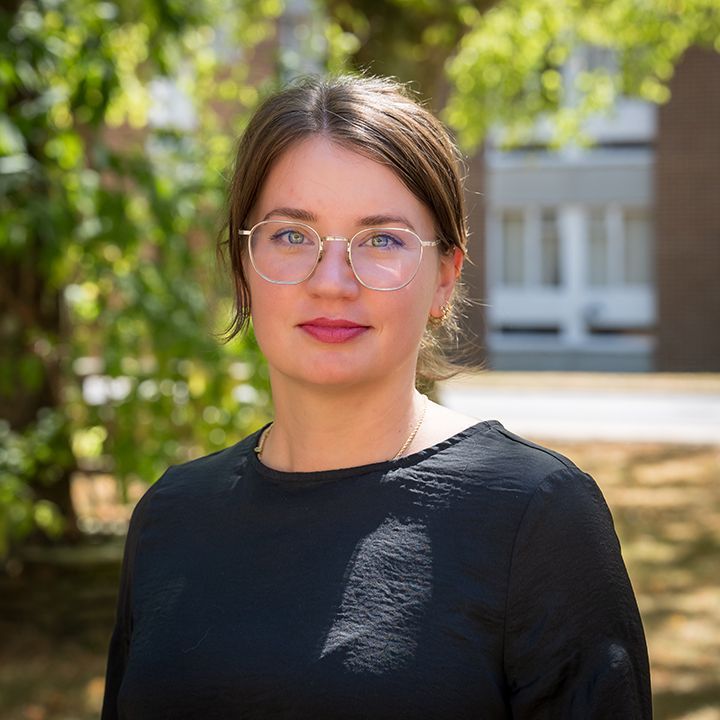
Dr. Kamila Kwapińska
Dr. Kamila Kwapińska is a Research Fellow on the Leverhulme-funded project Technology and the (Future) Human in War. Her research examines cyber warfare as an integral dimension of contemporary warfighting, including the intersections between cyber operations, kinetic military campaigns, disinformation, and civilian digital resistance in the context of Russia’s war against Ukraine and Europe.
Read more
Email: k.kwapinska@sussex.ac.uk
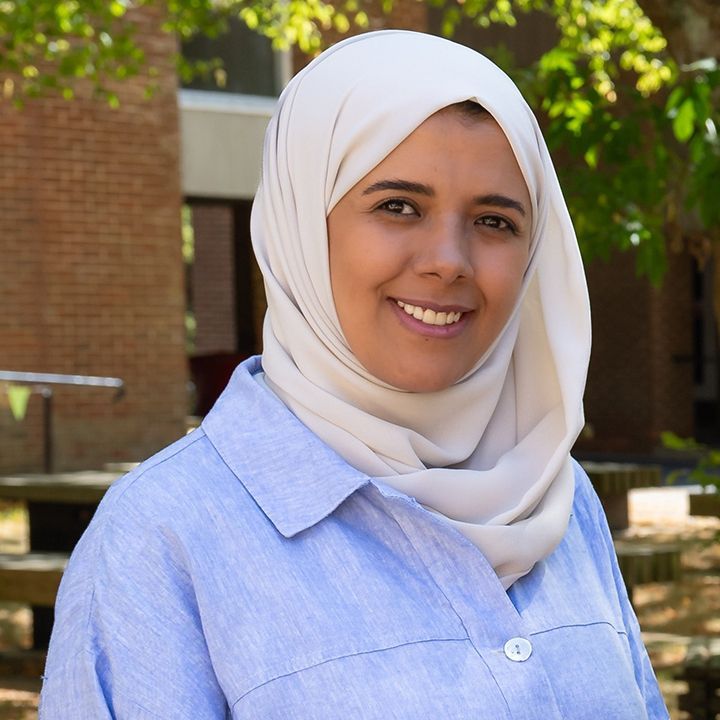
Khulood Al-Labani
Khulood Al-Labani is a Research Assistant on the Leverhulme-funded project Technology and the (Future) Human in War. She holds an MA in Conflict, Security and Development from the University of Sussex, where her dissertation, Decolonising Humanitarian Aid in Nation States, examined power, governance and ethical challenges within humanitarian systems. Within the project, Khulood works alongside Dr Lindsay Clark on research relating to drones, lethal autonomous weapons systems (LAWS), and the use of artificial intelligence in conflict (Work Package 2), as well as the Yemen case study.
Email: k.al-labani@sussex.ac.uk
You might also be interested in: