Blog articles
Korean industry leaders gain expert insights at Sussex
By: Cosmo Rana-Iozzi
Last updated: Monday, 21 September 2026
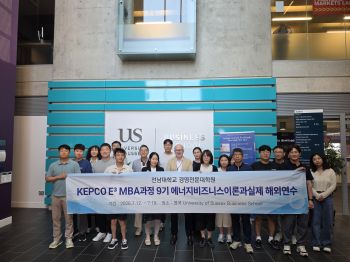
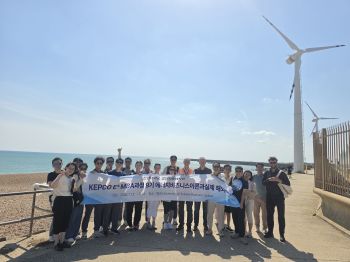
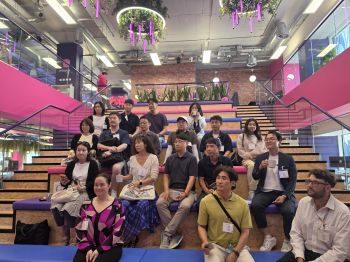
When the University of Sussex Business School's Science Policy Research Unit (SPRU) was approached to develop a bespoke executive education programme for employees of the Korea Electric Power Corporation (KEPCO), the challenge was clear: create a masterclass that would provide senior energy professionals with practical insights into the rapidly evolving UK energy sector while supporting their MBA studies with Chonnam National University (CNU).
The result was an international training programme that brought together academic expertise, industry engagement, and global knowledge exchange. Delivered in July 2026, the programme welcomed 15 KEPCO employees and 3 CNU faculty members to Sussex for a series of lectures and field visits exploring “The UK Energy Industry: Developments and Future Perspectives”.
Designing a programme for industry leaders
Unlike a conventional academic course, the programme was developed specifically for experienced practitioners working at the heart of South Korea's energy system. The objective was not simply to present research, but to connect cutting-edge thinking with the practical challenges facing energy providers and infrastructure planners today.
As Professor Ilwon Seo, Programme Director at Chonnam National University, explained, this was "our first attempt at building a programme of this kind for senior practitioners in Korea's energy sector. Working closely with Dr Youngha Chang and the SPRU team, we were able to bring together academic depth and practical, front-line relevance". The programme therefore represented a significant collaboration between Sussex, CNU and KEPCO, bringing together expertise from higher education and industry across two countries.
Participants attended SPRU-led sessions on topics including ‘The UK Energy System’, ‘Battery Energy Storage Systems’ and ‘Energy and Carbon Neutral Modelling’. These classroom discussions were complemented by visits to local strategic energy and industrial sites, including Octopus Energy Services and the Shoreham Port Industrial Cluster.
Bringing learning to life
A key aim of the programme was to ensure that academic learning was reinforced through direct exposure to real-world examples.
For many participants, the opportunity to visit Octopus Energy provided valuable insight into how digital innovation is reshaping energy retail markets. Participant Yoon reflected that Octopus's approach was "not something you can properly understand from a case study. The classroom sessions and the site visits reinforced each other throughout."
By seeing these approaches in operation, KEPCO employees were able to consider how lessons from the UK might inform future developments in South Korea.
Creating opportunities for international knowledge exchange
The programme highlighted the value of international collaboration in addressing energy-sector challenges that transcended national boundaries.
Participants discussed how UK approaches to battery energy storage deployment and offshore wind frameworks could contribute to solutions for grid stability and energy transition challenges in South Korea. Others explored how examples from Sussex and the wider UK energy ecosystem might inform future community-energy initiatives, microgrids and Virtual Power Plant developments.
For some, the strongest impression came from the depth of expertise available through SPRU. Participant Lim noted that the sessions on market regulation, offshore wind economics and decarbonisation modelling "held up under detailed questioning", adding that they “came away with a number of points that are directly relevant to our grid work.”
Building partnerships for the future
Beyond the immediate learning outcomes, the programme demonstrated SPRU and the Business School’s successful combination of research, policy and industry expertise to address complex global challenges in energy security and infrastructure.
The positive response from participants reinforced the value of Sussex's ability to tailor its expertise through programmes designed for organisations operating in highly specialised sectors. SPRU’s Dr Sarah Otner, Deputy Director of Executive Education and Policy Training at the Business School, added that the team was “delighted to receive some of our highest-ever feedback scores, as well as to enjoy each other’s company. We look forward to more opportunities for knowledge exchange as we grow our Custom Executive Education offering”.
If you would like to learn how your organisation can co-create such a programme, email S.Otner@sussex.ac.uk