Blog
Explore project findings through mixed media reflections on key themes and issues.
Caring for new entrants: what lies beneath the ‘good’ environmental story?
By: Chimezie Anajama
Last updated: Tuesday, 12 May 2026
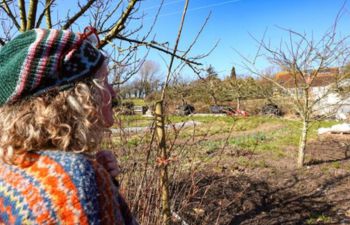
Image credit: Rachael Durrant
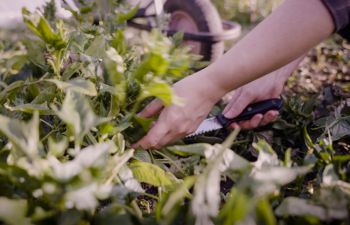
Image credit: Black Bark Films
Over the past few months, I’ve been thinking about what happens to research once it leaves the page. For instance, what might people who are reading this blog do differently as a result of learning from the research?
My recent paper, Re-enchanting the Research Encounter, reflects on how working with the Many Minds method of group analysis reshaped my relationship to the women at the heart of this project. It shows how slowing down, sharing data collectively, and attending to feeling as an entry point to analysis can open up new lines of enquiry – particularly around trauma, healing, shame, moral obligation and care. But I wonder where else might these practices make a difference…
What lies beneath the “good” environmental story?
In both food activism and agroecology training, there are powerful narratives circulating about the roles played by individuals in wider change processes. We hear stories of people leaving urban careers to enter farming, of communities mobilising to defend land and water, of feminist and ecological resistance reshaping the future. These stories can inspire action and solidarity.
And yet, in my interviews with women entering agroecological farming, I repeatedly encountered something else alongside them: exhaustion, ambivalence, precarity, grief, buried trauma, and compromises that didn’t fit the heroic narrative.
I began to sketch this as a simple frame:
- Above ground: saving the planet, restoring ecosystems, smashing the patriarchy, feeding communities.
- Below ground: pain, shame, abandonment, loss, structural barriers, and private moments of doubt.
Working with psychosocial methods – particularly group analysis, supervision, and reflective journalling – allowed me to hold these layers together without collapsing one into the other. It helped me see that feelings are not a distraction from systems thinking, but a crucial part of the system. This insight feels especially relevant (if perhaps more obvious) beyond academia.
Supporting food activism
Many activist organisations already devote significant attention to questions of care, reflection, and movement sustainability, some of which were touched on in an earlier post. Yet this work often unfolds within intense moral economies: conditions of urgency, limited funding, and constant pressure to demonstrate impact. In such contexts, it can remain difficult to acknowledge vulnerability or uncertainty. Burnout becomes normalised, and “happy stories” tend to travel further than more complex or ambivalent ones.
My research suggests that more structured forms of collective reflection – building on and complementing existing practices – could offer an additional resource. Approaches modelled loosely on the Many Minds method, for example, invite groups to gather after a demanding project not only to assess outcomes, but to reflect on how the work felt. Rather than beginning analysis with metrics alone, they make space to attend to affect and atmosphere, asking gently: what might be going on beneath the surface here?
This is not therapy. Rather, it is a way of making often‑unspoken dynamics visible: the moral pressures individuals place on themselves, the narratives of heroic environmentalism that circulate within movements, and the quiet shame that can attach to compromise or constraint. By surfacing these dynamics, organisations may be better placed to cultivate more sustainable cultures of care – ones that align commitments to justice and equity in outward‑facing work with greater attentiveness to internal conditions as well.
Deepening agroecology training
In agroecology education, there is already a strong emphasis on systems thinking, practical skills and ecological knowledge. But the emotional life of land-based transition is rarely addressed directly.
Many of the women in my study entered farming at moments of rupture – after illness, bereavement, or disillusionment with previous careers. The land became both a site of healing and a site of renewed pressure. To farm agroecologically, organically, and/or regeneratively under contemporary conditions is to navigate precarity, racialised-gendered-and-classed expectations, and deeply embedded rural imaginaries.
What would it mean to integrate this awareness into training programmes?
Creative and reflective practices could help new entrants to articulate not only their business plans and soil strategies, but their fears, motivations and inherited narratives about the “good ecological life.” Activities such as graphic journalling, zine-making, and structured group work can enhance our capacities for imaginative, multi-sensory and critical-reflexive engagement, and enable different ways of knowing and collective mean-making. This might help to reduce isolation, challenge perfectionism, and make structural constraints more visible – shifting blame away from individuals and towards the wider systems that shape access to land and livelihood.
In this sense, attending to affect is not an indulgence. It is part of building resilient movements and cultures.
Offering these conversations more widely
As this thinking has evolved, I’ve started to imagine how these practices might travel. I’m currently developing a guest seminar and workshop format that brings together ecofeminist theory, psychosocial group reflection, and creative exercises for students, activists and practitioners.
The intention would be to enable participants to explore questions such as:
- What does the “good agroecological practitioner” look like in our context?
- What expectations sit above ground and what might lie beneath?
- How do histories of capitalism, colonialism and gendered domination shape both?
The aim would not be to resolve these questions, but to hold them collectively, with tenderness and rigour.
I’m particularly interested in developing this kind of session in partnership with agroecology colleges, community training programmes and activist networks – spaces where education, justice and ecological transition are already being woven together.
If you’re part of an organisation that might benefit from this kind of reflective workshop, or if you’d like to host a seminar exploring the emotional life of agroecological practice, I’d love to hear from you.