News
Catch up on the latest news from the SUS-POL project
The Case for Banning Oil Exploration
Posted on behalf of: Renaud Coulomb, France d’Agrain, and Fanny Henriet
Last updated: Monday, 15 June 2026
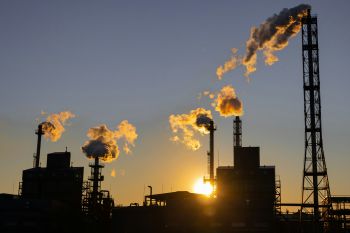
Inside Dreamatorium via Unsplash
A universal ban on oil exploration could prevent 114 GtCO₂e emissions and generate $12.5 trillion in global welfare gains. Yet such a comprehensive agreement is unlikely to be politically feasible in the short term. Our research shows that partial agreements exempting low-income countries remain highly effective, combining ambitious mitigation with economic protection for developing economies.
The transition is stalling
At Belém, in 2025, the outcome of COP30 omitted any roadmap to phase out fossil-fuel use. In April this year, 57 governments, including some major producers, gathered in Santa Marta at the first international summit dedicated to discussing the transition away from fossil fuels. But this transition has yet to materialise: globally, the industry continues to expand fossil-fuel extraction capacity.
Already, the emissions locked into proven oil reserves exceed the carbon budgets consistent with limiting warming to 1.5°C or even 2°C, yet exploration continues, with significant annual expenditures.
Continued exploration carries two major risks. First, additional discoveries could worsen oversupply, encouraging higher oil consumption and emissions and undermining global decarbonisation goals. Second, as climate policies tighten, newly developed reserves may never be exploited, leaving producers with stranded assets and investments, while many workers and regions are left behind.
Growing awareness of these risks has driven stronger policy interest in curbing exploration. France prohibited new fossil-fuel exploration in 2017; the UK pledged in 2024 to halt new oil and gas licensing for exploration. At the global level, calls for a Fossil Fuel Treaty have gained momentum, and around two dozen governments have joined the Beyond Oil and Gas Alliance.
What the industry says
Against this policy backdrop, industry actors justify ongoing exploration on two main grounds. First, production from existing fields declines over time due to well depletion and reservoir dynamics. In some future demand scenarios, natural decline could outpace short-run demand reductions, creating capacity bottlenecks, high prices, and losses in consumer surplus. Exploration and new field developments, according to the industry, are necessary to avoid harmful supply reductions driven by constraints on the rate of extraction from existing fields rather than the total volume of proven reserves.
Second, exploration could uncover lower-cost or lower-carbon resources that would displace higher-cost or higher-emission reserves. Oil fields are highly heterogeneous in both private producer costs and life-cycle emissions per barrel. Industry stakeholders argue that selective field development, reduced flaring and venting, and electrification of oilfields with renewable energy could cut emissions from new projects.
These arguments are not without merit, but they must be weighed against the much larger risks of higher emissions and stranded assets.
What our research shows
In our new preprint study, we tackle the central policy question head-on: What are the social costs and benefits of an exploration ban? We use a global field-level model of oil supply and demand, incorporating heterogeneity in private costs and carbon intensities across roughly 14,000 documented oil assets worldwide. Yet-to-find resources are characterised using observed basin-level trends in discoveries. Production, discoveries, and demand all respond to carbon pricing.
We compare two scenarios. In a climate-conscious world, emissions are fully internalised through optimal carbon pricing. In a carbon-ignorant world, exploration and extraction are guided purely by private profitability. Since actual carbon prices remain far below social cost estimates, the latter scenario is closer to current reality.
Our key finding: in a carbon-ignorant world, a global exploration ban raises future welfare by $12.5 trillion, mostly by cutting emissions by 114 GtCO₂e. Climate damages are valued at $200 per tonne of CO₂e, in line with meta-analyses of the social cost of carbon. Even assuming costless decarbonisation of oil extraction itself, the core result holds: without proper carbon pricing, exploration significantly reduces global welfare overall.
In a climate-conscious world, exploration yields small positive net benefits of about $0.3 trillion globally. New deposits help relax annual production constraints and can replace some higher-cost, higher-emission reserves. But because existing proven reserves already contain abundant low-cost oil, and demand should fall rapidly if emissions are well priced, further exploration delivers limited additional gains.
Three policy lessons
First, even in the absence of adequate carbon pricing, banning exploration is a clear welfare-improving mitigation tool. By limiting resource availability, bans constrain demand, reduce emissions, and move the world closer to its social optimum.
Second, if exploration is to continue, it must be paired with high carbon prices. Exploration only becomes socially beneficial once carbon prices reach at least $144 per tonne of CO₂, far above current levels in most jurisdictions.
Third, partial bans targeting OECD and BRICS producers can still deliver significant welfare gains. Such asymmetry may be more politically feasible and aligns with the principle of common but differentiated responsibilities and respective capabilities established in international climate agreements.
Can bans work in practice?
From a political economy perspective, exploration bans may be more feasible than global carbon taxes if oil-producing countries are the main opponents. Restricting supply tends to raise oil prices, preserving producer surplus. This feature is attractive to key stakeholders, though it conflicts with the polluter-pays principle.
Two challenges remain. First, bans must be credible: future governments may repeal them. Financing mechanisms that reward countries for keeping reserves untapped could strengthen permanence. Following Harstad and Storesletten, one option is conditional loans with infinite maturity, repayable with high interest only if exploration resumes. Second, higher prices resulting from bans weaken the incentives for other producing countries to adopt similar measures. Non-cooperative countries could be asked to contribute to a compensation fund supporting countries that choose to restrict exploration.
The policy lesson is clear: unless carbon pricing reaches close to the full social cost of emissions, new exploration reduces welfare. Exploration bans emerge as a powerful tool to curb emissions and limit stranded assets, and partial bans can go a long way.
-
Conflicts of interest
No specific conflicts of interest. The authors do not advise or hold shares of oil and gas companies. Research funding from ANR (French National Research Agency), Mines Paris – PSL University, Paris School of Economics, University of Melbourne, The Chair ENG at Fondation Mines Paris, CentraleSupélec, Dauphine University, Toulouse School of Economics is acknowledged.
Renaud Coulomb is Professor of Economics at Mines Paris – PSL University (CEDP) and Honorary Senior Fellow at the University of Melbourne. France d'Agrain is a PhD student at Mines Paris – PSL University (CEDP). Fanny Henriet is Professor of Economics at AMSE and CNRS Senior Research Fellow.
Further information: https://papers.ssrn.com/sol3/papers.cfm?abstract_id=5942094&__cf_chl_rt_tk=380jyK6Hrp_E.L2hpxVPlqiPqBXVz2wHnutF87Mf2WM-1780994779-1.0.1.1-LKSd3gOJYYEDtZe9j8yjA9847XTSzyBV7uvw8jL7gDY