Sussex researchers at the heart of landmark NASA mission
Posted on behalf of: University of Sussex
Last updated: Monday, 28 September 2026
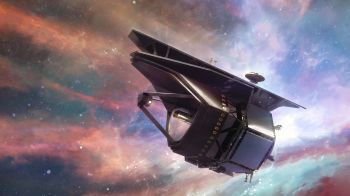
The University of Sussex has been confirmed as a leading contributor to a major NASA mission that will reshape our understanding of the universe.
The mission - the Probe Mission for Far-Infrared Astrophysics (PRIMA) – involves a 1.8-metre telescope tuned to far-infrared wavelengths, allowing scientists to see parts of the universe that ordinary telescopes simply can't reach.
PRIMA will run deep, sensitive surveys of the universe in far-infrared light, tackling some of astronomy's biggest open questions: how planets form outside our solar system, how galaxies and their black holes have grown and changed across cosmic history, and how dust and heavy elements have built up over time - all adding to the bigger picture of why our universe looks the way it does.
Seb Oliver, Professor of Astrophysics at Sussex, is one of 27 international Co-Investigators on the PRIMA science team and leads the UK's contribution to the mission. Reflecting on what this means for the University, he said:
"This is a genuinely significant moment for Sussex. Being selected as part of the team trusted to deliver a prestigious NASA mission of this scale places us firmly among a small group of world-leading institutions addressing the biggest questions in astrophysics - and it's a direct return on three decades of investment this University has made in far-infrared astronomy.
"It's the sort of achievement that gets Sussex noticed by the researchers, funders and international partners we want to work with, and it strengthens our position as a comprehensive, research-intensive university with real global reach - an ambition at the heart of our Sussex 2035 strategy.
"It matters just as much for recruitment. Prospective students choosing where to study physics and astronomy want to know their department is doing work that counts on the world stage, and prospective staff and researchers want to join departments with these opportunities. PRIMA gives us a compelling, tangible story for both audiences.
"I'm especially proud that so much of this has been shaped by people at earlier stages of their careers - James Donnellan, one of our PhD researchers, and Borja Pautasso, who started here as a Sussex undergraduate. This is a credit to everyone at Sussex who has supported this work over the years. It's a proud moment, and a real vote of confidence in where this university is heading."
Supported by the UK Space Agency, the UK's PRIMA team brings together expertise from Sussex, Cardiff University, Imperial College London, STFC's RAL Space and Celtic Terahertz Technologies, with each institution providing technologies and capabilities central to the mission's success. If confirmed, PRIMA’s project cost is capped at $1.2 billion, not including launch and other non-project costs, according to NASA.
Vice-Chancellor and President of the University of Sussex, Professor Sasha Roseneil said: "This is a fantastic achievement by everyone involved in PRIMA, around the world, in the UK, and at Sussex. NASA's decision to advance the mission to the next stage is a testament to the world-leading research and innovation being driven by our academics. We are hugely proud that a Sussex academic is leading the UK contribution to this ambitious international project, and that Sussex researchers are so key to its realisation. As PRIMA moves into its next phase, we share the excitement of the team and look forward to seeing this mission bring new insights into some of the biggest questions about our universe."
PRIMA adds to a growing list of space science achievements across Sussex. Our academics are also playing pivotal roles in James Webb Space Telescope data analysis and in major international collaborations including the Dark Energy Survey, the Hubble Space Telescope and the Herschel Space Observatory. Sussex astrophysics alumna Dr Rosemary Coogan also became the UK's third astronaut following her selection as a European Space Agency astronaut trainee in 2022.
The Astronomy Centre at Sussex remains a leading hub for research and postgraduate education in cosmology, astrophysics and galaxy evolution - recently ranked joint 1st in the world for research impact in Physics, and joint 17th overall in the UK for Physics, in the 2026 Shanghai Global Ranking of Academic Subjects (GRAS).