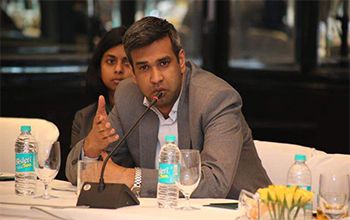
Meet our alumni
As a Public Policy specialist, Prashant Kumar builds strategic relationships in an industry of continuous innovation.
Explore how power interacts globally and how to use new ideas to address pressing challenges. Uncover International Relations to gain insight into our world.
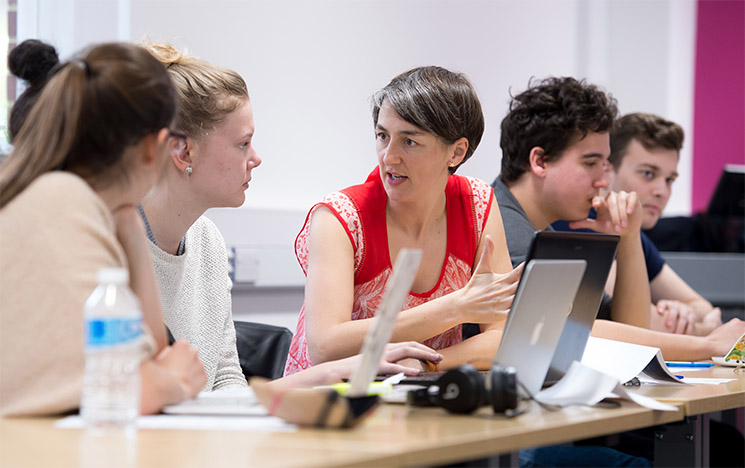
How is humanity organised at the world level, and where does power lie? What are the key ideas people use to try and understand issues such as war and peace, and wealth and poverty? And how can we use these ideas to address the urgent challenges facing the world today? At Sussex, we pioneer new critical approaches to these questions.
We are one of the largest dedicated International Relations departments in the world with a wide range of expertise. And you have plenty of choice in how you shape your degree.
Marina Mahathir’s Sussex experience ignited her passion for advocacy and independent thought.
Read Marina’s story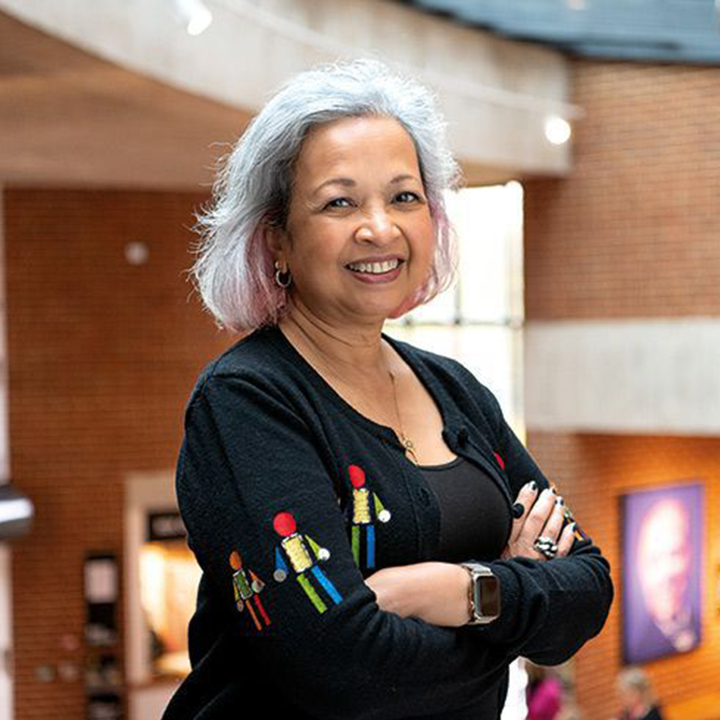
Explore all Sussex has to offer with our range of on-campus and online Open Days, events and campus tours.
Book an Open Day place
Hi, my name is Claire, and I studied International Relations with Arabic at Sussex.
So why I chose Sussex.
Well, International Relations, as well as International Development, are ranked number one in the world as a subject.
So that made it quite easy.
So how it was for me to start university, well, I came from abroad, so I'm originally from Luxembourg, where English is our fourth language, so I wasn't quite comfortable speaking English, so that was a major part coming to the UK and settling in at university.
But through societies and sports clubs, I made a lot of friends and I broadened my network and it made it quite easy for me to settle in straight away.
So my favourite thing at university, which probably goes into my growth as well from where I started university to where I am now, is my placement year.
I was lucky enough to secure a ten month placement in the field, which I split up in two parts.
So I started off with an internship at the U.N. for three months where I was based in Vienna, Austria.
And then I moved on for seven months to Lima, Peru, where I volunteered did an internship, with a women's rights group in the field.
So that's an option you have with your course, is to either do a placement year or a study abroad year, where between your second and third year, you go out there into another country in the field and gain that experience.
Be it in terms of culture, language or professional skills that you develop.
So that's a great opportunity, and I think that's what has definitely enhanced my experience at university.
I finished my degree of International Relations with Arabic at Sussex, and I have now moved on to do a Masters in International Human Rights Law.
So an LLM, which is a Law Masters and I stayed at Sussex as well.
And the way I did that decision was based on my placement year.
So the experience I gained in the field working with women on women's rights made me want to go and do the Masters in Human Rights Law.
So, yeah, now I'm now doing a Masters and I'm still at Sussex.
And then lastly, my word of advice, so I think just be open to meet new people, try new things, especially coming to Sussex, there's so many opportunities on campus through societies, sports clubs, but also off campus in Brighton that you can get involved in in terms of volunteering or just doing part time jobs.
So there's lots and lots of opportunities and then just generally an advice if you consider going to university.
I would say the uni is there support you in every single way.
So if you are not sure about what to study or you think you made the wrong choice the uni is there to support you whatever path you choose, if you want to change your subject.
Generally, if you want to meet people, there's lots of events organised by the University.
So I just say, just do it.
As a Public Policy specialist, Prashant Kumar builds strategic relationships in an industry of continuous innovation.
Our research seeks to achieve global goals for humanity and the environment.
Want to learn more about life at Sussex?
Our 360° virtual tour has been designed to introduce you to life in our diverse, supportive and inclusive community. Join our students for an immersive experience as they reveal why Sussex offers a space to follow your passions, find your voice, and discover people and places that will inspire you.
Begin your tour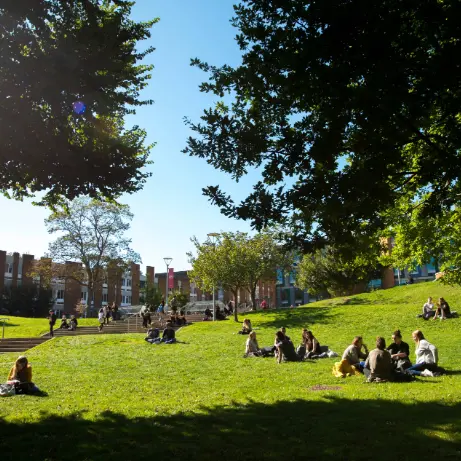
Find out more about fees, funding and student budgeting.
Uncover everything that Brighton has to offer – our city by the sea.
Take a look at our accommodation options, both on and off campus.