On De-extinction Remembering the Thylacine
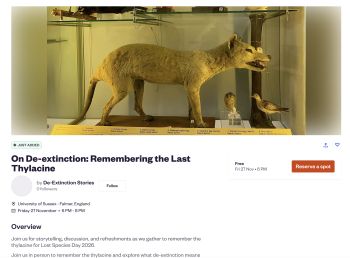
Join us for storytelling, discussion, and refreshments as we gather to remember the thylacine for Lost Species Day 2026.
Join us in person to remember the thylacine and explore what de-extinction means for the future.
90 years ago, on 7 September 1936, the last known thylacine (Tasmanian tiger), Benjamin, died in Hobart Zoo, Tasmania. Today, de-extinction scientists and conservationists are exploring ways to resurrect the thylacine.Lost Species Day 2026 andDe-extinction Stories invite attendees to critically and creatively engage with the topic of de-extinction.
While contemporary de-extinction projects - such as thylacine, passenger pigeon and woolly mammoth - focus on biotechnology and genetic engineering, we are interested in more expansive understandings of what it might mean to 'bring back' lost species.
- What does de-extinction mean to you?
- How might storytelling, ritual, or collective action and care serve as forms of resurrection?
- What might be gained or lost through the biological or speculative return of extinct animals?
This event will involve a curated storytelling programme, with the opportunity for attendees to respond to pieces, discuss the topic, and share their own creative work. Light refreshments will be served.
A full programme will be posted in November.