REAL_NbS 2026: Amplifying Community Voices Through Participatory Video in Monduli
Posted on behalf of: Dr Daniel Salau Rogei, REAL NbS Work Package 2 Consultant, Stellenbosch University
Last updated: Thursday, 20 August 2026
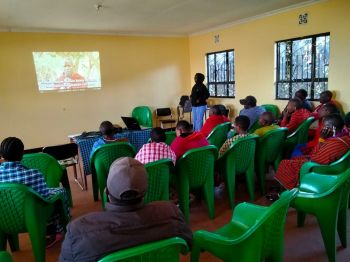
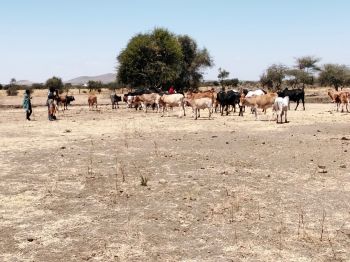
This week (6th – 17th August 2026) has been profoundly rewarding as we reached a milestone in the REAL Nature‑Based Solutions (NbS) project: reporting back to the very communities whose voices have shaped our journey.
Using participatory video as both a data collection and engagement tool, our editing team pieced together stories told not by villains or victims, but by actors and knowledge holders who continue—often in small but significant ways—to shape local action.
We presented the two‑year output of community‑led video production and dialogue to mixed groups of women, men, and youth in Meserani and Monduli Juu, inviting their feedback and validation. Emerging themes ranged from deforestation and ukulima holela (unsustainable livestock and farming practices) as drivers of land degradation, to contour farming and natural regeneration techniques as pathways for restoration. To ensure differentiated and gender‑sensitive perspectives, women were accorded exclusive sessions where they could freely share their views.
Perhaps the most insightful screening took place at Monduli municipality, where officers from more than ten departments converged to listen to community voices. The discussions highlighted the urgent need to dismantle the “siloed approach” to land restoration and embrace integrated, collaborative strategies; “…Especially in Monduli, with differentiated geographies and multiple, often competing land uses, cooperation across all actors is essential,” as one official observed.
This consensus underscored that land restoration is a cross‑cutting issue requiring coordination and cooperation between communities, government, and development agencies.
While these screenings and dialogues were rich, CSOs and community‑based organizations were notably absent. Their absence, however, was for good reason: many pastoralist‑led organizations are currently engaged in the International Year of Rangelands and Pastoralists (IYRP 2026) in Mongolia. Their global advocacy against rangeland degradation complements local interventions from below. Our next round of screenings will bring CSOs into the conversation, creating common ground to navigate multi‑scalar approaches to pastoralism and land restoration through NbS.
Meanwhile, the participatory video screenings reaffirmed that community voices are central to shaping sustainable solutions. By validating local knowledge and fostering dialogue across diverse groups, we are building momentum toward inclusive planning, programming, and policy.
In wrapping up, final screening was held at Nelson Mandela University of Agriculture, Science and Technology (NM-AIST). The dialogue thereof among the project team members confirmed that Nature‑based solutions thrive when communities, governments, and CSOs act together—bridging scales from local to global, and weaving stories into strategies for resilient landscapes. It also underscores the importance of research and research institutions in illuminating restoration pathways.