Sussex Digital Humanities Lab draws strong interest at Cambridge’s Synthesized event
By: Elena Dennison
Last updated: Tuesday, 21 July 2026
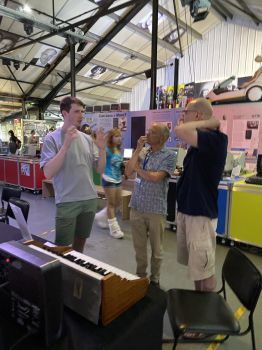
Adam Staff
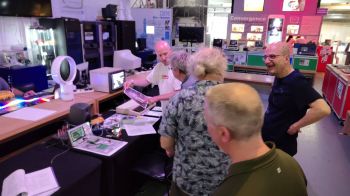
Alex Peverett
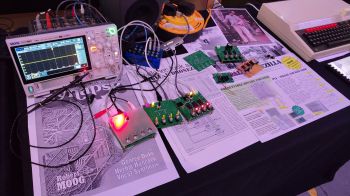
Dronezilla project
Specialist technicians Adam Staff and Alex Peverett from the Sussex Digital Humanities Lab enjoyed a successful appearance at Synthesized, at the Centre for Computing History in Cambridge on 27–28 June, where their exhibits attracted significant public interest and sparked conversations about the preservation and reinvention of historic computing and music technologies.
Across the two-day event, visitors engaged enthusiastically with demonstrations of the BBC Master/Music 500 system and the AMPLE programming language, both of which showcased important developments in creative computing and electronic music history. However, it was the Digital Dronezilla project that emerged as a standout attraction, drawing large crowds and generating lively discussions throughout the event.
Media Archaeology
Attendees were particularly interested in the project's historical significance, its reconstruction process, and the wider field of media archaeology research that underpins the work. The exhibit provided visitors with a unique opportunity to explore how historic music technologies can be studied, preserved, and brought back to life through contemporary research methods.
The Sussex team engaged with a diverse audience that included museum visitors, academic researchers, musicians, electronic music enthusiasts, and industry professionals. Many visitors were keen to learn more about the Digital Dronezilla project, as well as the broader range of media archaeology and creative computing initiatives being undertaken at the Sussex Digital Humanities Lab.
dead tech lib_
Another area of strong interest was the Lab’s dead tech lib_ (dead tech library) which prompted discussions about the collection’s scope, significance, and growing value as a research resource. Visitors expressed enthusiasm for the project’s role in preserving technological heritage and supporting future scholarship.
In a technoculture characterised by Facebook/Meta’s ‘move fast, break things' motto, the speed of innovation relies on obsolescence, waste, loss of heritage, and cultural hyperamnesia. What has been broken in the race for new, more powerful devices?
dead tech lib_ upturns this question through the practice of collection, repair, and the repurposing of forgotten technology as a mean of maintaining and building future cultural heritage. It holds technology accountable to its early promises of democratisation, challenging 'the always already new', and re-animating lost utopias and modes of expression.
Preservation, conservation, and reactivation
The event also enabled productive exchanges with museum staff and conservators. Discussions focused on the preservation, conservation, and reactivation of historic music technologies, revealing several areas of shared interest and potential collaboration between institutions working in this field.
Reflecting on the event, Adam and Alex described it as an excellent opportunity to share their research with a broad and engaged public audience while establishing new connections with communities interested in experimental music technology, hardware history, and creative computing.
What is next?
Following the success of this year’s event, the Synthesized organiser has expressed a strong interest in welcoming the Lab back for next year’s gathering.
The Sussex Digital Humanities Lab will continue to showcase its work later this year, with the next presentation of the Digital Dronezilla research project scheduled for September, when the team will deliver a paper at the Synthposium conference at the University of West London.
The successful appearance at Synthesized highlights the growing public appetite for projects that bridge technology, history, and creativity, while reinforcing the Sussex Digital Humanities Lab’s role in advancing research into historic computing and electronic music culture.