News
Remembering Professor Jason Arday: Dignity, Humanity and the Black Academic Experience
By: Bud Johnston
Last updated: Saturday, 15 August 2026
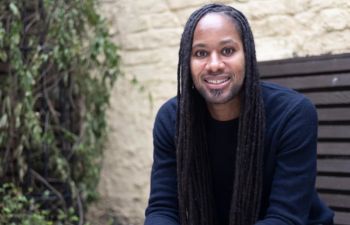
Professor Jason Arday
We extend our deepest condolences to Professor Arday’s family, friends, colleagues, students and all those who knew, loved and were inspired by him.
The final weeks of his life were played out under an extraordinary degree of public scrutiny.
Allegations concerning aspects of his academic work and professional biography did not deserve this extraordinary degree of public scrutiny. Yes, accountability matters in universities. Academic integrity matters. No individual should be exempt from appropriate scrutiny because of their position, profile or identity.
But accountability and public humiliation are not the same thing.
There must also be space to ask what happens when scrutiny ceases to be proportionate; when investigation becomes spectacle; when an individual becomes the subject not simply of legitimate questions about professional conduct, but of sustained public commentary about their character, credibility, personal history and very right to occupy the position they have attained.
And in Professor Arday’s case, it is impossible to separate that question entirely from race.
He became widely known as the youngest Black professor in the history of the University of Cambridge. For many Black people within higher education, that achievement carried significance precisely because Black professors remain so conspicuously underrepresented within British universities.
Representation at that level is never simply about one person. It exists against a history in which Black academics have had to negotiate institutions that were not built with us in mind, and in which our competence, authority, scholarship and belonging have too often been treated as things requiring additional proof.
That history should make us attentive to the difference between scrutiny and racialised scrutiny.
It should make us ask whether a Black academic who becomes highly visible is afforded the same room for complexity, error, due process and dignity that others receive. It should make us conscious of the particular ferocity with which questions about one Black person's conduct can become questions about diversity, equality initiatives, representation and whether Black people have been advanced beyond what they supposedly deserve.
Some of the commentary surrounding Professor Arday did exactly this: his individual circumstances became intertwined with arguments about diversity and the legitimacy of efforts to address racial inequality in universities.
That should trouble us.
A Black professor should not have to represent every Black academic. Nor should allegations against one individual become an opportunity to undermine the principle that universities need to confront structural racial inequality.
Black academics are entitled to accountability.
They are also entitled to fairness. They are entitled to due process. And they are entitled to humanity.
Professor Arday's family have spoken publicly of what they describe as a campaign of misinformation and harassment directed towards him and those close to him. Whatever conclusions may ultimately have been reached through proper academic processes, that statement should force all of us to reflect seriously on the culture that surrounds public accusation, particularly in an age in which traditional and social media can transform scrutiny into something relentless, permanent and deeply personal.
There is a responsibility here that extends beyond any one newspaper, university or commentator.
Words have consequences. Headlines have consequences. The repeated dehumanisation of an individual has consequences. And institutions have a responsibility not only to uphold standards but also to consider the wellbeing of the people caught within their processes.
For Black at Sussex, these questions speak directly to why our work exists.
Black at Sussex now approaching into is 5th year of the five-year programme established to improve the experiences of Black students and staff and to increase the recruitment and retention of Black people at the University of Sussex. Its work is rooted in the recognition that institutional environments are not experienced equally, and that improving representation without attending to belonging, wellbeing, progression and institutional culture is not enough.
The experiences of Black academics across higher education remind us why this work cannot be regarded as optional or symbolic.
It is not enough for universities to recruit Black staff into spaces where they remain highly visible because there are so few of them.
It is not enough to celebrate Black excellence when somebody is appointed, promoted or becomes a "first", while failing to interrogate what happens to Black people once they are inside those institutions.
We must also create cultures in which Black staff and students can belong without carrying an extraordinary burden of representation; where mistakes do not become racial morality tales; where success does not provoke suspicion simply because it disrupts established expectations of who normally occupies positions of authority; and where institutional processes are rigorous without ceasing to be humane.
This tragedy should not be used to close down legitimate discussion about academic standards. Neither should academic standards be invoked to close down legitimate discussion about race. We must be capable of holding both.
We can believe strongly in integrity and due process while questioning disproportionate and dehumanising treatment. We can acknowledge unresolved allegations while refusing to participate in the destruction of a person's humanity. And we can ask uncomfortable questions about whether race shapes whose mistakes become scandals, whose shortcomings are individualised and whose are used as evidence against an entire community or against the very principle of racial equality.
Professor Jason Arday's death is first and foremost a devastating loss for the people who loved him. At this moment, their grief should matter more than the public's appetite for further judgment.
We hope there will also be serious reflection across higher education and the media about what has unfolded: about proportionality, about care, about race, about institutional responsibility and about the human consequences of the ways in which we choose to speak about one another.
For Black at Sussex, our commitment remains what it has always been: to work towards a university in which Black staff and students are able not merely to enter and succeed, but to belong, to be supported, to be treated fairly and to flourish.
That work matters.
Moments such as this remind us just how much.
With our deepest condolences, rest well Professor Jason Arday
Black at Sussex, Project Lead Bud Johnston
In supporting wholeheartedly everything written above, I would like to add a personal note on the remarkable life of Jason Arday as someone who is also neurodiverse, Black and works in academia. Jason’s life came to an end at 41, that is just one year older than my life as a teacher began. Having found both successes and devastating setbacks in the years since my secondary school, I never settled well into the world of work. Not until I became a teacher - and I didn’t know why until I received my own neurodiverse diagnosis a few years ago. Now 14 years on, I lead academic teams at university, conduct scholarship on students of colour with neurodiversity, and advocate for my colleagues who are neurodiverse from whatever background.
And I marvel that he was able to achieve so much before I even got started. Jason should have been offered support, he should have been held warmly by his institution - he shouldn’t have been hunted by the media, and by those with a loudspeakers who discredit the need for race equity interventions with spurious evidence, and no real life experience of what it takes to persevere and achieve when there are so many barriers to that success.
Psychologist Guilaine Kinouani in her book Living While Black: The essential guide to overcoming racial trauma (2021: 75) reminds us:
Most of the past 500 years have been spent convinced of the intellectual inferiority of Black people, policing the Black body, ascribing it to designated territories and subservient roles and ensuring it did not move beyond its station. Where did all this stuff go?
Where indeed?
Professor Jason Arday, rest in power and peace
Gavin Mensah-Coker, Chair, Black At Sussex.