Department of Media and Film

Teaching and learning: how will I learn?

'Stork' 'Dir Agnes Strikiate, MA 2010There are usually 12-16 students in each class. Depending on your choice of options you will be in workshops or seminars two to two-and-a-half days per week plus lectures or masterclasses. The remaining time you work independently or in a small team and with technical support to research and complete your set exercises, projects, reading and other assignments using our excellent facilities and libraries.

Seminars

These are primarily thought of as an interactive space in which you can discuss with your tutor and fellow students the ideas and problems that you have encountered in your independent practice, reading and research during the week. With guidance from your tutor, you explore key aspects of the development and production process – research, proposal and script writing, constructing a story – through focussing on the development of your own projects. You debate set reading and viewing and gain critical feedback on your work in progress.

Practical workshops

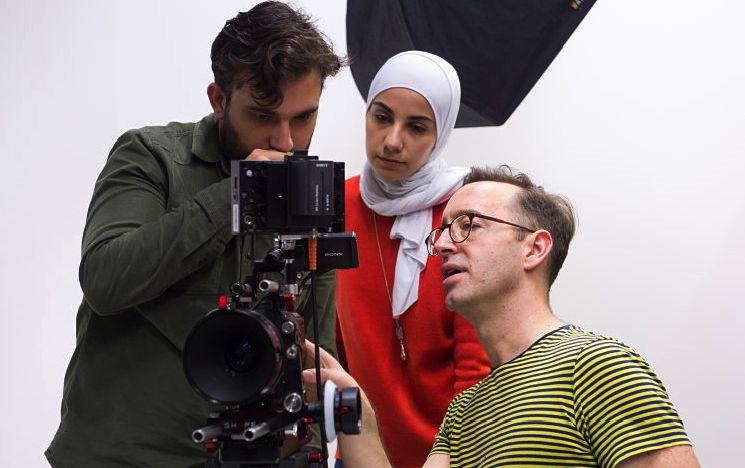
In these sessions you are introduced to key production and post-production techniques in camera, lighting, interviewing, editing and sound design and are supported in the technical realisation of your projects by highly experienced tutors with wide know-how in current media technologies.

Screenings

Your core modules and options include regular screenings of set films on the big screen for your seminar group. The School media library also has an extensive DVD collection for student use.

Degree show

Each year students on the course present their work to the public via a degree show which they organise and promote.This is a great way to learn about presenting your films to an audience.

Master classes

These are led either by visiting film-makers or media professionals who specialise in certain aspects of film or media production: eg editors, sound designers, producers or camera operators or in distribution/broadcasting or in practice-based research in academic contexts. The master classes are intended to complement your studies on the core courses and give you more insight and understanding of specific ways of working and of professional practice.

Production facilities

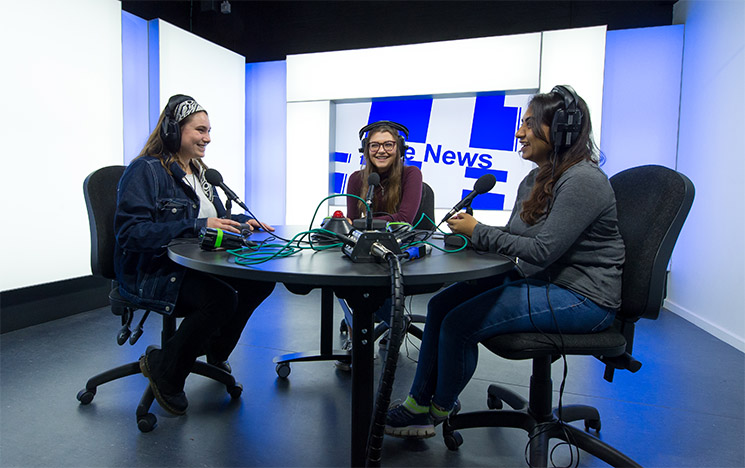
We have a range of cameras from High Definition Sony Z7s to Digital SLRs which shoot video. In our newly refurbished Media Practice facility, we have Final Cut and Avid editing facilities, a sound edit suite and studio with ProTools, sound booths, a dedicated postgraduate Mac lab and TV/photographic studios to which you have 24 hour access. The School's mini 'theatre' includes High Definition projection and cinema seating.

What do I need to purchase for the course?

The School is fully equipped with high-spec cameras, macs, PCs and edit suites but you may find it useful to have your own laptop. You will largely be taught using Final Cut Pro software to edit. You will also need funds to cover expenses such as travel to make your projects and should allow £250-£500 for this depending on your location needs if you are shooting your major project in the UK – more if you wish to shoot overseas. (You can take our equipment to film overseas subject to booking ahead). You will also need to purchase readers for some of your modules and should allow £10-£15 for these for each of the four modules you will take.

Other resources

The University enjoys extremely well-resourced teaching and research facilities, with a recently modernised central Library, a dedicated School media library and resources centre, lecture and seminar rooms equipped with WiFi and computer and video projection. The University is host to the Mass Observation Archive, which contains unique records of British everyday life since the 1930s – a fascinating archive for documentarists. You also have access to a wealth of lectures and research seminars across the School and the University.

Placements

The School currently offers an internship in association with Brighton-based TV company back2back.tv that UK/EU candidates can apply for on acceptance to the course. The successful applicant for the internship will also receive a £5,000 bursary towards their tuition fees. (This internship scheme is in addition to the general School scholarships for which all applicants are eligible). Staff may also advise you on obtaining optional placements in local production companies and students regularly assist at See, the annual Brighton Documentary Festival. The University's Careers and Employability Centre also has extensive contacts with media companies and helps students both with placements and longer-term career plans.

The University enjoys extremely well-resourced teaching and research facilities, with a recently modernised central Library, a dedicated School media library, lecture and seminar rooms equipped with computer and video projection. We also have state-of-the-art media facilities in Silverstone. There is a dedicated digital media lab for postgraduate students as well as access to the general practice areas including studios, labs, post-production facilities, viewing theatres, professional camera and sound equipment.

Seminars

Seminars at Sussex are a space in which you can discuss with tutors and fellow students the ideas and problems that you have encountered in your independent research. They are a forum for testing ideas and situating yourself in relation to the relevant debates.

Presentations

Students take turns leading seminar discussion by exploring topics in a presentation. This will dig deeper into the topic, set up a debate and ask key questions that can be discussed by the group as a whole.

Practice workshops and demonstrations

Practice is taught through dedicated MA seminars, workshops and demonstrations. Experienced production tutors will facilitate these sessions and offer teaching, advice and guidance through a variety of techniques and software packages. Drop-in sessions are also time-tabled for general practice experience. MA students have 24-hour access to the production facilities.

The University enjoys extremely well-resourced teaching and research facilities, with a recently modernised central Library, a dedicated School media library, lecture and seminar rooms equipped with computer and video projection. We also have state-of-the-art media facilities in Silverstone. There is a dedicated digital media lab for postgraduate students as well as access to the general practice areas including studios, labs, post-production facilities, viewing theatres, professional camera and sound equipment.

Seminars

Seminars at Sussex are a space in which you can discuss with tutors and fellow students the ideas and problems that you have encountered in your independent research. They are a forum for testing ideas and situating yourself in relation to the relevant debates.

Presentations

Students take turns leading seminar discussion by exploring topics in a presentation. This will dig deeper into the topic, set up a debate and ask key questions that can be discussed by the group as a whole.

Screenings

Some modules have time-tabled screenings. Of course, watching films in a classroom context is no adequate substitute for the cinematic experience in which they were initially encountered but we want you to respond to films via large-scale projected images and without the normal distractions that may interrupt viewing in a domestic context. Many screenings will also be prefaced with introductory comments by the module tutor.

Sussex enjoys well-resourced teaching and research facilities, with a recently modernised central Library, a dedicated School media library (which contains relevant film and media texts for all the courses), lecture and seminar rooms equipped with computer and dvd projection, and state-of-the-art media facilities (including studios, labs, post-production facilities, viewing theatres, professional camera and sound equipment).

Seminars

Seminars at Sussex are primarily a space in which you can discuss with tutors and fellow students the ideas and problems that you have encountered in your independent research during the week.  They are not ‘lessons’ but a forum for testing ideas and situating yourself in relation to the relevant debates. 

Presentations

Students may be asked (depending upon the module) to take turns leading seminar discussions by exploring topics in a presentation.  This gives you the opportunity to investigate the topic in considerable detail, set up a debate and ask key questions that can then be discussed by the whole group. 

Screenings

Some modules (certainly all of the film modules) have time-tabled screenings. These are a required element of the module and will usually be prefaced by some introductory comments from the module tutor.

In Memory of the Dead Media Handbook" (Garnet Hertz) - Studio D'Ars, Milan, Italy

The MA in Media and Cultural Studies is taught by a mix of seminars, lectures and tutorials, alongside which you will be expected to engage actively in independent study which includes reading, research, discussion and writing. Alongside a Course handbook, you will be given a module handbook for each course you take that will explain what is required week by week, including preparation for seminars and assessments. Each module also has a dedicated online learning environment where you can find resources and a forum for discussion.

Lectures

The core module Media Theory and Research includes a lecture series given by different members of faculty week by week. The lectures provide a rounded curriculum and an overview of key debates and methods in the field. Ideas and questions from the lectures can be taken up in the accompanying seminars.

Seminars

Most module are seminar based, and all are led by research-active members of faculty. For students arriving from different educational systems and different institutional practices, it is worth pointing out that seminars at Sussex are primarily thought of as an interactive space in which you can discuss with your tutor and fellow students the ideas and problems that you have encountered in your independent reading and research during the week. They are not ‘lessons’ or ‘classes’ in which you will be introduced to new material necessarily, but a forum for testing ideas and situating yourself in relation to the relevant debates.

Seminars will usually involve 10-15 students, providing quite an intimate but intensive learning environment. Many of our options are cross-listed with other courses in the School and beyond, which encourages productive discussions among students coming from different intellectual perspectives. Moreover, this MA attracts students from all over the world, and this too adds to the richness and variety of our discussions.

Presentations

In most seminar modules, with guidance from their tutor, students take turns either independently or in pairs in initiating a seminar discussion by exploring topics in an informal presentation that might, for example, connect the theoretical or conceptual topic of the week to a particular case study.

Tutorials and supervision

Every tutor has weekly office hours for individual consultation, and each module tutor will also organise tutorials to discuss the planning and development of your term paper. In the summer term, you will have a series of tutorials with the supervisor of your dissertation. The MA convenor will help you find a supervisor from within the faculty whose area of expertise is best suited to your particular research agenda.

Tutorial support

We recognise the challenges that our international students face when English is not their first language and when they are used to different styles of teaching and learning. We offer dedicated subject-specific tutorial support alongside the formal MA seminars to ease the transition for such students. This is in addition to the University’s provision of academic and English language support for international students.

Resources

The University enjoys extremely well-resourced teaching and research facilities, with a recently modernised central Library, a dedicated School media library and resources centre, lecture and seminar rooms equipped with WiFi and computer and video projection. The School also enjoys state-of-the-art media facilities (including studios, labs, post-production facilities, viewing theatres, professional camera and sound equipment).

Each term will consist of a combination of core modules and options.

This MA is taught by a mix of seminars, lectures, workshops, tutorials and master classes, alongside which you will be expected to engage actively in independent study including reading, research, discussion, writing and practical work. Alongside a course handbook for the MA, you will be given a module handbook for each module you take that will explain what is required week by week, including preparation for workshops, seminars and assessments. Each module also has a dedicated online learning environment where you can find resources and a forum for discussion.

Lectures

Lectures provide a rounded curriculum and an overview of key debates and methods in the field. Ideas and questions from the lectures can be taken up in the accompanying seminars and workshops.

Seminars

Most module are seminar based, and all are led by research-active members of faculty. For students arriving from different educational systems and different institutional practices, it is worth pointing out that seminars at Sussex are primarily thought of as an interactive space in which you can discuss with your tutor and fellow students the ideas and problems that you have encountered in your independent reading and research during the week. They are not ‘lessons’ or ‘classes’ in which you will be introduced to new material necessarily, but a forum for testing ideas and situating yourself in relation to the relevant debates.

Seminars will usually involve 10-15 students, providing quite an intimate but intensive learning environment. Many of our options are cross-listed with other MAs in the School and beyond, which encourages productive discussions among students coming from different intellectual perspectives. This MA attracts students from all over the world, and this too adds to the richness and variety of our discussions.

Practice workshops and demonstrations

Practice is taught through dedicated MA seminars, workshops and demonstrations. Experienced production tutors will facilitate these sessions and offer teaching, advice and guidance through a variety of techniques and software packages. Drop in sessions are also timetabled for general practice experience. MA students have 24-hour access to the production facilities.

Presentations

In most seminar modules, with guidance from their tutor, students take turns either independently or in pairs in initiating a seminar discussion by exploring topics in an informal presentation that might, for example, connect the theoretical or conceptual topic of the week to a particular case study, or present practical work in progress for a ‘crit’.

Tutorials and supervision

Every tutor has weekly office hours for individual consultation, and each module tutor will also organise tutorials to discuss the planning and development of your term paper. In the summer term, you will have a series of tutorials with the supervisor of your dissertation. The MA convenor will help you find a supervisor from within the faculty whose area of expertise is best suited to your particular research agenda.

Master classes

These are led either by visiting film-makers or media professionals who specialise in certain aspects of film or media production: eg editors, sound designers, producers or camera operators or in distribution/broadcasting or in practice-based research in academic contexts. The master classes are intended to complement your studies on the core courses and give you more insight and understanding of specific ways of working and of professional practice. We will also have visiting sessions from various NGOs and other professionals working in development issues.

English language support

We recognise the challenges that our international students face when English is not their first language and when they are used to different styles of teaching and learning. The University offers academic and English language support for international students.

Placements

Students will benefit from our extensive connections with civil society organisations, local media producers, official aid institutions, foundations government agencies and NGOs in Africa, Latin America, South and East Asia, North America, Australasia and Europe, in terms of placement opportunties, visiting speakers, workshops and masterclasses (Countries include Brazil, Bangladesh, India, Kenya, Uganda, Ghana, Nigeria, Palestine, Pakistan,Tanzania, Sierra Leone, South Africa, the US and the UK).

Although students are able to execute their final media project abroad, those who prefer to work in the UK are encouraged to see ‘development’ as being as much about the issues of inequality and injustice in this country as in other parts of the world. Indeed, we will positively encourage students from the global south to work on the development challenges facing those who live in the global North, as there is a huge amount of media potential in reversing the gaze.

The placement option normally takes the form of a eight- to 12-week work placement with an organisation working in a field relevant to the degree, normally undertaken from May-July after assessments on other modules are completed. Where appropriate, permission may be granted for the placement to take place during eight to 10 hours per week across the year, if the organisation is locally-based and working hours can be agreed that do not clash with scheduled classes.

Students can either identify their own placement, or apply for one held on a database of placement opportunities at School level, where over 40 potential placement opportunities have already been identified. We will work with alumni, research networks and external research users to provide as wide a choice as possible.

Types of placement might include:

  • local organisations in the Brighton area: these might include the International HIV/AIDS Alliance and an independent film companies based in Brighton (Media for Development, Animal Monday, etc)
  • organisations in London: these might range from London-based VCOs to international NGOs, to media and development organisations
  • organisations internationally: to include research-policy centres in Brazil, Bangladesh, Ghana, Nigeria; international NGOs; national and local NGOs and civil society organizations and social movements.

The University's career development service also has extensive contacts with media companies and helps students both with placements and longer-term career plans.