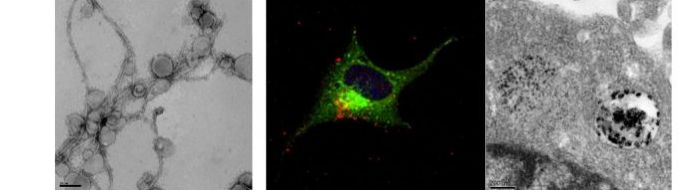
The network of AD researchers based at the University of Sussex and Brighton and Sussex Medical School aims to focus on greater understanding of the underlying mechanisms of disease in AD.
- Professor Jennifer Rusted
-
Jennifer Rusted is a psychologist interested in human memory, normal and abnormal cognitive ageing. Her work explores the impact of the APOE4 polymorphism (an established risk factor for late-life dementia) across the lifespan. She is also interested in how lifestyle factors (such as exercise and diet), pharmacological and behavioural interventions may enhance cognitive function in older people and may interact with genetic risk factors to influence the onset and the trajectory of late-life dementia.
Jenny Rusted is part of a 5M GBP ESRC-NIHR multicenter collaborative grant led by Professor Linda Clare at the Research in Ageing and Cognitive Health (REACH) group, Bangor University. Entitled “Improving the experience of Dementia and Enhancing Active life: Living well with dementia (IDEAL)” it is a five-year longitudinal cohort study monitoring the experiences of 1500 people with dementia and their family carers throughout the UK.
Project partners: Alzheimer’s Society, Brunel University, Cardiff University, Innovations in Dementia CIC, Kings College London, London School of Economics, NWORTH, Sussex University, RICE, and the UK research networks – NIHR Clinical Research Network: Dementia and Neurodegenerative Diseases, NICRN, NISCHR CRC, and SDCRN.Find out more about the APOE work and APOE, Nicotine and Alzheimer's Disease.
Learn more about the Living Well with Dementia work.
Visit the Rusted Lab website.
- Dr Sarah King
-
Sarah King is a molecular and behavioural neuroscientist who uses genetic approaches to investigate the underlying neurobiological processes that control behaviour. She has particular interest in using genetically manipulated mice carrying the human ApoE genes to investigate their role in cognition across the lifespan. In so doing she aims to investigate the neurobiological mechanisms underlying the transition to cognitive decline in ApoE4 carriers to find new targets for preventative treatments for Alzheimer’s.
Find out more about the collaborative work between Rusted and King.
- Professor Louise Serpell
-
Louise Serpell is a biochemist interested in the molecular mechanisms that underlie Alzheimer’s disease, from the protein changes to the toxic effect on neurons. She is particularly interested in how the structure of the proteins involved in Alzheimer’s disease may lead to neuronal dysfunction and cell death. These mechanisms are fundamentally linked to the spread of pathology and the memory symptoms observed in AD patients. She has an interest in identifying biomarkers that may allow earlier diagnosis of AD.
- Prof Kevin Staras
-

Kevin Staras is a neuroscientist with an interest in operational properties of synapses in circuits of hippocampal neurons. The research has major implications for current models of neuron-neuron communication and for understanding forms of plasticity underlying learning and memory. Additionally, uncovering the fundamental processes of synaptic function offers novel insights into cellular and molecular mechanisms associated with types of neural dysfunction. In collaboration with Louise Serpell, he has been examining the effects of amyloidogenic oligomers on presynaptic transmission characteristics.
- Professor Mara Cergnani
-
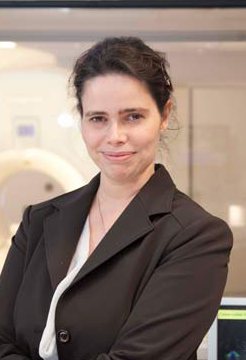
Prof Mara Cercignani is the Chair in Medical Physics at BSMS and academic director of the Clinical Imaging Sciences Centre. Her research focus in on quantitative MRI, and in particularly on relaxometry, diffusion and magnetization transfer imaging, with the aim of translating physics development into clinical applications. She has long standing collaborations with UCL, KCL, the University of Manchester and the University of Cardiff, as wellas with other centres in Europe and in the US. She co-authored several papers aiming at demonstrating the potential of novel MRI techniques for understanding the pathology behind dementia.
- Dr Chris Bird
-
Chris Bird is a psychologist with a particular interest in memory. His work investigates how we are able to remember events and what role the hippocampus (aregion of the brain) plays in this ability. He is also investigating how damage to particular brain regions can lead to memory problems,for examplein Alzheimer’s disease. Some of this research is aimed at developing strategies to help people compensate for their memory problems. Chris’s work is supported by a European Research Council grant to investigate memory for events in healthy adults and adults with memory problems and dementia.
- Dr Natasha Sigala
-

Natasha Sigala is a neuroscientist with an interest in the continuum of perception and memory. She employs behavioural, neurophysiological and imaging approaches to understand how the brain creates and maintains representations of stimuli over short and long periods of time, how these representations change with experience, and how they deteriorate in healthy ageing and in dementia.
- Dr Peggy St Jacques
-

Peggy L. St. Jacques is a cognitive neuroscientist studying autobiographical memory, or memory for events from our personal past. One of the main goals of her research program is to better understand how retrieving an autobiographical memory can provide an opportunity to edit the personal past – resulting in the enhancement but sometimes distortion of memories. She employs functional neuroimaging and patient based approaches, and is well known for the use of novel paradigms and camera technologies that allow for investigations of memory in a real-world environment- thus, maintaining the ecological validity of memories whilst exerting control over their properties. Peggy’s research also focuses on how memories change in healthy aging and dementia, particularly for emotional experiences.
- Professor Sube Banerjee
-
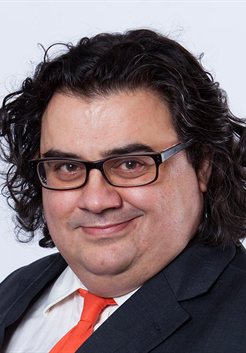
Sube Banerjee works with health and providers, industry and governments on health systems, policy and strategies to improve health for older adults with complex needs in general and those with dementia and in long term care in particular. His research focusses on: measurement of quality of life and quality of care in dementia; development and evaluation of new treatments and services; and the interface between policy, research and practice.
- Dr Oyinkan Adesakin
-
Oyinkan Adesakin is a geneticist interested in understanding the molecular mechanisms that underline Alzheimer’s disease using her favourite model, the fruit fly, Drosophila. Her goal is to uncover potential pathways/proteins involved in disease progression in order to identify potential therapeutic targets. She does this by utilizing Drosophila models of Alzheimer’s disease to identify genetic interactions, which also encompasses using several molecular tools and several behavioural readouts to assess neuronal function.