Learning resources

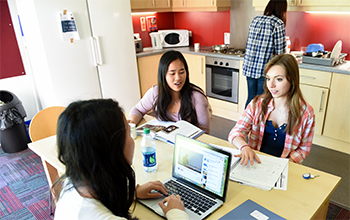
The University of Sussex provides a range of specialist resources to support your studies and enhance your learning experience.

Key facts

a learning environment that embraces technological innovation

extensive library resources – our main Library is open 24 hours a day from Monday to Saturday and during the day on Sunday in term time

wide range of IT skills training

support for students with disabilities, mental health difficulties and specific learning difficulties

multimedia language-learning facilities

Image gallery: Library and IT services

The University of Sussex has ambitious plans to engage you wherever you learn – on the internet, on digital media players and on mobile phones. We are transforming learning on and off campus. Using a blended approach, our teaching and learning is embracing technological innovation, allowing for the introduction of a 24/7 learning environment in a 24/7 culture. Sussex provides a range of specialist online and traditional resources to support your studies and enhance your learning experience.

The Library

The Library has recently undergone a substantial and exciting refurbishment, and its friendly staff are ready to help you from the day you arrive. Easy to find at the centre of campus, the Library is a quiet and comfortable place to study. It is open 24 hours a day during term time. Much of the Library’s information is also available online so you can use the electronic library anywhere and at any time. The Library also runs InfoSuss, a web-based tutorial to help you find your way through the many online resources.

In addition, the Library has a unique collection of manuscripts, archives and rare books, as well as the world-famous Mass Observation Archive now housed in a purpose built facility – the Keep.

Library facilities

Access to over 700,000

Over 1,000 study places

Bookable study rooms for two to eight people

Electronic Library with access to over 25,000 journals

Over 200 PCs, laptop facilities and wireless coverage throughout

Audiovisual facilities including films and documentaries

Information hub

Automated book issue and return

Bookshop

Based in the Library, the bookshop stocks both academic and general interest books. Experienced staff work with module tutors to ensure that module books are readily available.

IT Services (ITS)

When on campus attending lectures and seminars, you can use your laptop to take advantage of our extensive wireless network. As well as being able to prepare your assignments when and where you choose, you will be in a better position to take advantage of the big investment Sussex is making in virtual learning and access online support and information services. ITS provide a range of computer facilities. Located across the campus, often with 24-hour access, all PCs have a customised desktop, a full MS Office suite, email and internet access. You can print and use your personal file storage from all these PCs. In addition ITS provide specialist software and a small number of iMac computers. There is also an extensive range of IT skills training courses

IT facilities

Over 500 PCs, many available 24 hours a day

Wireless network to enable laptop owners to access online resources

Free email and internet access

Access to personalised information about your degree

Help via the web, by email, over the telephone and in person

Extensive training

Safe storage for computer files, accessible both on and off campus via the internet

Extensive printing facilities

Adapted PCs for students with disabilities or additional learning needs

Students who live on campus can connect to the internet from their study bedroom 

Online learning support

Sussex Direct is a secure website offering personalised access to the information you need to study, work and socialise at Sussex. Many students use it to register before arriving at the University. Once here, you can use it for personal and secure access to information about your modules, reading lists, timetables and marks.

Study Direct is your online learning environment where you will find your subject-based e-learning module materials and activities. An increasing number of modules are making use of technology so you can listen to your lectures again online. 

Sarah's perspective

‘My time at Sussex has been the most enlightening five months of my life. The classes were quite different, but just as rewarding Sarahas back home in the United States. The tutors were incredibly knowledgeable, very helpful and happy to see me outside of class if I ever had a question. The people I have met here, especially the other international students, have always been very kind and as enthusiastic about learning about my culture as I was about learning about theirs. During my time here, I have met students from as far away as Chile, Canada, Japan and Germany. Being together at Sussex was a bonding experience I’m not likely to forget anytime soon. 

‘Though my time here at Sussex has been short, it’s been invaluable, and I’m incredibly glad that I chose Sussex as my temporary home away from home.’ 

Sarah Ferro,
from the University of California, USA 

Disability and learning support

ITS currently support 10 adapted PCs with assistive software packages specifically for use by students with a disability or additional learning needs. The PCs are located across campus in easily accessible rooms. The Sussex Regional Access Centre offers needs assessments, advice and training on assistive technology for disabled students. The Centre is easily accessible by wheelchair users and those with visual impairments. To access support for specific learning difficulties including dyslexia, ADHD and autism among others, contact the Student Support Unit on T +44 (0)1273 877466 E studentsupport@sussex.ac.uk

Sussex Centre for Language Studies

The Centre offers self-access and structured learning facilities for students who need help with English and other languages, as well as study skills support.

The Centre offers a resource library of language-learning materials including computer programs, audio and video media, access to the internet, and satellite TV programmes. Teaching facilities include a digital multimedia language laboratory.

English language modules

If your first language is not English, you may like to improve your English language skills while at Sussex. The Sussex Centre for Language Studies is accredited by the British Council and runs a variety of modules throughout the year, which you can take before you start your academic modules.

The Centre runs full-time English modules throughout the autumn and spring terms, as well as during the summer months. You can enrol on these modules for academic credit. Depending on how much English language training you will need to bring you up to the required level for academic study, you can take English modules lasting from a month up to one year as part of your Study Abroad programme of study.

The Centre also provides part-time modules in English for Academic Purposes, covering topics such as academic writing and presenting seminar papers. Modules are also organised to prepare you for the Cambridge ESOL exams (FCE, CAE and CPE). All modules may also be taken for credit. Refer to How to Apply for more on English language requirements.

Jorge's perspective

Jorge Roberto Ahumada GarciaStudying at the University of Sussex has enriched my experience abroad in every way. Surrounded by the beauty of the South Downs, Sussex is the perfect university environment. My English language abilities have improved enormously, thanks to everyday interaction with students from around the world. The housing office placed me in an off-campus residence with students from the UK, Canada, Italy, Ukraine, and Nigeria – when I return to Mexico, I’ll take a little bit of all these cultures with me.

‘I’d heard wonderful things about Brighton, and its vibrant culture, lively city centre, and beautiful seafront have surpassed my every expectation. Although I must admit the weather took some getting used to!

‘I never thought I would come to call another place home, but Sussex has become just that.’

Jorge Roberto Ahumada Garcia,
from the Universidad de Guadalajara, Mexico