History of SPRU
Find out about the history of the Science Policy Research Unit (SPRU), from its beginnings in 1966 to the present day.
How it started
SPRU was founded in 1966 by Christopher Freeman and was one of the world’s first interdisciplinary research centres in the field of science and technology policy.
Chris Freeman (11 September 1921 to 16 August 2010), an economist, was one of the most eminent researchers in innovation studies, and among modern Kondratiev wave and business cycle theorists.
Chris was invited to set up SPRU by Asa Briggs (then the University Pro Vice Chancellor) and became its first Director (a post he held until 1982).
Alongside his role as Director of SPRU, Chris was RM Phillips Professor of Science Policy and later Professor Emeritus at Sussex.
Together with colleagues at SPRU and internationally, Chris founded and edited the journal "Research Policy" which became the leading journal in the field. Today, SPRU colleagues on the editorial team include Maria Savona (co-ordinating editor), Ben Martin (another former SPRU Director), Paul Nightingale, Daniele Rotolo, Karoline Rogge and Ohid Yaqub.
Pioneering spirit
Joined from the outset by Geoff Oldham and administrative pioneer Jackie Fuller, Chris worked with a number of other renowned academics and SPRU quickly became a pioneering institution, leading the field and breaking new ground throughout the 1970s and 1980s.
Attracting grants both from the UK and internationally, SPRU was able to attract many leading researchers and thinkers from around the world, including Martin Bell John Chesshire, Charles Cooper, Giovanni Dosi, Michael Gibbons, Jonathan Gershuny, Mary Kaldor, Ben Martin, Ian Miles, Roy Rothwell, John Surrey, Luc Soete, Nick von Tunzelmann and William Walker, while many other eminent researchers were visitors to SPRU, in particular, Richard R. Nelson and Carlota Perez. Below, we remember the contributions of some of these early thinkers.
SPRU’s world-renowned, multi-disciplinary research has helped policy makers to address real-world problems for over 60 years. The innovative and collaborative approach taken by the SPRU team has seen contributions to both theory and practice, and also inspired countless researchers and students. This combination of theory and practice, alongside a strong focus on external engagement within academia, the policy world and beyond, remains to this day.
Running Masters and PhD programmes formally since the early 1980s, but committed to pioneering teaching and supervision in the field since the Unit’s inception, SPRU is one of the largest academic bodies in the world studying science, technology and innovation.
Attracting top students from all over the world, many former SPRU PhDs and staff have gone on to influence science policy and play leading roles in academia. The department's international impact has been developed through SPRU’s graduates around the world, a long-standing Visiting Fellows programme and extensive academic networks.
Celebrating 60 years
In 2026 we are celebrating our 60th anniversary, and are committed to building on past contributions to tackle pressing global challenges.
This important milestone allows us to reflect on SPRU’s major contributions to the shaping of innovation policy and research since its inception, re-connect with alumni, colleagues and stakeholders and make new connections, developing partnerships and collaborations that align with our teaching and research.
Today we have more than 50 faculty members at the forefront of new ideas, problem-oriented research and creative, high-impact engagement with decision-makers. Inspiring research-led teaching is core to our mission with an outstanding portfolio of taught Masters courses and PhD programmes developed over six innovative and exciting decades.
We are proud of our history and excited for the future.

- The influence of Chris Freeman
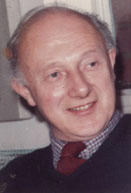 Chris Freeman’s fields of specialisation were the economics of innovation and technical change, science and technology indicators and definitions of R&D (leading to the 1963 Frascati Manual), the diffusion of technologies, structural change in the world economy, and the ‘catch-up’ efforts of developing countries.
His influence on generations of researchers was wide and profound. Programs that have their origins in his work can be traced at leading public policy institutions across the world.
Chris passed away in 2010. Obituaries for Chris appeared in the Guardian and the Daily Telegraph among other places.
In 2023, Francisco Sagasti (former president of Peru) gave the Chris Freeman Lecture “Science and Technology Policy and Politics: From Ideas to Action.”
- About Professor Marie Jahoda
 Marie Jahoda (1907-2001) studied and worked in Vienna until 1937, when she fled Austria for England during World War II, and then moved to the USA in 1946. Marie came to the University of Sussex in the 1960s and played a full part in the academic life of the University and its governance.
After her official retirement at 65 years old, Marie began a new period of active creative work participating in the interdisciplinary research of SPRU. She made major contributions to research programmes on social and technological forecasting and the social psychological consequences of prolonged unemployment.
- The legacy of Keith Pavitt
 After studying at Trinty College, Cambridge, qualifying as an RAF pilot, holding a fellowship at Harvard University, and working at the OECD, Keith Pavitt (1937-2002) moved to SPRU in 1971. He became Reginald Phillips Professor of Science and Technology Policy in 1984, a position he held until 2002.
Working closely with leading economists and science-policy scholars in SPRU and internationally, and supervising many doctoral students who later became influential researchers themselves, Keith helped establish SPRU as one of the world’s leading centres for innovation studies.
He made pioneering contributions to the theory and practice of innovation management, most notably through his influential “Pavitt taxonomy” of innovating firms, which became used widely in industrial economics and technology policy. As co-editor of Research Policy, he also played a central role in developing the journal into the world’s leading publication in innovation studies.
- Remembering Professor Geoffrey Oldham

Professor Geoffrey Oldham (1929-2017) helped to shape the field of science and technology policy research, and has had a long-term impact on the organisations that fund, conduct and use it.
He dedicated his life's work towards building pioneering institutions that advocated for the intelligent use of science, technology and innovation policy towards the benefit of a life sustaining, equitable world.
Geoff was a tireless advocate for education and gender equity in science and technology, and his influence spanned the globe – from China to Canada, the UK to South Africa – his kindness and enthusiasm were felt by a vast network of colleagues and friends.
Read The Guardian obituary and watch the SPRU memorial video.
- The Life and Work of Professor Julian Perry Robinson
 Professor Julian Perry Robinson (1941–2020) made a unique and enduring contribution to the study and control of chemical and biological weapons.
 After joining SPRU in 1971, Julian’s work informed international negotiations and policy debates, including the development and implementation of the Biological Weapons Convention and the Chemical Weapons Convention. In the 1990s he co-founded the Harvard Sussex Program on Chemical and Biological Weapons (HSP) with Matthew Meselson, developing the Sussex Harvard Information Bank (SHIB), a unique open-source archive that has supported generations of researchers and practitioners working on CBW disarmament and non-proliferation.
Julian’s life and work are explored in the volume Julian Perry Robinson: Pioneer in the Prohibition of Chemical and Biological Warfare (Springer, 2025). Obituaries appeared in The Guardian, The Times, Nature, the Bulletin of the Atomic Scientists, and Arms Control Today.
- Remembering Professor Peter Senker
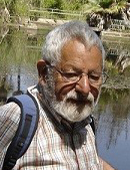 Professor Peter Senker (1934 - 2024) was a distinguished political economist and a cornerstone of the Science Policy Research Unit.
Over his three-decade tenure, Peter’s influential work on technological change and its societal impacts, along with his dedication to mentorship, has left an indelible mark on the field.
His legacy continues to inspire through his extensive publications and the many careers he shaped.
Further reading
Produced for the SPRU 50th anniversay in 2016.
- SPRU Commemorative Book for 50 years [PDF 11.6MB]
- Report on SPRU’s Qualitative Angle [PDF 1MB]
- Bibliometric Perspective on SPRU Research Activity Part I: The PhD Data [PDF 1.7MB]
- Bibliometric Perspective on SPRU Research Activity Part II: The Publications Data [PDF 4.6MB].