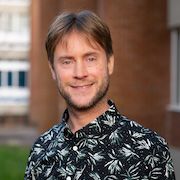
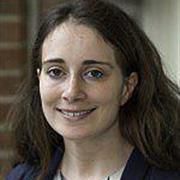
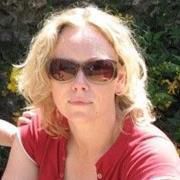
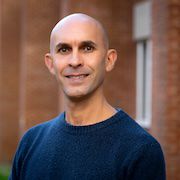
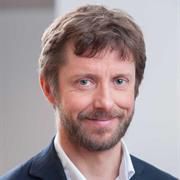
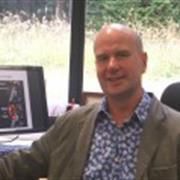
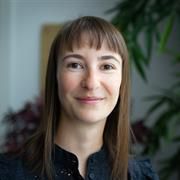
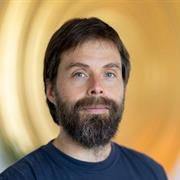
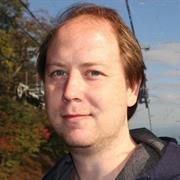
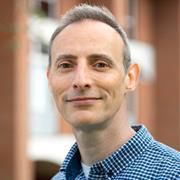
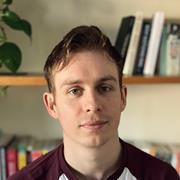
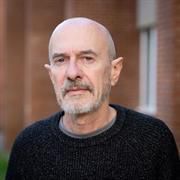
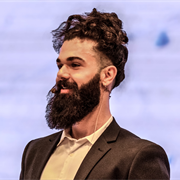
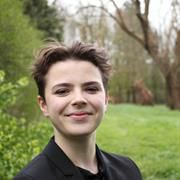
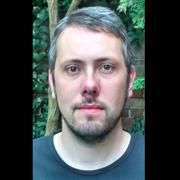
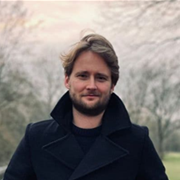
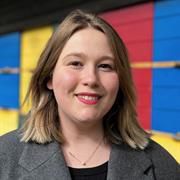
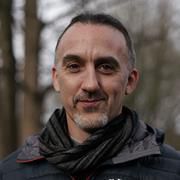
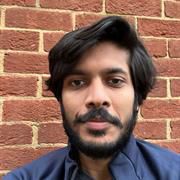
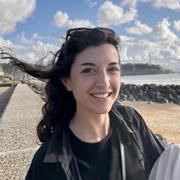
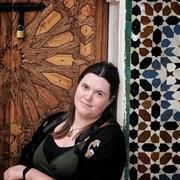
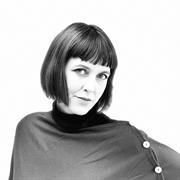
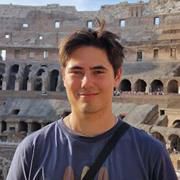
Dr Lionel Barnett (post-doc)
With a background in applied mathematics, my chief research interests are in the analysis of (mostly biological) complex dynamical systems, using mathematical tools from network theory, information theory and stochastic processes.
I gained my DPhil degree at Sussex in 2004 under the tutelage of Dr. Inman Harvey, during which time I developed
new approaches in the evolutionary theory of neutral (not neural!) networks. I have since completed a successful post-doctoral project with Dr. Seth Bullock of Southampton University, analysing the influence of spatial embedding on the structure and dynamics of complex networks.
In 2010 I joined Dr. Anil Seth's Neurodynamics and Consciousness Lab as a post-doc, where I research the causal dynamics of information flow in complex neural systems, particularly as they relate to phenomena of consciousness. Using techniques from information theory and time series analysis, the chief aims of my research are (i) to elucidate the relationship between network structure and functional behaviour, (ii) derive useful macroscopic descriptions for large-scale neural systems, and (iii) investigate how the previous aims can be actualised from empirical neural data, such as EEG/MEG, fMRI, etc.
Click here for more information about Dr. Lionel Barnett.
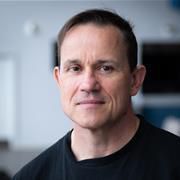
Dr Adam Barrett (post-doc)
My research makes use of mathematical methods to attempt to understand what is distinct about the particular neural structures, dynamics and functions that give rise to conscious experience.
More specifically, inspired by Integrated Information Theory, a major focus of my work is on the development of potential measures of conscious level that quantify the extent to which neural dynamics simultaneously generate and integrate information. In other words, I work on modelling and developing our mathematical understanding of neural complexity, as well as deriving statistical techniques for applying abstract measures based on this concept to neuroimaging data. A key component of this involves developing methodology for quantifying the strength of directed interactions (functional connectivity) between neural dynamical variables, and this leads to applications broadly across neuroscience. Datasets I have analysed include EEG recordings from subjects undergoing general anaesthesia, and intracranial depth electrode recordings from awake and asleep epileptic patients.
I am also interested in the role of metacognition (knowledge of knowing) in conscious awareness, and research ways of modelling and measuring metacognition at both the behavioural and neural level.
Prior to joining the Seth lab in 2009, I was a postdoc in Mark van Rossum's group at the University of Edinburgh, working mainly on synaptic plasticity and the neural basis of learning and memory.
In 2006 I completed my PhD in theoretical physics at the University of Oxford, and the topic of my thesis was string/M-theory. Before this I studied mathematics undergraduate and Masters (Parts I, II and III of the Tripos) at St John's College, Cambridge.
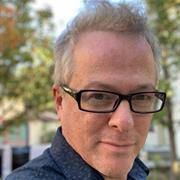
Dr Daniel Bor (post-doc)
Daniel completed his first degree in psychology and philosophy at the University of Oxford in 1997. He then moved to the MRC Cognition and Brain Sciences Unit (CBU) at Cambridge University for his PhD (completed 2002), where he carried out research into the prefrontal cortex and strategic processing. He was then a research fellow, partly at Cambridge University, and partly at the MRC CBU for a number of years before taking two years out in 2008 to write a popular science book on the science of consciousness (published by Basic Books, due out spring 2011), before returning to research as a research fellow at the Sackler Centre for Consciousness Science.
My research focus in SCCS: My research centres on using brain-imaging and behavioural techniques involving structured strimuli in normal participants and various clinical populations to help elucidate the purpose and nature of consciousness, and by so doing potentially elucidate the precise nature and cause of various clinical conditions, potentially leading to more effective future treatments.
Click here for more information about Dr Daniel Bor.
Dr David Gamez (Visiting Research Fellow)
David Gamez holds PhDs in both philosophy and computer science from the University of Essex. From 2009 to 2012 he was at Imperial College London, where he worked on brain-inspired neural networks and robotics and investigated new algorithms for making predictions about consciousness. He is currently a JTF Turing Research Fellow and Visiting Research Fellow at the Sackler Centre, where he is using a combination of philosophy and neural modelling to explore how a science of consciousness can be developed based on mathematical theories.
More information about David Gamez's research can be found at his personal website: www.davidgamez.eu.
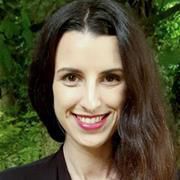
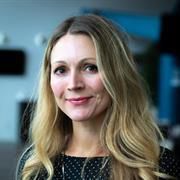
Dr Sarah Garfinkel (post-doc)
Dr Garfinkel’s research uses fMRI, pharmacological manipulation and autonomic indices to investigate the mechanisms underlying altered memory processes – focusing on memory distortion, memory facilitation and selective memory impairments.
During her PhD at Sussex University, under the supervision of Prof. Dora Duka and Prof. Zoltan Dienes, she investigated the effect of alcohol on false and veridical memories, as well as the propensity for alcohol to differentially impact implicit and explicit memory processes. During her Postdoctoral Fellowship at the University of Michigan, Dr. Garfinkel investigated how stress impacts memory. Under the mentorship of Prof. Israel Liberzon, she investigated the neurocircuitry underlying the maintenance of fear memories in Post Traumatic Stress Disorder. In collaboration with Professors Liberzon and Abelson, and in collaboration with Columbia University, she investigated how the stress hormone cortisol can facilitate memory encoding. In collaboration with Cornell University, she is currently involved in projects assessing the deleterious effect of chronic poverty on hippocampal dependent memory.
Returning to Brighton as a Fellow in Clinical Medicine at the Brighton and Sussex Medical School, Dr. Garfinkel now works with Prof. Hugo Critchley to investigate how the autonomic nervous system affects implicit and explicit attention and memory processes.
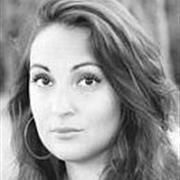
Dr Eugenia Radulescu (post-doc)
Eugenia is a psychiatrist who completed her medical studies and PhD at University of Medicine and Pharmacy “Carol Davila”, Bucharest, Romania. During her PhD she developed a strong interest for schizophrenia research. Prior to joining the Sackler Centre she was a researcher in the laboratory of Dr. Daniel Weinberger- Clinical Brain Disorders Branch (CBDB), National Institutes of Health (NIH), in Bethesda, USA. During that time she was trained in neuroimaging the genetics of schizophrenia (fMRI, VBM, MRI spectroscopy).
My research focus in SCCS: I will be mainly involved in studying the consciousness of self in psychiatric populations, especially psychosis, from early (prodromal) to chronic stages. This will be initially pursued with clinical, neuropsychological and neuroimaging methods. My long term interest will be to explore the biological basis of various aspects of consciousness, and to integrate the findings from clinical phenomenology, neuroimaging, molecular biology and genetics, into a coherent model with practical implications for psychosis research.
Dr Nicolas Rothen (post-doc)
Nicolas is psychologist who completed his studies and PhD in experimental Psychology and Neuropsychology at University of Bern, Switzerland. During this time he conducted research on synaesthesia, a rare unusual condition in which ordinary stimuli trigger extraordinary experiences. Besides this he has a strong interest in memory research.
My research focus in SCCS: I will be mainly concerned with studies on synaesthesia and its influence on memory. Previous studies have shown that under certain conditions synaesthetic experiences lead to an advantage in memory performance. However, to date the specific performance advantage is not well characterised in terms of cognitive and neuroscience models of memory and it is not clear why synaesthetes show any memory advantage at all. It is the aim of my research project to characterise the memory performance advantage of synaesthetes in terms of cognitive and neuroscience models of memory. Moreover, the current research project aims to shed some more light on the question why synaesthetes show any memory advantage at all.
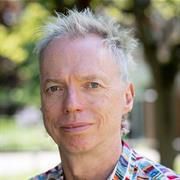
Dr David Schwartzman (post-doc/Lab Manager)
David is a Cognitive Neuropsychologist who completed his MSc and PhD at Oxford Brookes University both in the area of Cognitive Neuropsychology. During this time his research investigated the functional role of gamma oscillations in visual perception us EEG. He also worked at the Experimental Psychology department at Oxford University with Nick Yeung at the ACC lab investigating how we use external signals of success or failure to help us perform more acurrately (2007-2009).
David's research interests include understanding the neural substrates of face perception, repetition priming and visual hallucinations in age related macular degeneration patients. He has also investigated how minute movements of the eyes, called Micro Saccades can affect the brain’s electrical responses and the changes in fluid dynamics of the brain that occur with age.
My research at the SCCS involves working with Daniel Bor and Nicolas Rothen investigating if it is possible to train normal participants to develop Synaesthetic responses. I am also investigating metacognition by using TMS to disrupt activity in the dorsolateral pre-frontal cortex during the processing of visual stimuli.
Dr Keisuke Suzuki (post-doc)

Keisuke Suzuki obtained his Ph.D degree on subject of artificial life from the University of Tokyo in 2007. He stayed as a research fellow in RIKEN Brain Science Institute, where he carried out research into human cognitive functions in virtual reality environments (2008-2011). He developed a novel virtual reality system called SR (Substitutional Reality) system with his colleagues. In this system, people believe that they experiencing real-world scenes even though they are actually experiencing pre-recorded scenes. He joined the Sackler Centre for Consciousness Science in 2011 as part of CEEDS project.
Keisuke's research focus at the SCCS is about conscious presence, i.e. subjective feeling of being "here and now". The sense of presence is one of important aspects of our subjective conscious experience, but its underlying neural mechanisms remain poorly understood. The research will involve constructing a theoretical model to explain conscious presence, integrating neurological and psychiatric evidence with a focus on depersonalization disorder (DPD). Theoretical work will be complemented experimentally using state-of-the-art virtual reality techniques. Keisuke is also interested in relationship between hallucination and delusion, informing an integrated theory of perception and belief