How do conscious experience, subjectivity and 'free will' arise from the brain and the body?
Even in the late 20th century, consciousness was considered by many to be beyond the reach of science. Now, understanding the neural mechanisms underlying consciousness is recognized as a key objective for 21th century science. Powerful new combinations of functional brain imaging, computational modelling and basic neurobiology bring real hope that human ingenuity can resolve this central mystery of life. Practically, an enhanced understanding of consciousness will transform clinical approaches to a wide range of neurological and psychiatric disorders, from coma to insomnia, from depression and schizophrenia to autism and dementia. Founded in 2010 with a generous donation from the Dr. Mortimer and Theresa Sackler Foundation (with additional support from UK and EU research councils), the Sackler Centre for Consciousness Science represents a new and multidisciplinary approach to clinical intervention and diagnosis, based on the science of the complex brain networks that give rise to consciousness.
Our Research
Our research follows two interacting strands; one in basic science, and the other in clinical application ultimately focused on developing new innovative treatments. Advances in basic science have the potential to translate into new clinical approaches, and clinical studies can shape the development of novel testable theories and computational models of basic brain mechanisms underlying consciousness.
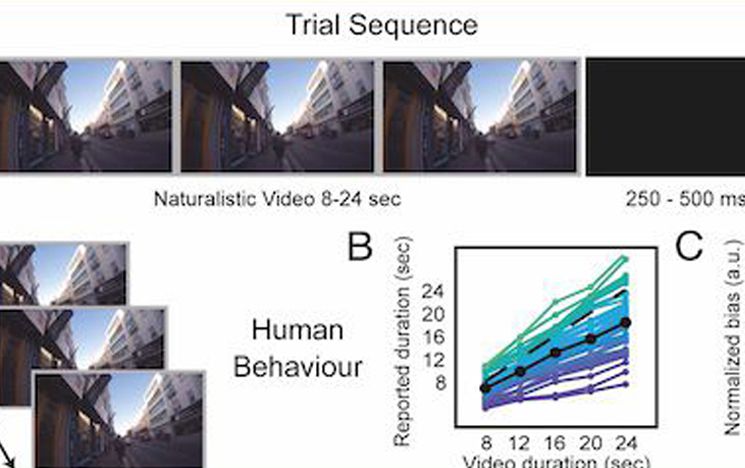
The basic science strand seeks to unravel the complex brain mechanisms that generate consciousness. Most current approaches focus on identifying so-called ‘neural correlates of consciousness’, for example, how brain activity changes when a stimulus is experienced or not. Our research will move beyond correlation to develop new theories and models of neural mechanisms that actually account for fundamental properties of consciousness; for example the property that conscious experiences provide integrated representations of very large amounts of information. New theory can guide and be guided by large-scale computational modelling of the corresponding brain mechanisms; synthetic computational modelling is needed because standard reductionist approaches struggle when confronted by the complex networks of the brain. Theoretical, modelling, and experimental approaches mutually inform and constrain one another, and will interact with data and insights from the clinical strand.
The clinical application strand translates insights about the mechanisms of consciousness to the clinical domain, while simultaneously feeding-back experimental data to stimulate developments in the basic science. Work in this strand focuses on neuropsychiatry as well as on brain-injured patients with neurological deficits. In addition to its evident clinical importance, psychiatric neuroscience has considerable potential for informing scientific approaches to consciousness. The disturbances of conscious mental life that occur in psychiatric disorders involve radical and disabling shifts in the contents and quality of conscious experience, for example profound changes in emotional state or specific experiential phenomena such as auditory hallucinations. Characterizing the neural processes involved in these disorders help us to understand their operation in healthy individuals, lighting the way to novel clinical interventions. Similarly, analysis of brain-injured patients provides unique access to informative dissociations of conscious experience; for example, ‘vegetative state’ patients show high levels of arousal apparently without any accompanying awareness.
Our Facilities
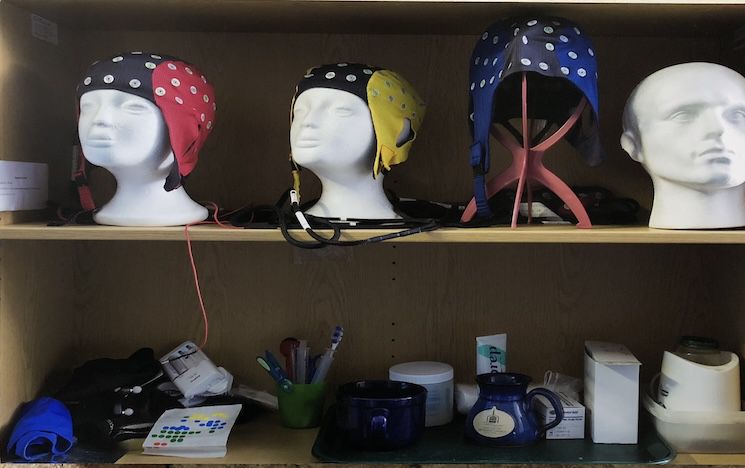
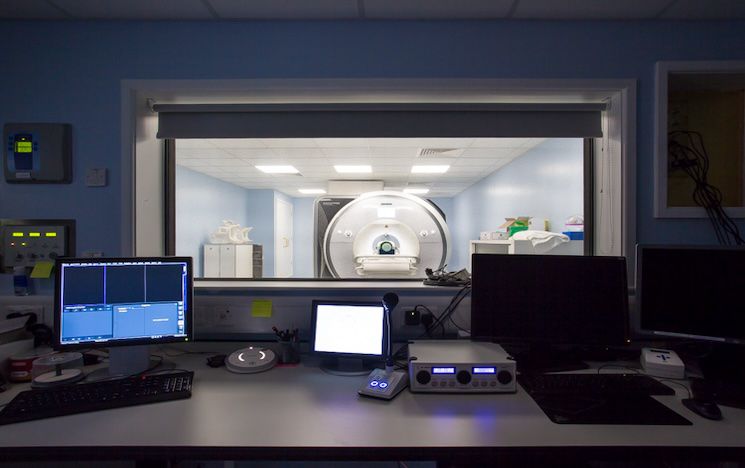
The Sackler Centre makes use of wide range of dedicated and shared facilities for its research. We have access to functional MRI (1.5T) with integrated psychophysiological measurement and stimulus delivery equipment; combined EEG and transcranial magnetic stimulation (TMS); transcranial direct current stimulation (tDCS); virtual and substitutional reality methods, and dedicated high-performance GPU-based computing equipment. Of course the main resource we have is the range of wonderfully talented faculty, researchers, and students.
The Sackler Centre within Sussex University
Unravelling the mind, brain and consciousness is one of six inter-disciplinary research themes that the University of Sussex is addressing as part of its strategic plan for 2008-2015. A key part of this effort, the Sackler Centre for Consciousness Science is a dedicated research facility conducting fundamentally new research into consciousness science. Truly interdisciplinary in nature, it brings together consciousness researchers from Psychology, Psychiatry, Informatics and Engineering, Neuroscience, and Cognitive Science to address common questions using converging methodologies. Establishment of the Centre represents a most significant contribution to the strategic direction of the University, providing a model for future activity and exemplar of current and future research.
Sussex is uniquely placed for such a centre of international standing, building on its distinguished reputation for multidisciplinary work in cognitive science, neuroscience and experimental psychology. The Sackler Centre also synergises with new developments, including the Brighton and Sussex Medical School with its Clinical Imaging Sciences Centre which adds cutting-edge clinical and neuroimaging expertise. The Centre is also closely associated with a new prominent University initative: Sussex Neuroscience and the internationally leading Centre for Computational Neuroscience and Robotics. With this available expertise on one site, we have the ability to deliver novel and powerful insights into high level brain functions that include human consciousness.
Keep in touch!
Information about our research interests and friends can be also found on the Sackler Centre Facebook page; and keep up-to-date with our progress by following us on Twitter.