News
Scientists unlock hidden potential of cutting-edge cancer drugs
Posted on behalf of: School of Life Sciences, Genome Damage & Stability Centre
Last updated: Sunday, 17 March 2013
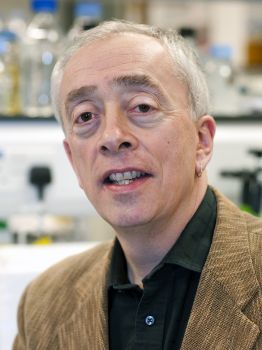
Professor Laurence Pearl
A class of cutting-edge cancer drugs could keep patients alive for much longer than they do now, following a major new discovery about exactly how they attack tumours.
The drugs, known as kinase inhibitors, are some of the most heralded of the new kind of targeted therapies, with 25 already in use and around 400 under development. They treat 5,000-10,000 patients in the UK each year, with that number set to grow as more are approved for use.
Kinase inhibitors work across types of breast, skin, lung and kidney cancer, but while effective often extend life by only around three to six months.
But scientists at the University of Sussex and the Institute of Cancer Research in London believe they can unlock the true potential of the drugs by changing the way they are used – after uncovering a hidden mechanism of action.
The mechanism identified applied in precisely the same way to each of four kinase inhibitors tested, all of which are already in use as cancer treatments:
- Vemurafenib, which treats cancers caused by a mutation of a gene called BRAF, including many melanoma skin cancer patients
- Lapatinib, which treats patients with aggressive, HER2-positive breast cancer
- Sorafenib, which treats many patients with kidney cancer
- Erlotinib, which treats many patients with non-small cell lung cancer.
Researchers found that the conventional assumption of how kinase inhibitors work against cancers told only part of the story.
The drugs had been thought to work solely by blocking the cell signalling function of enzymes called kinases – which play an active role in many cancers – by preventing them from binding to ATP, the basic unit of energy in cells.
But the new research found that at high doses, the drugs also prevented kinases from linking up with a complex of molecules in cells called the Hsp90-Cdc37 chaperone system, which is essential for maintaining the stability of proteins. The team showed that this ‘chaperone deprivation’ actually caused the destruction of the cancer-causing kinases and halted the growth and division of cancer cells.
The researchers now plan to conduct clinical trials using kinase inhibitors at higher doses but with rest periods to take advantage of the new mechanism – and believe the new method has the potential to keep cancers at bay for much longer.
Co-author Professor Laurence Pearl, Head of the School of Life Sciences at Sussex and Professor of Structural Biology in the Genome Damage and Stability Centre, said: “This discovery could really improve the impact of these targeted treatments, which are already becoming important agents in modern cancer therapy.
“Our work has revealed their hidden power to promote the destruction of the kinases that drive cancer, which hasn’t so far been exploited in their clinical use.
“It shows how important it is to understand the basic biology of how cancer drugs work. We have more work to do to understand this mechanism fully, but we are optimistic that our discovery will help many patients live for longer.”
The study was funded by Cancer Research UK and the Wellcome Trust, and is published today (Sunday 17 March) in the journal Nature Chemical Biology.