Programme Leader: Dr Yusuf Sayed
Overview
The MA in International Education and Development critically engages with a wide range of contemporary international educational issues from a multi-disciplinary development perspective, focusing on the challenges facing resource-constrained, and/or rapidly expanding educational systems - particularly in economically developing countries. Building on the internationally diverse experience of the teaching faculty and professional experiences and interests of the students, it aims to link theory with research, policy and practice in international education and development.
The MA in International Education and Development programme is geared toward students with substantive professional experience in international education, as well as to those with a strong analytical background in a relevant discipline. Students are usually interested in applying their knowledge with the intention of working in a government department, development agency, or non-governmental organisation. Also to research or consultancy work.
Download a copy of the MAIED Leaflet [PDF 3.28MB] here.
Programme Objectives
By the end of the MA in International Education and Development successful students will:
- Have acquired theoretical and practical knowledge along with the analytical skills relevant to international education and development
- Be able to conceptualise and apply this newly-acquired knowledge and understanding creatively and independently to a specific set of circumstances with a view to advancing learning and/or solving problems
- Be able to communicate ideas and arguments effectively and present them in an acceptable and accessible form
- Be able to collect, analyse and evaluate information and present data through a chosen method of enquiry
Programme Content
There are three mandatory components to the course:
Debates in International Education and Development: Introduces key theories and concepts in international education and development. Drawing from a variety of disciplinary perspectives, this component seeks to provide a critical view of the various ways in which education and development influence each other.
Perspectives in Educational Policy and Practice: Explores a variety of contemporary perspectives associated with educational policy and practice in education in development contexts. A particular focus is understanding ways in which research shapes education and development agendas.
Research Methods in International Education and Development: Helps students develop basic research skills in education for development contexts - in particular, the acquiring of a conceptual framework for research and the application of qualitative and quantative research tools. Students gain conceptual and practical experience in designing and undertaking research.
Students can also take up to two optional components (but must take at least one) from the following:
- Educational Planning and Governance for Development
- Gender, Inclusion and Educational Development
- Quality Education: Learning, Pedagogies and Assessment for Development
- Teacher Education for Development
The second option may be taken from within the programme, or from selected development studies courses across the University (e.g. IDS and the School of Global Studies).
Finally, students take the following core course that runs throughout the year:
Academic Study Skills for International Education and Development: A forum for academic support and guidance offering opportunities to discuss specific assignment requirements and assessment criteria, as well as planning and writing assignments. It also covers essential skills such as giving presentations, academic reading, use of ICTs and of different research resources.
Programme Structure
Autumn Term:
Debates in International Education and Development
Perspectives in Educational Policy and Practice
Academic Study Skills for International Education and Development
Spring Term:
Specialised Options (students choose two)
Academic Study Skills for International Education and Development
Summer Term:
Research Methods in International Education and Development
Academic Study Skills for International Education and Development
- Full time: one academic year (October to August)
- Part time: two academic years
Study Methods
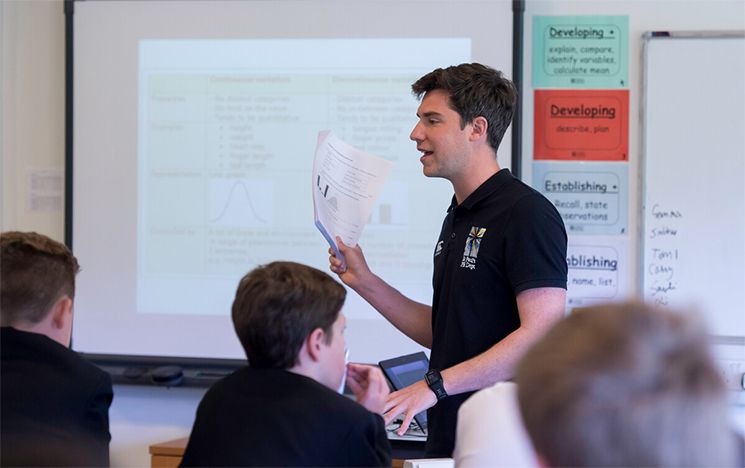
The MA in International Education and Development has a distinctive approach to teaching, learning and assessment. Courses are taught via a combination of group work, seminars, workshops and lectures which actively encourage student participation. Students are able to pursue specialist interests through appropriately designed reading and project work supported by individual tutorials. There are many opportunities to take advantage of post-graduate level activities related to education and development across the University. Some visits to local schools are arranged for students to gain some knowledge of comparable issues to those being studied in developing country contexts and, where appropriate, to gain experience in developing relevant research skills.
Assessment
Students write an assignment on a chosen subject related to each of the courses (30 credits each), a short research proposal (15 credits) and a final dissertation on a topic of their choice (45 credits).
Entry requirements
Good undergraduate honours degree or equivalent; professional experience in a relevant area; IELTS 6.5 and above or equivalent (if applicable).
How to Apply
Email Y.Sayed@sussex.ac.uk for all academic enquiries or write to him at:
Department of Education
School of Education and Social Work
Essex House
University of Sussex
Falmer
BN1 9QN
For more information on the MAIED:
E: eswenquiries@sussex.ac.uk
T: + 44 (0)1273 877888
F: + 44 (0)1273 877534
Applications can be made using the online application form or in hard copy format via our paper application page.