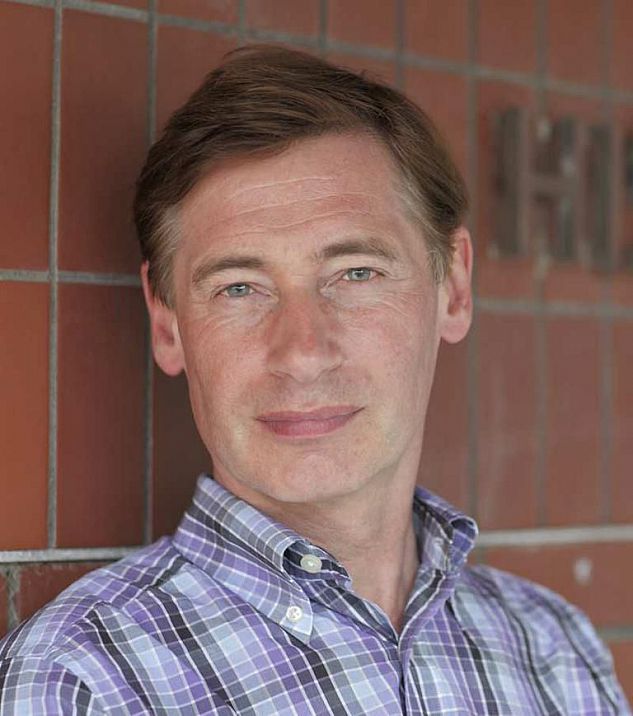
Mr Peter Price
| Post: | Research Student (Centre for Intellectual History, History) |
| Other posts: | Associate Tutor (History) |
| Location: | Arts A A106 |
| Email: | pxp20@sussex.ac.uk |
| download vCarddownload vCard to your mobile | |
Biography
Publications:
'Human Specialness': The Historical Dimension & the Historicisation of Humanity, (Cranmore Publications 2012).
Role
Associate Tutor
Doctoral Research Student
Qualifications
2010-14 - PhD Intellectual History, Sussex (Sussex Founder's Scholarship and AHRC funded)
2010 - MA Intellectual History, Sussex (Distinction)
2009 - BA History, Sussex (Hons)
Activities
For a period of six months from January-June 2013 I shall be based at the Kluge Center in the Library of Congress, Washington DC as an AHRC-funded Resident Scholar.
As a recipient of the Sussex Founder's Scholarship, I was placed in charge of overseeing and cataloguing the late J. W Burrow's (1935-2009) Papers for the Special Collections Archive at the University of Sussex Library from 2010-12.
Outside of academia, I am a keen watercolourist and independent musician.
My research focuses upon the Anglican Dean of Gloucester Josiah Tucker (1713-99) and his providential argument for, and justification of, free trade. Being one of the most important social, religious, political and economic writers of the day, my aim is to reintegrate dominant theological perspectives in the history of eighteenth-century political economy that have hitherto been downplayed or ignored in light of classical liberal economic tradition.
Building upon the previous work of historians whilst contextually reinterpreting many aspects of Tucker’s own publications and correspondence, the central thrust of my work focuses upon the Dean’s unwavering faith in the workings of divine providence in generating economic liberation and a betterment in mankind’s material (and thereby spiritual) condition. Indeed, crucially, he believed himself to be justifying free trade whilst at the same time promoting an Anglican enlightenment of toleration, peace and security, and the full extent of these claims will be examined and exposed.
In conclusion, I hope to reveal that Tucker is a central figure in the history of political economy, and one who represents a vital conduit between the old ways of thinking about economic matters and the new.
I teach both First and Second Year courses on the 'Early Modern World' and 'Ideas in History'.
Student Consultation
Wednesday, 13:00-14:00, Room A177