We have close ties with the University’s Sussex Sustainability Research Programme (SSRP). The SSRP aims to deliver the UN’s Sustainable Development Goals and supports the sustainability of life on Earth through interdisciplinary research which stimulates action and influences policy. A number of research projects led by our Faculty, including Dave Goulson, Mika Peck, Chris Sandom, and Alan Stewart, have been funded by the programme.
Ecology and Evolution research
We study how organisms evolve, how they interact with their environments, and how to protect species and ecosystems in a changing world.
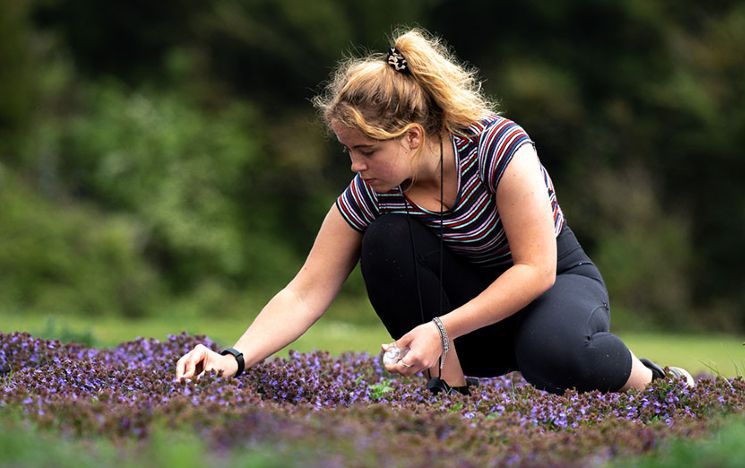
Our areas of interest
Our faculty are experts in four main research areas.
- Evolution
Natural selection from DNA to phenotypes.
Our faculty
- Behaviour
The mechanisms and functions of animal behaviour.
Our faculty
- Ecology
How organisms interact with their environments.
Our faculty
- Conservation and Sustainability
Protection and restoration of species and ecosystems.
Our faculty
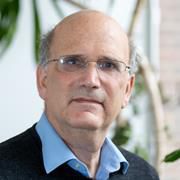
“We have an established reputation for collaborative and interdisciplinary approaches to teaching, research and impact.” Professor Daniel Osorio
Head of Department of Ecology and Evolution
Head of Department of Ecology and Evolution
Sussex Sustainability Research Programme
We have strong ties with other research groups at the University of Sussex, such as Neuroscience and Informatics. We also collaborate with scientists in a wide range of external organisations including the Mammal Society, Bumblebee Conservation Trust and UN Environment World Conservation Monitoring Centre. We also have formal links with Royal Botanic Gardens, Kew.
Current funding comes from a range of sources including UK Research Councils, the European Union, the Royal Society, charities, foundations, governments and industry.
Our facilities include:
- constant environment rooms
- greenhouses
- facilities for chemical analysis of contaminants
- molecular lab
- ant room
- apiaries
Contact
If you have any queries, please contact our Head of Department: Profesor Daniel Osorio on D.Osorio@sussex.ac.uk