Sussex Centre for Consciousness Science
Explore the research, activities and people in the Sussex Centre for Consciousness Science (SCCS), a Centre of Excellence.
Welcome to the Sussex Centre for Consciousness Science
Our mission at SCCS is to advance the scientific and philosophical understanding of consciousness and to use the insights from this research for the benefit of society, medicine and technology.
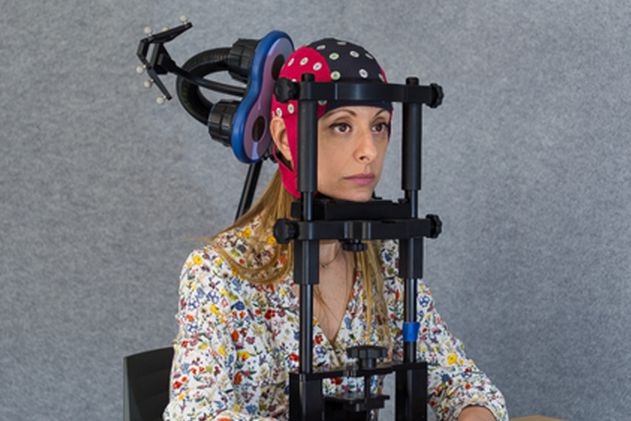
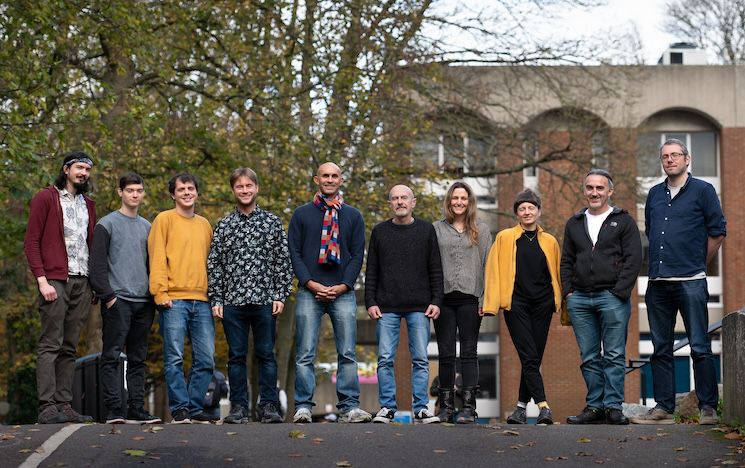
Image credit: Barry Falk 2018
Sussex Centre for Consciousness Science Research Symposium 2026
You can now book your ticket for our free afternoon research symposium.
Date: Wednesday 14th October 2026, 2-5pm
Location: Rooms 1 & 2, Bramber House Gallery, University of Sussex
Keynote speaker: We are excited to welcome Professor Fiona Macpherson as our keynote speaker with the talk Representation, Naive Realism and Colour Illusion. She is Professor of Philosophy at the University of Glasgow and founding Director of the Centre for the Study of Perceptual Experience. Her research focuses on philosophy of mind and perception, including consciousness, sensory experience and imagination. She currently serves as President of the British Philosophical Association.
- Full symposium schedule
2:00 Introduction
Professor Anil Seth, Director, Sussex Centre for Consciousness Science
2:10 15 minute talks from SCCS members, including questions and answers
Dr Lionel Barnett, Research Fellow, Department of Informatics
Dr Sophie Forster, Reader in Cognitive Neuroscience, School of Psychology: Mind Travel: How attention determines the pathway of inner experience
Dr Marek Pokropski, Visiting Research Fellow, Department of Philosophy: Idealisation and Modelling in Consciousness Science
Jocelyn Rose, PhD student at Brighton and Sussex Medical School: Psychedelic praxis: Embedding trauma-responsive therapy into psychedelic healthcare3:20 Posters and refreshments
Explore a selection of research posters from SCCS members, and find out which poster is awarded the prize
4:15 Keynote Lecture by Professor Fiona Macpherson: Representation, Naive Realism and Colour Illusion
According to naïve realism, perceptual experience consists in direct awareness of a mind-independent world. One of the theory's main attractions is that it offers a straightforward account of phenomenal character: what it is like to have a perceptual experience is constituted by the very objects and properties perceived, rather than by internal mental representations. In this way, naïve realists promise a naturalistic account of perceptual consciousness.
However, on this account, perceptual experience cannot involve error: one cannot perceptually misrepresent objects as having properties they do not possess. Strictly speaking, then, there can be no perceptual illusions.
Although naïve realists acknowledge purported cases of illusion, they devote considerable effort to explaining them away. I examine five prominent naïve realist strategies for doing so, including appeals to objective appearance properties, and argue that each faces significant difficulties. I conclude that naïve realism should be rejected.
5:00 Networking and drinks
We’ll move to the IDS Bar in the Students’ Union.
Call for posters
This year’s symposium programme features a poster exhibition, and we particularly encourage PhD students to present their research. Printing support is available on request.
The best PhD student poster will win a £50 Amazon voucher.
Submit your poster idea by Wednesday 7 October.
Fill in this form to submit your poster idea
Centre of Excellence
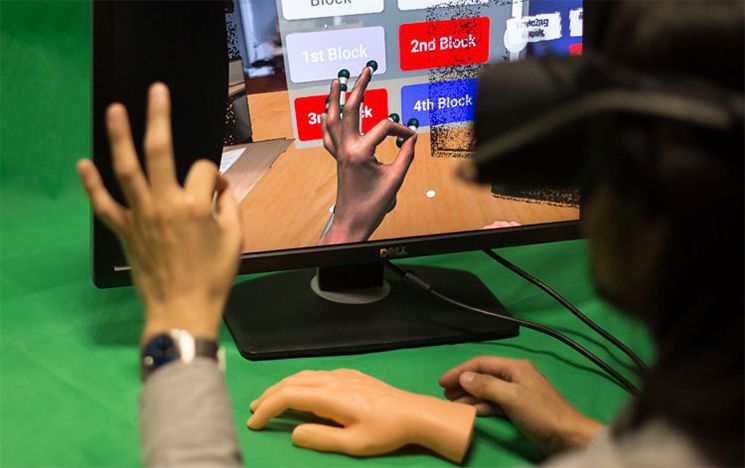
As experts in the field of consciousness science, we are proud to be one of 12 Centres of Excellence at the University of Sussex.
Find out more about our Centres of Excellence.
Is consciousness a controlled hallucination?
Watch this video and hear from Prof. Anil Seth, our Centre Director, about taking on impossible challenges and driving progress for our planet, and its people.
- Video transcript
Professor Anil Seth: With dividing the problem in different ways the impossible can often be made possible.
[MUSIC: Whooshing]
[TITLE CARD: ‘Sussex Centre for Consciousness Science’]
Professor Anil Seth: One of the greatest unsolved mysteries in science and philosophy
[MUSIC: Rising mysteriously]
Professor Anil Seth: is how conscious experiences arise from the biology of our brains and our bodies.
[MUSIC: Boom sound effect into stirring piano score]
[ON SCREEN TEXT: ‘Professor Anil Seth - Director, Sussex Centre for Consciousness Science’]
Professor Anil Seth: The Sussex Centre for Consciousness Science aims to unravel this mystery. My own theory is that conscious experiences are best explained as forms of controlled hallucinations.
[Echoes of Anil’s voice tails off “hallucinations”]
Professor Anil Seth: We brought together researchers from many different disciplines, from neuroscience to philosophy, mathematics to psychiatry
[Camera shutter noises as we flick through still photos of the subjects]
Professor Anil Seth: to get new insights and helping to drive applications in technology, medicine and society.
[Camera shutter noises as we flick through still photos of the applications]
[MUSIC: Upbeat world influenced track]
Professor Anil Seth: At Sussex we recently led a project called the Perception Census, investigating how we each experience a unique world.
Professor Anil Seth: In less than two years we've had more than 33,000 people take part from over a hundred countries. The results could transform our understanding of how and why we each experience the world in our own distinctive way.
[MUSIC: Light reverb]
[END CARD: University of Sussex logo ‘Impossible until it’s done’ with URL sussex.ac.uk/impossible]
Join us
Discover opportunities to join the Sussex Centre for Consciousness Science team, including funded PhD scholarships.
Start your journey