MSc, 1 year full time/2 years part time
Subject overview
Physics and astronomy at Sussex was ranked in the top 5 in the UK in The Times Good University Guide 2013, in the top 10 in the UK in The Sunday Times University Guide 2012, 16th in the UK in The Guardian University Guide 2014 and 21st in the UK in The Complete University Guide 2014.
The Department of Physics and Astronomy was ranked 12th in the UK in the 2008 Research Assessment Exercise, and top in the South East. 95 per cent of our research was rated as internationally recognised or higher, and 60 per cent rated as internationally excellent or higher.
Our research lies at the forefront of fundamental physics, ranging from quantum information processing, quantum optics, and cold atom physics, through a programme of top-rated particle physics experiments, to the theoretical understanding of space, time and matter.
The Department has a truly international character, with collaborations in Europe, North America, South East Asia and Australia.
The Department is a founder member of SEPnet, the South East Physics Network of physics departments, which in 2008 received a joint award of £12.5 million to enhance collaboration in graduate teaching and research.

Specialist facilities
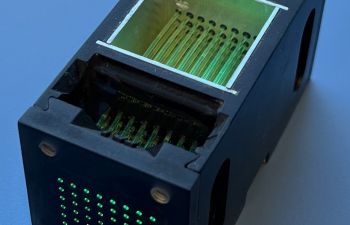
A wide range of experimental facilities at Sussex, at national centres and at international laboratories is available to graduate students. The Atomic, Molecular and Optical Physics research group at Sussex operates state-of-the-art laboratories for quantum information processing with trapped ions, photons and electrons. Our experimental facilities include a range of high-precision laser systems from infrared to ultraviolet, as well as miniature ion and atom chips for the controlled manipulation of quantum bits. Sussex is one of only two places in the world with the capability to manufacture the optical-fibre cavities needed for quantum networking.
Our postgraduate students have access to a range of computing facilities including the University’s high-performance computing service. Our research groups have dedicated unix-based computing systems, and access to national and international super-computer facilities. The Experimental Particle Physics group is part of a Grid Tier-2 node and benefits from access to the Grid’s distributed high-performance computing resources. We are currently refurbishing all of our research and teaching laboratories.
Academic activities
Both taught and research students are expected to attend research seminars, and to contribute to their group’s discussions of the latest journal papers. PhD students have an opportunity to attend an international conference and give a paper on their specialist subject. Many experimentalist PhD students also have the opportunity to travel to various other sites, such as the Institut Laue-Langevin (ILL) in the French Alps, CERN in Geneva and SNOLAB in Canada. Most PhD students acquire considerable computing skills, which they find an asset in obtaining employment.
Programme outline
The exploration of quantum phenomena at the scale of single atoms and photons has recently led to extraordinary applications of quantum entanglement such as quantum teleportation, quantum cryptography, and quantum computing. The degree of control exerted over these systems is reflected in the term ‘quantum technology’, describing both experimental and theoretical developments in this area.
This degree is for you if you have an interest in the wonders of quantum physics, and a desire to exploit its full power. At Sussex, we cover a wide range of research at the frontiers of quantum technology:
- ion-trap quantum processors
- ion-photon interfaces for the projected quantum internet
- superconducting quantum circuits
- devices for quantum enhanced metrology.
The long-term applications include improved sensors, powerful quantum simulators and the long-distance distribution of quantum information.
This MSc can be taken in an experimental or theoretical mode and has a strong research component embedded in one of our renowned research groups. On this course, you will develop unique experimental or theoretical techniques enabling you to pursue further studies or a career in industry.
We continue to develop and update our modules for 2013 entry to ensure you have the best student experience. In addition to the course structure below, you may find it helpful to refer to the 2012 modules tab.
Full-time structure
Over the year, your time is split equally between taught modules and a research project. The research project can be either experimental or theoretical. It can take the form of a placement in industry, but usually projects are supervised by our faculty in the Atomic, Molecular and Optical Physics research group. Your supervisor oversees your work in general. The choice of research project is decided, in consultation with you, soon after you arrive in the autumn term. You work on the research project throughout the year, with more emphasis on it outside the teaching periods. In many cases, the projects form the basis of research papers that are later published in scientific journals.
Autumn term: Atom-Light Interactions • Quantum Optics and Quantum Information. You also work on your research project.
Spring term: Electrons, Cold Atoms and Quantum Circuits • Experimental Quantum Technologies and Foundations.
In addition, you choose two options from Advanced Condensed State Physics • Computational Chemistry • Data Analysis Techniques • Fibre-Optic Communications • Further Quantum Mechanics • Lasers • Object-Oriented Programming • Programming in C++ • Quantum Field Theory I • RF Circuit Design. You also work on your research project.
Summer term: examinations and research project.
Part-time structure
In Year 1, you take the autumn- and spring-term core modules listed in the full-time course structure, opposite. After any examinations, you can begin work on your research project.
In Year 2, you continue working on your research project and also take the two options from the list above.
Assessment
Assessment of this MSc is made up of 50 per cent on a research project and 50 per cent on lecture modules. The research project culminates in your dissertation (with a contribution from a research talk). There are also six lecture modules, typically assessed by a mixture of problem sets with either an open-notes test or an unseen examination. A distinction can be awarded on the basis of excellence in both the research project and the lecture modules.
Current modules
Please note that these are the core modules and options (subject to availability) for students starting in the academic year 2012.
Advanced Condensed State Physics
15 credits
Spring teaching, year 1
This module covers the following topics:
- Electronic Energy bands in Solids. Electrons in periodic potentials; Brillouin Zones; Bloch states. Nearly Free Electron (NFE) model. Tight-Binding Approximation (TBA) model. Band structure of selected metals, insulators and semiconductors. Optical Properties.
- Electron Dynamics. Electrons and holes. Effective Mass. Mobilities. Magneto-transport.
- Semiconductors. Classification; Energy Gaps. Donor and Acceptor doping. Equilibrium carrier statistics in intrinsic and doped materials. Temperature dependence of electrical and optical properties.
- Semiconductor Devices. p-n junctions. Diodes, LEDs, Lasers, Transistors. Superlattices and 2DEG devices.
- Lattice Defects. Types of defects. Electronic and optical effects of defects in semiconductors and insulators.
Atom Light Interactions
15 credits
Autumn teaching, year 1
The module deals with the interaction of atoms with electromagnetic radiation. Starting from the classical Lorentz model, the relevant physical processes are discussed systematically. This includes the interaction of classical radiation with two-level atoms and the full quantum model of atom light interactions. Applications such as light forces on atoms and lasers are explored.
Computational Chemistry
15 credits
Spring teaching, year 1
The aim of the module is to provide a guide to the various levels of theory (with their associated acronyms) appearing in the rapidly expanding field of computational chemistry, with a particular emphasis on quantum chemical methods. The module will start with the concept of a potential energy surface (stationary points, the Born-Oppenheimer approximation, etc), the types of computation normally performed, and the basic quantum mechanics of electrons and nuclei in molecules. The solution of the Schrodinger equation under different approximations will then be explored.
Data Analysis Techniques
15 credits
Autumn teaching, year 1
This module introduces you to the mathematical and statistical techniques used to analyse data. The module is fairly rigorous, and is aimed at students who have, or anticipate having, research data to analyse in a thorough and unbiased way.
Topics include: probability distributions; error propagation; maximum likelihood method and linear least squares fitting; chi-squared testing; subjective probability and Bayes' theorem; monte Carlo techniques; and non-linear least squares fitting.
Electrons, Cold Atoms & Quantum Circuits
15 credits
Spring teaching, year 1
Topics covered include:
- Basics of Penning trap technology. Motion and eigenfrequencies of a trapped particle.
- Electrostatics and design of planar Penning traps.
- Electronic detection of a single trapped particle.
- The continuous Stern-Gerlach effect. Measurement of the Spin.
- Applications 1: Measurement of the electron's g-factor. Test of QED.
- Applications 2: Measurement of the electron's mass. Mass spectrometry.
- Trapping of neutral atoms with magnetic fields: Ioffe-Pritchard traps and the atom chip.
- Basics of Bose-Einstein condensation.
- Matter wave interferometry in atom chips: the adiabatic RF dressing technique.
- Introduction to circuit-QED. Superconducting microwave resonators and artificial atoms.
- Coherent quantum wiring of electrons, cold atoms and artificial atoms in a chip.
Experimental Quantum Technologies and Foundations
15 credits
Spring teaching, year 1
The module will introduce you to the practical implementation of quantum technologies. Topics include:
- general introduction to quantum computers
- ion trap quantum computers
- quantum computing with superconducting qubits
- quantum computing with neutral atoms
- linear optics quantum computing
- other quantum computing implementations
- hybrid quantum technologies
- quantum simulators
- quantum cryptography
- quantum effects in macroscopic systems
- quantum effects in biological systems
- foundations of quantum physics
- quantum physics and philosophy
Fibre Optic Communications
15 credits
Spring teaching, year 1
Topics covered in this module include: analysis of slab wave-guide; analysis of step index fibre; dispersion in the step index fibre; mono-mode fibre; propagation of light rays in multi-mode graded index fibres; dispersion in graded index fibres, light sources and detectors; modulation of semiconductor light sources; transfer characteristic and impulse response of fibre communication systems; power launching and coupling efficiency; receiver principles and signal-to noise ratio in analogue receivers; receivers for digital optical fibre communication systems; system noise; system components and aspects of system design; coherent optical fibre communication; and network systems.
Further Quantum Mechanics
15 credits
Autumn teaching, year 1
Topics covered include:
- Review of 4-vector notation and Maxwell equations.
- Relativistic quantum mechanics: Klein-Gordon equation and antiparticles.
- Time-dependent perturbation theory. Application to scattering processes and calculation of cross-sections. Feynman diagrams.
- Spin-1/2 particles and the Dirac equation. Simple fermionic scatterings.
Lasers
15 credits
Spring teaching, year 1
This module covers:
- Light-matter interaction.
- Rate equations of lasers.
- Principles of Gaussian optics and optical cavities.
- Types of lasers and their applications.
Object Oriented Programming
15 credits
Autumn teaching, year 1
You will be introduced to object-oriented programming, and in particular to understanding, writing, modifying, debugging and assessing the design quality of simple Java applications.
You do not need any previous programming experience to take this module, as it is suitable for absolute beginners.
Programming in C++
15 credits
Autumn teaching, year 1
After a review of the basic concepts of the C++ language, you are introduced to object oriented programming in C++ and its application to scientific computing. This includes writing and using classes and templates, operator overloading, inheritance, exceptions and error handling. In addition, Eigen, a powerful library for linear algebra is introduced. The results of programs are displayed using the graphics interface dislin.
Quantum Field Theory 1
15 credits
Autumn teaching, year 1
This module is an introduction into quantum field theory, covering
- Action principle and Lagrangean formulation of mechanics
- Lagrangean formulation of field theory and relativistic invariance
- Symmetry, invariance and Noether's theorem
- Canonical quantization of the scalar field
- Canonical quantization of the electromagnetic field
- Canonical quantization of the Dirac spinor field
- Interactions, the S matrix, and perturbative expansions
- Feynman rules and radiative corrections.
Quantum Optics and Quantum Information
15 credits
Autumn teaching, year 1
The module will introduce you to quantum optics and quantum information, covering:
- Quantum systems and the qubit
- Non-locality in quantum mechanics
- Methods of quantum optics
- The density matrix
- The process of measurement
- Introduction of irreversibility
- Decoherence and quantum information
- Quantum and classical communication
- Measures of entanglement and distance between states
- Logic operations and quantum algorithms
- Requirements for quantum computers
- Physical systems for quantum information processing.
RF Circuit Design
15 credits
Autumn teaching, year 1
This module aims to provide an advanced knowledge of design techniques and current applications in RF Circuit Design. It covers the principles and tools used in the design, construction and testing of radio frequency circuits. Emphasis will be given to practical concepts through demonstrations and example. The module includes; RF transmitters and receivers, two port networks and scattering parameters, the design of impedance matching networks, noise and noise figure matching, low noise amplifiers, power amplifiers, classes and linearity techniques, receiver circuit systems, IF amplifiers, selectivity and RF filters, power combining techniques, wafer probing techniques, RF measuring equipment - spectrum analysers, network analysers.
Entry requirements
UK entrance requirements
A first- or second-class undergraduate honours degree in a physics- or mathematics-based degree. Degrees in other subjects will be considered on an individual basis.
Overseas entrance requirements
Please refer to column B on the Overseas qualifications.
If you have any questions about your qualifications after consulting our overseas
qualifications table, contact the University.
E pg.enquiries@sussex.ac.uk
Visas and immigration
Find out more about Visas and immigration.
English language requirements
IELTS 6.5, with not less than 6.5 in Writing and 6.0 in the other sections. Internet TOEFL with 88 overall, with at least 20 in Listening, 20 in Reading, 22 in Speaking and 24 in Writing.
For more information, refer to English language requirements.
Additional admissions information
We must receive your application by 1 August if you are a non-EEA student because this degree requires clearance by the UK Government Academic Technology Approval Scheme (ATAS).
For more information about the admissions process at Sussex
For pre-application enquiries:
Student Recruitment Services
T +44 (0)1273 876787
E pg.enquiries@sussex.ac.uk
For post-application enquiries:
Postgraduate Admissions,
University of Sussex,
Sussex House, Falmer,
Brighton BN1 9RH, UK
T +44 (0)1273 877773
F +44 (0)1273 678545
E pg.applicants@sussex.ac.uk
Related programmes
Fees and funding
Fees
Home UK/EU students: £5,5001
Overseas students: £16,2002
1
The fee shown is for the academic year 2013.
2
The fee shown is for the academic year 2013.
To find out about your fee status, living expenses and other costs, visit further financial information.
Funding
The funding sources listed below are for the subject area you are viewing and may not apply to all degrees listed within it. Please check the description of the individual funding source to make sure it is relevant to your chosen degree.
To find out more about funding and part-time work, visit further financial information.
Leverhulme Trade Charities Trust for Postgraduate Study (2013)
Region: UK
Level: PG (taught), PG (research)
Application deadline: 1 October 2013
The Leverhulme Trade Charities Trust are offering bursaries to Postgraduate students following any postgraduate degree courses in any subject.
Sussex Graduate Scholarship (2013)
Region: UK, Europe (Non UK), International (Non UK/EU)
Level: PG (taught)
Application deadline: 16 August 2013
Open to final year Sussex students who graduate with a 1st or 2:1 degree and who are offered a F/T place on an eligible Masters course in 2013.
Faculty interests
For more detailed information, visit the Department of Physics and Astronomy. Our four research groups are focused on research into fundamental areas of science:
- Astronomy Centre
-
Dr Ilian Iliev uses supercomputer simulations to study the formation of large-scale cosmological structures, the cosmic dark ages and reionisation by the first stars.
Dr Antony Lewis works on theoretical and observational cosmology. He is involved with analysing data from the Planck Satellite.
Professor Andrew Liddle works on a range of topics in theoretical cosmology and dark energy. He is involved in the Planck Satellite and the Dark Energy Survey.
Dr Jon Loveday is an astronomer interested in observational cosmology, the nature of dark matter, and in galaxy formation. He participates in several world-leading optical and near-infrared galaxy surveys, including GAMA, SDSS, UKIDSS and VISTA.
Professor Seb Oliver is an astronomer researching the evolution of galaxies since the Big Bang. He undertakes surveys of the distant universe and leads the largest project on the Herschel mission.
Dr Kathy Romer is an observational cosmologist specialising in the detection and study of x-ray clusters of galaxies. She is the principal investigator of the international XMM Cluster Survey project.
Dr David Seery is a theoretical cosmologist working on the physics of the very early universe, and in particular the properties of the primordial density perturbation, which is believed to have seeded later structure formation.
Professor Peter Thomas uses supercomputer simulations to investigate the physics of galaxies and clusters of galaxies.
- Atomic, Molecular and Optical Physics
-
Dr Claudia Eberlein is a theorist working on quantum optics and quantum field theory.
Dr Barry Garraway heads this group and is a theoretical physicist with a particular research interest in quantum physics and quantum optics.
Dr Winfried Hensinger researches ion quantum technology and is implementing new quantum technologies using ultracold-trapped ions.
Dr Matthias Keller studies the interaction between single atomic ions and light to exchange information between quantum computers.
Dr José Verdú aims to develop novel types of traps for electrons with applications to metrology.
- Experimental Particle Physics
-
Dr Antonella De Santo heads this group and also leads the Sussex effort on ATLAS at CERN. She searches for supersymmetry in ATLAS data in a quest to uncover the nature of dark matter in the universe.
Dr Elisabeth Falk seeks to find manifestations of new physics in both neutrino experiments and in proton-proton interactions at the Large Hadron Collider.
Dr Mike Hardiman seeks to uncover the processes that led to the dominance of matter over anti-matter in the universe.
Professor Philip Harris is spokesperson of the CryoEDM experiment. He makes high-precision measurements of the neutron electric dipole moment, searching for subtle effects from new physics beyond the Standard Model.
Dr Jeff Hartnell is interested in fundamental properties of neutrinos. He works on the SNO+ experiment, attempting to determine whether the neutrino is its own anti-particle.
Dr Simon Peeters heads the SNO+ effort at Sussex and is interested in fundamental properties of the neutrino. He is also involved in the DEAP-3600 experiment aimed at direct searches of dark matter.
Dr Fabrizio Salvatore is involved in the ATLAS experiment at the CERN LHC, working on the experiment’s trigger system and on searches for supersymmetry in tau final states.
- Theoretical Particle Physics
-
Dr Xavier Calmet investigates physics beyond the Standard Model of particle physics and in particular the Higgs sector.
Professor Mark Hindmarsh is a world expert on the physics of the early universe and looks at the dynamics of strings in cosmology.
Dr Stephan Huber works on early universe cosmology and particle physics beyond the Standard Model.
Dr Sebastian Jaeger’s research centres on indirect ways to find new particles via their virtual effects.
Dr Daniel Litim heads this group and is a world leader of renormalisation group approaches to fundamental interactions in quantum field theory.
Careers and profiles
This degree may be attractive to you if you aim to:
- go on to doctoral study (theory or experiment)
- work in a high-technology company exploiting cutting-edge technologies related to our research. This could involve development of quantum information technology, high-precision measurements and quantum metrology, and photonics/optical communications
- work in business/data analysis, computer programming, software development, or teaching.
For more information, visit Careers and alumni.
School and contacts
School of Mathematical and Physical Sciences
The School of Mathematical and Physical Sciences brings together two outstanding and progressive departments – Mathematics, and Physics and Astronomy. It capitalises on the synergy between these subjects to deliver new and challenging opportunities for its students and faculty.
Physics and Astronomy, PG Admissions,
University of Sussex, Falmer,
Brighton BN1 9QH, UK
E msc@physics.sussex.ac.uk
Department of Physics and Astronomy
Discover Postgraduate Study information sessions
You’re welcome to attend one of our Discover Postgraduate Study information sessions. These are held in the spring and summer terms and enable you to find out more about postgraduate study and the opportunities Sussex has to offer.
Visit Discover Postgraduate study to book your place.
Other ways to visit Sussex
We run weekly guided campus tours every Wednesday afternoon, year round. Book a place online at Visit us and Open Days.
You are also welcome to visit the University independently without any pre-arrangement.