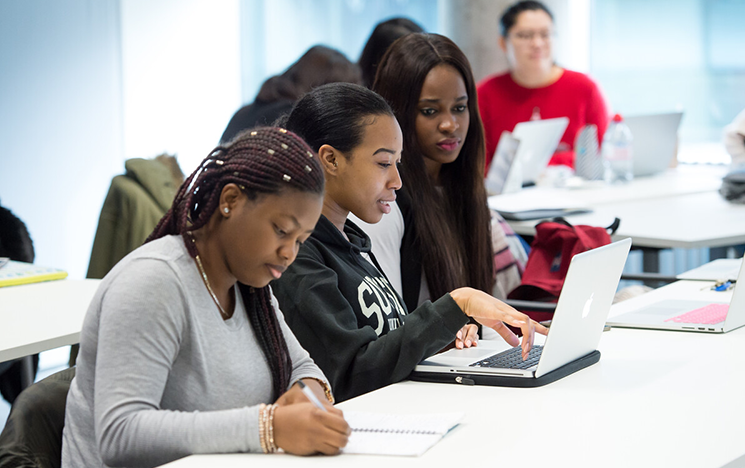
Thirty PhD students participated in the first School of Law Politics and Sociology (LPS) away day for postgraduate doctoral researchers this month. The away day - sponsored by the Sussex ESRC Doctoral Training Centre (DTC) Citizenship, Justice and Security pathway - was on the theme of professional development and focused particularly on getting published and post-doctoral research opportunities.
The first session was a round table comprising editors of leading academic journals in the three disciplines covered by the School - Law, Politics and Sociology - who gave some invaluable tips for doctoral students based on your personal editorial experience about getting published. The panel included: the Head of the Sussex Politics Department and editor of Government and Opposition Prof Paul Taggart; Dr Simon Susen from City University, London who is editor of the Journal of Classical Sociology; and Prof Stuart Harrop from the Sussex Law School who was an editor of the Journal of International Wildlife Law and Policy and is now on a number of editorial boards on Law, policy and cross-disciplinary journals.
This was followed by a session on getting a thesis published as an academic monograph introduced by Prof Taggart and Sussex Director of Doctoral Studies for Law, Politics and Sociology Prof Aleks Szczerbiak. Shared their experiences of working with academic publishers and putting together book proposals, both of them have guided a number of their own doctoral researchers through the publishing processes as well publishing their own theses as books.
The third session comprised established Sussex scholars from each of the three School disciplines who shared their personal insights into the publishing process. The panel for this session included: Head of School and Professor of Law Stephen Shute; Professor of Politics Paul Webb, who is also editor of the Party Politics journal; and Dr Susie Scott, a Reader in Sociology who has had great success in building up an impressive publications profile at an early stage in her academic career.
The final session involved two presentations on post-doctoral research opportunities. David Rose from the Sussex Research Office ran through the various post-doctoral funding opportunities that are currently available together with each scheme’s requirements, submission deadlines and success rate. Dr Cristobal Rovira Kaltwasser, currently a Marie-Curie Research Fellow in the Sussex Politics Department - who has secured two post-doctoral fellowships and is about to start his first permanent academic job – talked about his personal experience of putting together successful post-doctoral research projects.
Three major themes ran throughout the day. Firstly, that doctoral researchers need to multi-task: keeping up progress and momentum on their thesis while try to get publications and book proposals under review and putting together post-doctoral plans as on-going side-project; as well, of course, as other professional development activities such as teaching.
Secondly, PhD students were encouraged to network and be pro-active in seeking advice about publishing, post-doctoral opportunities and their professional development more generally. This includes: discussing professional development with their supervisors; talking to journal editors and book commissioning editors about ideas for articles and publishing their thesis; utilising the resources of the Sussex Research Office; and drawing on the expertise of current post-doctoral researchers based at Sussex for advice; as well as developing networks of contacts who can help them to identify publishing and post-doctoral opportunities.
Thirdly, the importance of being flexible and persistent was stressed in every session. This includes being: able to deal with critique and rejection of their work, willing to adapt their work in order to meet publishers’ and funders’ requirements, and to be very entrepreneurial in identifying and seeking both funding and post-doctoral research (and job) opportunities.
Commenting on outcome of the day, Prof Szczerbiak said:
‘I think that the clear message that came through from this day was that, in order to give themselves a chance in an extremely competitive academic jobs market, PhD students needed to build professional development into every stage of the research process and not just leave it until the end. The good news is that LPS puts a lot of time and effort into helping support our doctoral researchers’ professional development - both individual supervisors and also through School-level events such as this ESRC-funded away day - and our PhD graduates have a very good record of securing academic jobs.’
Back to news list