
2024
The importance and scientific value of long weather and climate records; examples of historical marine data efforts across the globe
Luterbacher, Jürg, Rob Allan, Clive Wilkinson, Ed Hawkins, Praveen Teleti, Andrew Lorrey, Stefan Brönnimann, Peer Hechler, Kondylia Velikou, and Elena Xoplaki, 2024
Western Pacific earthquake frequency linked to interannual variations in Pacific Ocean sea-level
Stone, Roger C., Jim Mori, Torben Marcussen, R. Dietmar Müller, Yvette Everingham, Robert Allan and Christa Pudmenzky, 2024
2023
The context of the 2018-2020 ‘protracted’ El Niño episode: Australian drought, terrestrial, marine, and ecophysiological impacts
Allan, R.J., Stone, R.C., Gergis, J., Baillie, Z., Heidemann, H., Caputi, N., D’Arrigo, R.D. and Pudmenzky, C., 2023
Global Historical Climate Database HCLIM
Lundstad, Elin, Yuri Brugnara, Duncan Pappert, Axel Andersson, Rob Allan, Barbara Chimani, Richard Cornes, Gaston Demarée, Janusz Filipiak, Lydia Gates, Gemma L. Ives, Julie Jones, Sylvie Jourdain, Andrea Kiss, Sharon Nicholson, Rajmund Przybylak, Philip Jones, Daniel Rousseau, Birger Tinz, Fernando Sanchez Rodrigo, Masumi Zaiki and Stefan Brönnimann, 2023
2022
Pre-industrial changes in southern Australian weather and climate variability: consolidating historical instrumental observations back to 1830
Gergis, Joëlle, Zak Baillie, Linden Ashcroft, Blair Trewin and Robert J. Allan, 2022
South African extreme weather during the 1877-78
Brugnara, Y, Stefan Brönnimann, S., Grab, S., Steinkopf, J., Burgdorf, A-M., Wilkinson, C. and Allan, R., 2022
Millions of digitized historical sea-level pressure observations rediscovered
Hawkins, Ed, Lisa V. Alexander, Rob J. Allan, 2022
Typhoon analysis in the vicinity of Japan using the instrumental meteorological data recorded in the ship logs of foreign vessels during the late Edo era
Kubota, H, T. Tsukahara, J. Hirano, A. Matsumoto, M. Zaishiro, T. Mikami, R. Allan, C. Wilkinson, S, Wilkinson, M. Mollan and A. De Jong, 2022
Meteorological data rescue – citizen science lessons learned from Southern Weather Discovery
Lorrey, Andrew M, Petra R. Pearce, Rob Allan, Clive Wilkinson, John-Mark Woolley, Emily Judd, Stuart Mackay, Sudhir Rawhat, Laura Slivinski, Sally Wilkinson, Ed Hawkins, Patrick Quesnel and Gilbert P. Compo, 2022
The 1757-1762 temperature observed in Beijing
Ren, YuYu, Guoyu Ren, Rob Allan, Jiao Li, Guowei Yang and Panfeng Zhang, 2022
Protracted Indian monsoon droughts of the past millennium and their societal impacts
Kathayat, Gayatri, Ashish Sinha, Sebastian F.M. Breitenbach, Liangcheng Tan, Christoph Spötl, Hanying Li, Xiyu Dong, Haiwei Zhang, Youfeng Ning, Robert J Allan, Vinita Damodaran, R. Lawrence Edwards and Hai Cheng, 2022
Hurricanes and Heatwaves
Symes, Ruth A [containing Robert Allen's input into ACRE and data rescue], 2022
Reordering Adivasi Worlds: Representation, Resistance, Memory
Sangeeta Dasgupta, 2022
The ‘Great Indian Blackout’: Why India’s Electricity System Needs a Technological Revolution
Stuart Peters, School of Engineering & Materials Science, Queen Mary University of London and Vinita Damodaran, Centre for World Environmental History, University of Sussex, 2022
2021
Health and Environmental Impacts of Coal Mining”
Prabir Chatterjee, Manan Ganguli and Smrajit Jana, 2021
Circularity, entropy, ecological conflicts and “unburnable fuels”
Joan Martinez-Alier, 2021
The economy is not circular, it is increasingly entropic. Energy from the photosynthesis of the distant past, fossil fuels, is burnt and dissipated. Even without further economic growth the industrial economy would need new supplies of energy and materials extracted from the “commodity frontiers”, producing also more waste (including excessive amounts of greenhouse gases). Therefore, new ecological distribution conflicts (EDC) arise all the time. Such EDCs are often “valuation contests” displaying incommensurable plural values. Examples from the Atlas of Environmental Justice are given of coal, oil and gas-related conflicts in several countries combining local and global complaints. Claims for climate justice and recognition of an ecological debt have been put forward by environmentalists from the South since 1991, together with a strategy of leaving fossil fuels in the ground through bottom-up movements. This could make a substantial contribution to the decrease in carbon dioxide emissions.
'Disaster, state and science: historical narratives of extreme weather in East Asia and the Pacific'
Fiona Williamson
Disaster Prevention Management 30:1 (2021): 1-4
2020

Ruling the World: Freedom, Civilisation and Liberalism in the Nineteenth-Century British Empire
Alan Lester, Kate Boehme and Peter Mitchell, Cambridge University Press, 2020
Ruling the World tells the story of how the largest and most diverse empire in history was governed, everywhere and all at once. Focusing on some of the most tumultuous years of Queen Victoria's reign, Alan Lester, Kate Boehme and Peter Mitchell adopt an entirely new perspective to explain how the men in charge of the British Empire sought to manage simultaneous events across the globe. Using case studies including Canada, South Africa, the Caribbean, Australia, India and Afghanistan, they reveal how the empire represented a complex series of trade-offs between Parliament's, colonial governors', colonists' and colonised peoples' agendas. They also highlight the compromises that these men made as they adapted their ideals of freedom, civilization and liberalism to the realities of an empire imposed through violence and governed in the interests of Britons.

Commonwealth Forestry & Environmental History: Empire, Forests And Colonial Environments In Africa, The Caribbean, South Asia And New Zealand
EDITOR- Vinita Damodaran and Rohan D’Souza, Primus, 2020
Contemporary anxieties about global warming and climate change impacts have unsettled the ways in which we think about environmental politics and human history. Intense discussions have already begun over whether we need to reconsider what we understand by the term ‘environmental change’ and if humans have truly become a ‘geo-physical’ force. Put differently, how should we recast our understanding of the planet’s varied environmental pasts in order to make sense of the Anthropocene present?
This collection of 19 essays on forestry and environmental change in the erstwhile colonies of the British
Empire—today comprising the ‘Commonwealth of Nations’—builds on Richard Grove’s quest for achieving a ‘global synthesis’ as efforts towards writing environmental histories on a planetary scale. The Commonwealth of Nations as a single environmental bloc for study, enquiry and historical scrutiny, explores connected environmental histories, compares dissimilar ecological regions and debates ideologies for environmental management.
Commonwealth Forestry and Environmental History is intended to enable conversations between environmental historians, foresters, sustainable development practitioners, policy makers and those keen on understanding contemporary politics brought on by concerns about climate change.
 Sorrow Songs of Woods: Adivasi-Nature Relationship in the Anthropocene in Manbhum
Nirmal Kumar Mahato
2020
Sorrow Songs of Woods focuses the fine and complex relationship between the Adivasis and nature in Manbhum. This book analyses the nature of colonial intervention in the ‘indigenous’ society and the politics of the identity formation of the Adivasis in relationship with the transformation of their community system and the state. It provides an empirically detailed and regional specific study on ethnic version of ‘ecological nationalism’ and seeks to locate the concept of indigeneity in terms of values, identities and knowledge systems, within a unified ‘indigeneous worldview’.
This volume also studies the Adivasi survival strategies and resource utilization practices. From the late nineteenth century onwards, the recurrent famines that plagued this area were the consequence of the changes wrought by colonial policies on centuries old traditional modes of productions and environmental resource management systems. When the people were deprived of nutrient supplements, the general health condition declined. The Adivasi medicine men took the path of exorcism and ascribed the causes of diseases to individuals, especially women. This volume also traces the history of Kurmis who were not Adivasis but wanted to become 'Adivasis' so that they could be included amongst ‘tribe’.
With an interdisciplinary perspective, this book is not only an important contribution to environmental history but to the new and emerging fields of Adivasi Studies and Environmental Humanities.
Event, Process and Pulse: Resituating Floods in Environmental Histories of South Asia
Rohan D'Souza
Environment and History 26 (2020): 31-50
The notion of the flood in South Asia is no longer solely characterised as the archetypal natural disaster. This perceptual shift, as this article will point out, draws from a conceptual shift within the field of environmental histories of South Asia. In the course of exploring and debating ideas about environmental change, environmental historians have drastically reconsidered the role and impacts of flooding in South Asia through three distinct narrative frameworks: (i) extreme hydraulic events; (ii) geomorphological process; and (iii) biological pulses. Environmental history as a field has thus helped to flesh out and radically revise our understanding of flooding, which has changed from previously being seen as an ahistorical calamitous event to instead providing contexts for revealing complex relationships between geomorphological processes, biological pulses and livelihood strategies. The notion of the flood in South Asia, consequently, is now acknowledged as an ecological force that is mediated by social, cultural and political interventions rather than exclusively borne out as an effect of nature.
Citizen, Consumer, User Covid-19 and the Higher Education Churn In India [PDF 361.47KB]
Rohan D'Souza
JMC Review, 2020
As the infectious spread of the Covid-19 virus began to overwhelm people and governments across the world, higher education, unsurprisingly, has also been profoundly disrupted.
India’s Coronavirus Refugees Are Also Development Refugees
Gladson Dungdung
Scientific American, June 20 2020
The pandemic has increased the desperation of a population already facing economic exploitation and environmental destruction
Covid-19 and islands (states, territories and sub-national island jurisdictions- SNIJs) [PDF 193.65KB]
Iain Orr (BioDiplomacy)
June 2020
An update in a revised format of a note started on 25 March – then updated every 5 days - with data from the Worldometer website on Covid-19 and islands.
Zooming towards a University Platform [PDF 250.24KB]
Rohan D’Souza (Associate Professor, Graduate School of Asian and African Area Studies, Kyoto University)
RAIOT June 2020
George Packer, journalist, novelist and a frequent contributor to The Atlantic, acidly concluded in a recent polemic that the “coronavirus didn’t break America”. Rather, the virus simply “revealed what was already broken”.1 For Packer, the global pandemic in all its relentless fury actually laid bare Trump’s dysfunctional government within an already corroding and ailing society. The Covid-19 rampage, hence, was more messenger than the message.
‘Flood Mortality on SE Asia: Can Paleo-Historical Information Help Save Lives?’
Alan Ziegler, Hanshe Lim, Robert Wasson, Fiona Williamson
Hydrological Processes (December, 2020)
F. Williamson
Water History (October, 2020)
‘A Question of Scale: Making Meteorological Knowledge and Nation in Imperial Asia’
F. Williamson and V. Janković
History of Meteorology 9 (2020)
2019
Palgrave Studies in World Environmental History
Damodaran, V. (Ed), D’Souza, R. (Ed), Sivasundaram, S. (Ed), Beattie, J. J. (Ed)
 The widespread perception of a global environmental crisis has stimulated the burgeoning interest in environmental studies and has encouraged a range of scholars, including historians, to place the environment at the heart of their analytical and conceptual explorations. An understanding of the history of human interactions with all parts of the cultivated and non-cultivated surface of the earth and with living organisms and other physical phenomena is increasingly seen as an essential aspect both of historical scholarship and in adjacent fields, such as the history of science, anthropology, geography and sociology. Environmental history can be of considerable assistance in efforts to comprehend the traumatic environmental difficulties facing us today, while making us reconsider the bounds of possibility open to humans over time and space in their interaction with different environments. This series explores these interactions in studies that together touch on all parts of the globe and all manner of environments including the built environment. Books in the series come from a wide range of fields of scholarship, from the sciences, social sciences and humanities. The series particularly encourages interdisciplinary projects that emphasize historical engagement with science and other fields of study.
Biofuels’ unbalanced equations: Misleading statistics, networked knowledge and measured parameters: Part 2. Networks, consensus and power (PDF, 0.2MB)
 Kate B. Showers
In International Review of Environmental History: Volume 5, Issue 2, 2019
Abstract
The independence of claims that biofuels can mitigate climate change is assessed using environmental history. The development of professional and institutional networks that produced both energy demand models and soil, land and terrain databases and models is traced, and the acquisition of significant unacknowledged social power is examined. Data literacy’s critical perspective identified sources of embedded distortions, unacknowledged bias and inherent weaknesses. Claims of the robustness, accuracy, objectivity and originality of globalised analyses in general, and global biofuels projections in particular, are challenged. The effectiveness of policy based upon these results is discussed.
Synchronous droughts and floods in the Southern Chinese Loess Plateau since 1646 CE in phase with decadal solar activities
Xuefeng Yu, Yi Wang, Shiyong Yu and Zhihai Kang (2019). Global and Planetary Change. ISSN 0921-8181
Abstract
Droughts and floods are two longstanding and devastating climatic threats to mankind. They are challenging to predict mainly due to the significant spatial and temporal variations of precipitation. Using historical archives back from 1646 CE, here we present a high-resolution catchment level dataset of droughts and floods in the southern Chinese Loess Plateau (hereafter, CLP) within the middle reaches of River Jing. We have analysed the occurrences of floods and droughts based a specially-developed statistics from historical archives, as well as the daily rainfall from present-day observations within the catchment. Overall, our results show that the frequency of droughts and floods in the region is synchronous on decadal timescales with solar activities and the Pacific Decadal Oscillation (hereafter, PDO) index, and they are also broadly in phase with changes in both global and regional reconstructed temperatures. At decadal to interannual timescales, PDO and El Niño and Southern Oscillation (hereafter, ENSO) drive an uneven distribution of precipitation in different seasons in the southern CLP, which could be one of the reasons for the strong association of floods and droughts with the PDO and ENSO signals in our catchment. If the global temperature continues to rise in the future, we expect that the risk of both droughts and floods in the study region will also increase.
A 1000-year-long documentary record of the lower Yellow River ice-jam floods and its climatic implications
Yi Wang, Shi-Yong Yu and Wen-jia Li (2019). In: INQUA Congress 2019, 25-31 July 2019, Dublin.
Abstract
The Yellow River floodplain is a low-lying landmass, which is remarkably susceptible to excessive precipitation and prone to floods. Therefore, it has a strong association with calamity and has traditionally been regarded as "China's sorrow." Also, given its immense ecological, societal, and economic importance, the Yellow River floodplain contributes significantly to human welfare, which has colloquially known as the birthplace of Chinese civilization. Therefore, a deeper understanding of flooding frequency in this area is especially important for the assessment of socio-economic risks associated with future climate changes. The late 20th century contained a number of catastrophic floods in the lower Yellow River, which has exerted devastating impacts on the human livelihood. However, the long-term context of apparently anomalous flooding events witnessed in recent decades has received very limited attention.
To better understand the nature, evolution, and driving mechanisms of river floods, it is widely recognised that the instrumental time series should be placed within a longer time framework. Here we present a 1000-year-long documentary record of ice-jam floods of the lower Yellow River by compiling flooding events in terms of levee breaches and overflows during the early spring months as documented in official dynamic histories. A time series with a yearly resolution was formed by using a binary expression with "1" denoting the presence and "O" the absence of flooding event for a year. The flood frequency is computed by convolution with a 31-year-wide window. Our results reveal an increasing frequency of ice-jam floods since AD 1855 when an avulsion occurred, and the river shifted northward to its current channel. As the occurrence of the ice-jam floods is essentially induced by a deepened temperature gradient between the inland and maritime region in the lower Yellow River area during the early spring months (January-March), we ascribe the increasing frequency of ice-jam floods to the prolonged negative phase of ENSO (i.e., La Nina). Our finding implies the global teleconnection of terrestrial hydrological systems to the ENSO cycles.
Biofuels’ unbalanced equations: Misleading statistics, networked knowledge and measured parameters (PDF, 0.2MB)
 Kate B. Showers
In International Review of Environmental History: Volume 5, Issue 1, 2019
Abstract
Biofuels were central to the European Union’s early twenty-first-century responses to Kyoto-mandated carbon emissions reduction. This paper, the first part of three, traces the evolution of eight globalised soil, land and terrain databases and models underpinning global biofuels research. Central to the discussion are examination of the meaning and power of numbers; the significance of homogenising and harmonising data; and the decline of data quality inherent in derivation. The relevance of globalised model-based analysis for practical policy formulation and local implementation are discussed.
A Cultural History of Famine
Food Security and the Environment in India and Britain, 1st Edition
Edited by Ayesha Mukherjee
Routledge, January 2019
 The term "food security" does not immediately signal research done in humanities disciplines. It refers to a complex, contested issue, whose currency and significance are hardly debatable given present concerns about environmental change, resource management, and sustainability.
The subject is thus largely studied within science and social science disciplines in current or very recent historical contexts. This book brings together perspectives on food security and related environmental concerns from experts in the disciplines of literary studies, history, science, and social sciences. It allows readers to compare past and contemporary attitudes towards the issues in India and Britain – the economic, social, and environmental histories of these two nations have been closely connected ever since British travellers began to visit India in the latter half of the sixteenth century. The chapters in this book discuss themes such as climate, harvest failure, trade, technological improvements, transport networks, charity measures, and popular protest, which affected food security in both countries from the seventeenth century onwards. The authors cover a range of disciplinary and interdisciplinary approaches, and their chapters allow readers to understand and compare different methodologies as well as different contexts of time and place relevant to the topic.
This book will be of great interest to students and researchers of economic and social history, environmental history, literary studies, and South Asian studies.
Climate signals, environment, and livelihoods in the Long Seventeenth Century in India
Vinita Damodaran, James Hamilton and Rob Allan (2019)
In: Mukherjee, Ayesha (ed.) A cultural history of famine: food security and the environment in India and Britain. Routledge Environmental Humanities . Routledge, Oxon, pp. 52-70. ISBN 9781138230927
The article examines the impact of the little ice age on India
Also in 2019
H.J. Noltie (2019). A history of Indian collections at the Royal Botanic Garden Edinburgh in 22 objects, in R. Jeffery (ed.) India in Edinburgh: 1750s to the Present, pp 96–113. New Delhi
H.J. Noltie (2019). Moochies, Gudigars and other Chitrakars: their contribution to 19th-century Indian botanical art and science. Marg 70: 34–43.
H.J. Noltie & M.F. Watson (2019). The Buchanan-Hamilton collection of botanical drawings at the Linnean Society of London. Marg 70: 81–84.
H.J. Noltie. (2019) A Scottish Daughter of Flora: Lady Charlotte Murray and her Herbarium Portabile of 1781–4. Archives of Natural History 46: 298–317
Nandikar, M.D., Shinde, R.A. & Noltie, H.J. (2019). Taxonomy and typification of Kalanchoe olivacea and K. bhidei (Crassulaceae). Rheedea 29: 197 – 208. Rheedea
Miehe, G., Schleuss, P.-M., Seeber, E. .... Noltie, H.J. [+ 31 other authors] (2019). The Kobresia pygmaea ecosystem of the Tibetan highlands – Origin, functioning and degradation of the world's largest pastoral alpine ecosystem: Kobresia pastures of Tibet Science of the Total Environment. 648: 754–771.
R. D'Souza. ‘Scarcity, Environmentalism and the Politics of Pre-Emption: reconsidering the environmental histories of South Asia in the epoch of the Anthropocene’, Geoforum, 101, 2019, pp.242-49.
R. D'Souza. ‘Should Clean Energy be Politics as Usual? Reflections on India’s Energy Transition Quest’, Georgetown Journal of Asian Affairs, Vol.4, No.2, winter 2019, pp. 38-44.
2018
 The Palgrave Handbook of Climate History
Sam White, Christian Pfister, Franz Mauelshagen (Eds.)
Palgrave Macmillan, 2018
This handbook offers the first comprehensive, state-of-the-field guide to past weather and climate and their role in human societies. Bringing together dozens of international specialists from the sciences and humanities, this volume describes the methods, sources, and major findings of historical climate reconstruction and impact research. Its chapters take the reader through each key source of past climate and weather information and each technique of analysis; through each historical period and region of the world; through the major topics of climate and history and core case studies; and finally through the history of climate ideas and science. Using clear, non-technical language, The Palgrave Handbook of Climate History serves as a textbook for students, a reference guide for specialists and an introduction to climate history for scholars and interested readers.
 The Politics of Swidden farming. Environment and Development in Eastern India
Debojyoti Das
Anthem Press, September 2018
'The Politics of Swidden farming’ is an ethnography of swidden farming practised – a characteristically remote, inaccessible and under-researched region of South Asia. The research ties on both archival-historical and contemporary ethnographic discourses on swidden farming and agrarian development among the eastern Naga community inhabiting the northeastern borderland state of Nagaland.
‘The Politics of Swidden farming’ offers a new explanation for the changes taking place in slash-and-burn (jhum or swidden) farming in the highlands of eastern India through an ethnographic case study. Today market-led agriculture is transforming land and labour relations. Jhum cultivators are beneficiaries of state schemes, including internationally funded, community-driven development or biodiversity conservation programmes.
The book traces the story of agroecological change and state intervention to colonial times (including post Indian independence) when Nagaland was seen as the frontier of state and civilization. Contemporary agrarian change can be understood by contextualizing farming not just in terms of the science and technology of agriculture or conservation/biodiversity but also in terms of technologies of rule. For the colonial administrators of the Naga Hills – who saw their role partially in terms of rescue and record ethnography – jhum practices were part of backward Naga customs and traditions. Improving farming practices was bound up with indirect rule as a distinct process of governance involving forms of knowledge and intervention. It was political expediency rather than imperial science that changed local agroecologies and pressurized shifting cultivation. Crucially, neighbouring Naga terrace rice cultivators were promoted as offering a more civilized – yet local – alternative.
 Richard Grove, George Adamson
Palgrave Macmillan, 2018
This book examines the role of the El Niño Southern Oscillation (ENSO) in society. Throughout human history, large or recurrent El Niños could cause significant disruption to societies and in some cases even contribute to political change. Yet it is only now that we are coming to appreciate the significance of the phenomenon. In this volume, Richard Grove and George Adamson chart the dual history of El Niño: as a global phenomenon capable of devastating weather extremes and, since the 18th century, as a developing idea in science and society. The chapters trace El Niño’s position in world history from its role in the revolution in Australian Aboriginal Culture at 5,000 BP to the 2015-16 ‘Godzilla’ event. It ends with a discussion of El Niño in the current media, which is as much a product of the public imagination as it is a natural process.
Review: Morgan on Grove and Adamson, 'El Niño in World History'
Also in 2018
H.J. Noltie (2018). John Bradby Blake and James Kerr: hybrid botanical art, Canton and Bengal, ca. 1770. Proceedings of the JBB symposium, Curtis’s Botanical Magazine 34: 427–51.
H.J. Noltie (2018). The Botanical and Forestry Library of Hugh Cleghorn of Stravithie. Edinburgh Bibliographical Society, occasional publication. Edinburgh: Edinburgh Bibliographical Society & RBGE.
H.J. Noltie (2018). An album of Trichinopoly bird paintings. The Linnean, 34: 15–22.
Roy MacLeod, The Mineral Sanction: The Great War and the Strategic Role of Natural Resources, in Richard Tucker, Tait Keller, J.R. McNeil, Martin Schmid (eds.), Environmental Histories of the First World War (New York: Cambridge University Press, 2018), 99-116.
R. D'Souza. ‘Re-imagining the Northeast in India, Again: Did Geography Sidestep History in Vision (2020)?’ In Bhagat Oinam and Dhiren A. Sadokpam (ed.), Northeast India : A Reader, Routledge: London, 2018, pp. 436-52. Northeast India | A Reader
S. Ravi Rajan and Rohan D’Souza, ‘Environmental History of India: An Overview’ in S. Ravi Rajan and Lise Sedrez (ed.), The Great Convergence: Environmental Histories of BRICS, Oxford University Press: New Delhi, 2018, pp. 274-95.
2017
Climate Change and the Humanities
 Alexander Elliott, James Cullis, Vinita Damodaran (Eds.)
Palgrave Macmillan, 2017
This volume of essays fills a lacunae in the current climate change debate by bringing new perspectives on the role of humanities scholars within this debate. The humanities have historically played an important role in the various debates on environment, climate and society. The past two decades especially have seen a resurfacing of these environmental concerns across humanities disciplines in the wake of what has been termed climate change. This book argues that these disciplines should be more confident and vocal in responding to climate change while questioning the way in which the climate change debate is currently being conducted in academic, political and social arenas. Addressing climate change through the varied approaches of the humanities means re-thinking and re-evaluating its fundamental assumptions and responses to perceived crisis through the lens of history, philosophy and literature. The volume aims thus to be a catalyst for emerging scholarship in this field and to appeal to an academic and popular readership.
China: A Historical Geography of the Urban
Yannan Ding, Maurizio Marinelli, Xiaohong Zhang (Eds.) Palgrave Macmillan, 2017
This book offers a unique contribution to the burgeoning field of Chinese historical geography. Urban transformation in China constitutes both a domestic revolution and a world-historical event. Through the exploration of nine urban sites of momentous change, over an extended period of time, this book connects the past with the present, and provides much-needed literature on city growth and how they became complex laboratories of prosperity.
The first part of this book puts Chinese urban changes into historical perspective, and probes the relationship between nation and city, focusing on Shanghai, Beijing and Changchun. Part two deals with the relationship between history and modernity, concentrating on Tunxi, a traditional trade center of tea, New Villages in Shanghai and street names in Taipei and Shanghai. Part three showcases the complexities of urban regeneration vis-à-vis heritage preservation in cities such as Datong, Tianjin and Qingdao.
This book offers an innovative interdisciplinary and international perspective, which will be of interest to students and scholars of Chinese urban studies, as well Chinese politics and society.
Palgrave Studies in World Environmental History
The widespread perception of a global environmental crisis has stimulated the burgeoning interest in environmental studies. This has encouraged a wide range of scholars, including historians, to place the environment at the heart of their analytical and conceptual explorations. As a result, the understanding of the history of human interactions with all parts of the cultivated and non-cultivated surface of the earth and with living organisms and other physical phenomena is increasingly seen as an essential aspect both of historical scholarship and in adjacent fields, such as the history of science, anthropology, geography and sociology. Environmental history can be of considerable assistance in efforts to comprehend the traumatic environmental difficulties facing us today, while making us reconsider the bounds of possibility open to humans over time and space in their interaction with different environments. This new series explores these interactions in studies that together touch on all parts of the globe and all manner of environments including the built environment. Books in the series will come from a wide range of fields of scholarship, from the sciences, social sciences and humanities. The series particularly encourages interdisciplinary projects that emphasize historical engagement with science and other fields of study.
Download the brochure: Palgrave Studies in World Environmental History [PDF 347.83KB]
Also in 2017
H.J. Noltie (2017). Botanical Art from India: from the Collection of the Royal Botanic Garden Edinburgh. Edinburgh: RBGE.
R. D'Souza. ‘Carbon Forests and Rivers of Conflict: Writing South Asian Environmental History in the Epoch of the Anthropocene’, Asia’s Transformations to Sustainability: Past, Present and Future of the Anthropocene, The Research Institute for Humanity and Nature, National Institutes for the Humanities and Inter-University Research Institute Corporation, RIHN 11th International Symposium Proceedings March 10-11, 2017, Kyoto, Japan, pp.108-129.
2016
 An Environmental History of Southern Malawi - Land and People of the Shire Highlands
Brian Morris
Palgrave, 2016
This book is a pioneering and comprehensive study of the environmental history of Southern Malawi. With over fifty years of experience, anthropologist and social ecologist Brian Morris draws on a wide range of data – literary, ethnographic and archival – in this interdisciplinary volume.
Specifically focussing on the complex and dialectical relationship between the people of Southern Malawi, both Africans and Europeans, and the Shire Highlands landscape, this study spans the nineteenth century until the end of the colonial period. It includes detailed accounts of the early history of the peoples of Northern Zambezia; the development of the plantation economy and history of the tea estates in the Thyolo and Mulanje districts; the Chilembwe rebellion of 1915; and the complex tensions between colonial interests in conserving natural resources and the concerns of the Africans of the Shire Highlands in maintaining their livelihoods.
A landmark work, Morris’s study constitutes a major contribution to the environmental history of Southern Africa. It will appeal not only to scholars, but to students in anthropology, economics, history and the environmental sciences, as well as to anyone interested in learning more about the history of Malawi, and ecological issues relating to southern Africa.
 Indian Forester, Scottish Laird / The Cleghorn Collection [PDF 568.44KB]
H.J. Noltie
Hugh Francis Clarke Cleghorn (1820–1895) was one of the many remarkable Scottish surgeons who worked for the East India Company, but who used an official posting as a base for research upon India’s rich flora, and recording it visually in drawings made by Indian artists. His particular interest was in useful plants, which led to the major work in the field of forest conservancy for which he is best remembered. In 1851 he read a pioneering report on tropical deforestation to the British Association for the Advancement of Science; in 1856 he was appointed the Madras Presidency’s first Conservator of Forests; and in the 1860s, with Dietrich Brandis, Cleghorn played a major role in setting up a structure for forest management in British India that, while providing timber for burgeoning commercial demand (especially railways), allowed an element of forest preservation for the protection of watersheds and climatic amelioration.
Rob Allan, Georgina Endfield, Vinita Damodaran, George Adamson, Matthew Hannaford, Fiona Carroll, Neil Macdonald, Nick Groom, Julie Jones, Fiona Williamson, Erica Hendy, Paul Holper, J. Pablo Arroyo-Mora, Lorna Hughes, Robert Bickers and Ana-Maria Bliuc.
Wiley Interdisciplinary Reviews: Climate Change January 2016.
 Climate change has become a key environmental narrative of the 21st century. However, emphasis on the science of climate change has overshadowed studies focusing on human interpretations of climate history, of adaptation and resilience, and of explorations of the institutions and cultural coping strategies that may have helped people adapt to climate changes in the past. Moreover, although the idea of climate change has been subject to considerable scrutiny by the physical sciences, recent climate scholarship has highlighted the need for a re-examination of the cultural and spatial dimensions of climate, with contributions from the humanities and social sciences. Establishing a multidisciplinary dialogue and approach to climate research past, present, and future has arguably never been more important. This article outlines developments in historical climatology research and considers examples of integrated multidisciplinary approaches to climate, climatic variability, and climate change research, conducted across the physical sciences, social sciences, humanities, and the arts. We highlight the international Atmospheric Circulation Reconstructions over the Earth (ACRE) initiative as one example of such an integrated approach. Initially, ACRE began as a response from climate science to the needs of the agricultural sector in Queensland, Australia for a longer, more spatially, and temporally-complete database of the weather. ACRE has now evolved to embrace an international group of researchers working together across disciplines to integrate their efforts into a four-dimensional (4D) dynamical global historical climate-quality reanalysis (reconstruction).
Introduction: Human-nature Interactions through a Multispecies Lens
Alex Aisher, Vinita Damodaran
Conservation & Society, 2016
This introduction brings together a group of papers focusing on conservation theory and practice, and argues strongly for a new place-based conservation through a multispecies lens. Honouring the work of Brian Morris, a scholar who has consistently forged a persuasive set of conceptual connections between science and society, and building on his insights into environmental history and human-nature interactions, we outline a vision of conservation that incorporates new narratives – at the intersection between the ecological and the social – to reimagine the world in the Anthropocene. This includes challenging the persistence of fortress, neoprotectionist and other top-down forms of conservation, through a recognition that conservation is deeply rooted in (human, nonhuman and more-than-human) senses of place. The introduction urges scholars to focus on landscapes as units of analysis: 'multispecies assemblages' that are easily overlooked at other spatial and historical scales. It calls for increased attention to the contact zones where the lives of humans and other species biologically, culturally and politically intersect, as a counterpoint to the dominant planetary perspective of earth systems and conservation science. It underlines the importance of deep relational analyses of human interactions with other life forms, through renewed attention to multispecies histories, locality, and forms of knowledge rooted in place. It is at this level, through historically nuanced accounts founded on a more place-based conception of ourselves as a species, that new narratives and answers to our current predicament will emerge.
2015
Hybrid Knowledge in the Early East India Company World
Anna Winterbottom
Palgrave Macmillan, December 2015, Cambridge Imperial and Post-Colonial Studies Series
Hybrid Knowledge in the Early East India Company World presents a new reading of the English East India Company 1660-1720. It shows how innovative works covering natural history, ethnography, theology, linguistics, medicine, and agriculture - were created amid early modern struggles for supremacy in Asia, the Indian Ocean and the Atlantic.
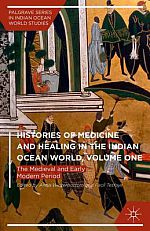 Histories of Medicine and Healing in the Indian Ocean World
Volume One: The Medieval and Early Modern Period
Anna Winterbottom, Facil Tesfaye (Eds.)
Palgrave Macmillan, November 2015, Palgrave Series in Indian Ocean World Studies
This interdisciplinary work presents essays on disease and medicine in the Indian Ocean World, spanning over a millennium. It is the first work on medical history in the region. Themes include medical theory, concepts of fertility, material culture, healing, diplomacy, and colonialism, public health, slavery, migrant labour, and medicine.
Michael R. Frogley & John E. Whittaker
The original description and taxonomic attribution of Cyprideis torosa (Jones, 1850) is reviewed with reference to the type locality at Grays, Essex, SE England and several of the original specimens are re-illustrated. A short biography of its author, the geologist T. R. Jones, is provided.
Northern Governmental Organisations: between the free market and the nation state
Samarendra Das and Miriam Rose
Foil Vendanta, August 2015
This article draws together the common critiques of advocacy and development NGOs in the ‘Third world’ or ‘global South’ – from their role in dividing and co-opting people’s movements by professionalising activism, to their lack of accountability to the people they claim to represent. We show that, behind the ‘rights based’ rhetoric, NGOs consciously or unconsciously serve the neoliberal interests of donor countries, institutions, and even companies.
Also in 2015
Spearheading Museums in Lower Bengal: The Role of the Sundarban Anchalik Sangrahashala
Anindita Kundu Saha and Debojyoti Das
Economic & Political Weekly, August 2015
Tianjin: China’s cities have made history, now it’s time to make them safer
The Conversation
Tianjin: China’s Urban Revolution stalled?
China Commentary
We can start leaving the oil in the ground right now – here's how
Maria Rosa Murmis and Carlos Larrea
The Guardian
2014
 The East India Company and the Natural World
Edited by Vinita Damodaran, Anna Winterbottom, Alan Lester
Palgrave Macmillan, December 2014
The East India Company and the Natural World is the first work to explore the deep and lasting impacts of the largest colonial trading company, the British East India Company, on the natural environment. The EIC both contributed to and recorded environmental change during the first era of globalization. From the small island of St Helena in the South Atlantic, the Indian subcontinent and Southeast Asia, and as far off as New Zealand, the Company presence profoundly altered the environment by introducing plants and animals, felling forests, and redirecting rivers. The threats of famine and disease encouraged experiments with agriculture and the recording of the virtues of medicinal plants. The EIC records of the weather, the soils, and the flora provide modern climate scientists with invaluable data. The contributors – drawn from a wide range of academic disciplines - use the lens of the Company to illuminate the relationship between colonial capital and the changing environment between 1600 and 1857.
See also: The East India Company and the Natural World - flyer [PDF 188.70KB]
Burning Table Mountain: An Environmental History of Fire on the Cape Peninsula
 Simon Pooley
Palgrave Macmillan, September 2014
Cape Town's iconic Table Mountain and the surrounding peninsula has been a crucible for attempts to integrate the social and ecological dimensions of wild fire. This environmental history of humans and wildfire outlines these interactions from the practices of Khoikhoi herders to the conflagrations of January 2000. The region's unique, famously diverse fynbos vegetation has been transformed since European colonial settlement, through urbanisation and biological modifications, both intentional (forestry) and unintentional (biological invasions). In all the diverse visions people have formed for Table Mountain, aesthetic and utilitarian, fire has been regarded as a central problem. This book shows how scientific understandings of fire in fynbos developed slowly in the face of strong prejudices. Human impacts were intensified in the twentieth century, which provides the temporal focus for the book. The disjunctures between popular perception, expert knowledge, policy and management are explored, and the book supplements existing short-term scientific data with proxies on fire incidence trends recovered from historical records.
 Copper colonialism: British Miner Vedanta and the copper loot of Zambia
Samarendra Das and Mirian Rose
Foil Vendanta, January 2014
Also in 2014
Cornish, C., and M. Nesbitt. 2014. "Chapter 20. Historical perspectives on western ethnobotanical collections," pp. 271-93 in Curating biocultural collections: a handbook. Edited by J. Salick, K. Konchar, and M. Nesbitt. Kew: Royal Botanic Gardens, Kew.
Cornish, C., P. Gasson, and M. Nesbitt. 2014. The wood collection (xylarium) of the Royal Botanic Gardens, Kew. IAWA Journal 35: 85-104
2013
Battles over Bauxite in East India: The Khondalite Mountains of Khondistan
in Robin S. Gendron, Mats Ingulstad, Espen Storli, ed. Aluminum Ore: The Political Economy of the Global Bauxite Industry. University of British Columbia Press, Vancouver.
Samarendra Das and Felix Padel
Bureaucratic control of irrigation and labour in late-imperial China: the uses of administrative cartography in the Miju catchment, Yunnan [PDF 1.46MB]
Water History, October 2013
Darren Crook and Mark Elvin
Nesbitt, M. 2013. Indian dyes and textiles at the Royal Botanic Gardens, Kew. MARG: a Magazine of the Arts 65 (2), 100-105.
Brennan, E., Harris, L.-A.; Nesbitt, M. 2013. Jamaican Lace-Bark: Its History and Uncertain Future. Textile History 44: 235-253.
2012
Personifying Humanitarianism: George Arthur and the Transition from Humanitarian to Development Discourse
Annals of the Association of American Geographers, 2012, published online Dec 2011
Alan Lester
'British India on Trial': Brighton Military Hospitals and the Politics of Empire in World War I
Journal of Historical Geography,38, 2012, 18-34
Samuel Hyson and Alan Lester,
Humanism, Race and the Colonial Frontier
Transactions of the Institute of British Geographers, 37, 2012, 132-48
Alan Lester
Bird hunting in Mishmi Hills of Arunachal Pradesh, north-eastern India [PDF 1.17MB]
Indian Birds Vol. 7 No. 5 134 (Publ. 1 February 2012)
Ambika Aiyadurai
Environmental History of Africa
Encyclopedia of Life Support Systems (EOLSS) 2012
Vimbai C. Kwashirai
Land Use from Below: Biofuels, Urbanization and Sustainable Soil Management in Europe and Africa
In Verena Winiwarter and Martin H. Gerzabek (eds) The challenge of sustaining soils: Natural and social ramifications of biomass production in a changing world. Vienna: Austrian Academy of Sciences.
Will Africa’s mega dam have mega impacts?
World Rivers Review, March 2012.
Sir Joseph Hooker's collections at the Royal Botanic Gardens, Kew. Curtis's Botanical Magazine 29: 66-85.
D Goyder, P Griggs, M Nesbitt, L Parker, K Ross-Jones. 2012.
Global Environmental History: An Introductory Reader
John McNeill
(London: Routledge) [co-edited with Alan Roe]
A Companion to Global Environmental History
John McNeill
(Oxford: Wiley-Blackwell) [co-edited with Erin Stewart Mauldin]
World Environmental History
John McNeill
(Great Barrington, MA: Berkshire Publishing) [co-edited with 6 colleagues]
2011
 James Beattie
Series: Cambridge Imperial and Post-Colonial Studies Series
Palgrave Macmillan
A fascinating new interpretation of imperialism and environmental change, revealing the anxieties imperialism generated through environmental transformation and interaction with unknown landscapes. Demonstrating that systematic deforestation accompanied anxieties about human-induced climate change, soil erosion, and a looming timber famine, the book illuminates colonial fears about the power of environments – and environmental change – to affect health. It looks at concerns at the ugliness of urban environments and attempts at improving their appearance, but it also argues that some of the conservation policies and bureaucracies that resulted from expressions of environmental anxiety represented a form of imperial control designed to generate revenue and to enable the more efficient exploitation of resources. Environmental anxiety tied together parts of South Asia and Australasia. Policies, people, plants and ideas were exchanged between these areas, but adapted in light of colonies' particular political, economic and environmental circumstances and problems.
Representing Tribe : The Ho of Singhbhum Under Colonial Rule
Asoka Kumar Sen
Concept Publishing, 2011
 Contemporary indigenous identity assertion contests denial both material as well as epistemic and claims rightful space in the mainstream episteme. Intervening in the debate Representing Tribe seeks to understand in the context of the Ho of Singhbhum why they still continue to remain the most epistemically benighted. The book argues that the over-dependence of researchers on the statist sources preserved at the national and state capitals have more or less committed colonial and post-colonial writings to the colonial imaging of tribe. This work puts this representation under scanner by questioning the broad and unscientific generalizations this rested on and by deploying besides the oft-used statist sources, the untapped village and district-level papers, seeks to remantle the very notion of indigeneity as shaped by the intervention of historical forces. The work in a way initiates the reconstruction of Ho history by underlining new issues which were critical for Ho, rather tribal life in general. Thus Representing Tribe may perhaps lay claim to tread newer furrows by strategising the reinterpretation of colonial rule at work among the tribe and adding substance to socio-economic history by studying such relevant issues as social stratification, gender empowerment and labour migration.
Also in 2011
Beyond Mega on a Mega Continent: Grand Inga on Central Africa’s Congo River
Engineering the Earth: The Impacts of mega engineering projects. Springer, Part II, pp.1651-1679
Kate B. Showers
Electrifying Africa: An environmental history with policy implications
Geografiska Annaler, Series B, Swedish Society for Anthropology and Geography, 2011, 93(3): 193-221
Kate B. Showers
Prehistory of Southern African forestry: from vegetable garden to tree plantation
Environment and History, 2011 16(3):295-322
Kate Showers
also in Johnson (ed) Bioinvaders: Themes in Environmental History
The Meyor: A least studied frontier tribe of Arunachal Pradesh, north-east India [PDF 1.89MB]
The Eastern Anthropologist 64:4 (2011)
Ambika Aiyadurai
Zimbabwe’s Chinhoyi Caves: 1845-1945
Global Environment Journal of History and Natural and Social Sciences, 2011, 71-100
Vimbai C. Kwashirai
Discussion : What are the consequences of humankind becoming a predominantly urban species? [PDF 90.45KB]
Mark Elvin 2011
2010
The British Empire and the Natural World: Environmental Encounters in South Asia
 Edited by: Deepak Kumar, Vinita Damodaran, Rohan D’Souza
Oxford University Press, December 2010
The British empire marked an exceptional ecological moment in world history. Between1600 and 1960, through economic expansion, political strategy, military conquest, and territorial control, it held and linked disparate lands and varied peoples. The environmental encounters of the empire, significantly enough, were multidimensional with, many an ecological legacy still infl uencing and shaping the modern world. The British Empire and the Natural World examines concepts of nature and environmental practices in colonial South Asia.
Focusing on the British empire as a scale and unit of analyses, this volume reconsiders
environmental transformations in the nineteenth century and the complex intercolonial exchanges over environmental ideas, techniques and technologies, and the institutionalization of various environmental imaginings. It explores a range of topics
including colonial forestry, plantation economies, irrigation practices, ethnic identities, and environmental strategies of the empire.
This collection underscores the need to debate the British empire as an apt and helpful conceptual template for the writing of global environmental histories. It also reviews several key debates and shifts in recent writings on environmental history in South Asia.
See also: Environmental Encounters in South Asia [PDF 1.27MB]
Out of this earth: East Indian Adivasis and the Aluminium cartel
Felix Padel and Samarendra Das
Blackswan, July 2010
 Capping the biggest mountains in south Odisha are some of the world’s best deposits of Bauxite, the ore for aluminium—mineral wealth to bring prosperity to one of India’s poorest states. But for tribal people who have lived around them since history began, these mountains are sacred—not a resource to be exploited, but a source of life itself, through the water they store, and release in perennial streams.
So metal factories, built in tribal areas with a view to mining the mountain summits, are seen as a new colonial invasion, to be resisted. Thousands of Adivasis have already been displaced, in a process of cultural genocide, that involves notorious scams, and corrupts the values of civil society at the same time as wasting irreplaceable resources.
Aluminium is a metal we take for granted in hundreds of artefacts. But what do we understand about its real costs? This book traces a hidden history, coming alive through hundreds of voices and stories, of how one country after another swallowed promises of prosperity, and plunged into a cycle of exploitation and unrepayable debt. What is the link between the massive meltdown of Iceland’s banks, and the promotion of dams and smelters? Between the mafia-style looting of Russia’s assets and the rise to power of a succession of aluminium barons? Why did the US set a limit during the 1950s-60s and start to outsource aluminium factories to other, poorer countries, such as Ghana, Guinea, Jamaica, India?
The answer lies in hidden subsidies and prohibitive ‘externality costs’.
Sacrificing people: invasion of a tribal landscape
 Felix Padel,
Orient Blackswan, July 2010
Sacrificing People is a provocative anthropological study of the structures of power and authority which the British rule imposed on a tribal people of Central India, the Konds. The Konds practised human sacrifice and in the pretext of rooting out this ‘barbaric’ ritual, the British waged wars of conquest against them subjecting them to a century of exploitation.
Recalling the violence during the colonial period, this book puts into perspective the violence and ethnic cleansing in the district of Kandhamal (2007–8) when invading forces burnt dozens of Kond villages. It also brings to light how mining companies have invaded the Kond territory due to the rich Bauxite cappings dominating their largest mountains and displaced several million tribal people.
From colonial intrusion to developmental displacement, the author draws attention to how the colonial mindset and system of exploitation continue till date. Who is an innocent victim? When is the taking of life justified? Who claims the right to do so? Who is sacrificing whom? It is through these questions that this book analyses the roots of human violence which sacrifices the essence of being human
Zimbabwe: Poverty, Poverty and Poverty
 Vimbai Chaumba Kwashirai
Nova Science Publishers Inc, March 2010
This book shows that in pre-Rhodes Zimbabwe, Africans suffered many deprivations including survival, economic provisioning, education and health. Colonialism not only accelerated the exploitation and abuse of Africans but it also exacerbated poverty. Ironically, independence in 1980 temporarily ameliorated but nevertheless exacerbated poverty. Where Prime Minister Smith stifled the emergence of a black middle class, President Mugabe promoted one but forced much of it into the diaspora. Smith oppressed black farmers and Mugabe destroyed white commercial agriculture. Both leaders neglected the needs of poor people. Their style of leadership not only courted international sanctions but also destroyed public and investor confidence in the economy. Both leaders used violence, intolerance, death, intimidation, torture and harassment (VIDITH) to suppress dissent and discontent. Smith used VIDITH to sustain UDI while Mugabe deployed it to quash opposition. Economic factors were secondary to illiberal democracy in explaining poverty in Zimbabwe because the first priority of white and black politicians was political survival. A fundamental relationship exists between good governance, foreign investment, economic growth and the eradication of poverty. Over 70 per cent of Zimbabweans were poor during UDI. It was déjà vu for Zimbabweans in the 1990s and 2000s when poverty increased from 62 to over 75 per cent. A minority of Zimbabweans became rich overnight while the majority lived in abject poverty, creating a huge gap between the wealthy and the poor. Zimbabweans found themselves fighting for the same basic rights they had fought for during the liberation struggle.
Also in 2010
The Royal Society and the Commonwealth: old friendships, new frontiers
Roy MacLeod, July 2010
Pre-history of Southern African Forestry: From Vegetable Garden to Tree Plantation
in Sarah Johnson (ed) Bio-Invaders, Chapter 7, Themes in Environmental History Series, White Horse Press, Isle of Harris.
Environmental Histories of the Cold War
John McNeill
(New York: Cambridge University Press) [co-edited with Corinna Unger]
Environmental History as If Nature Existed
John McNeill
(New Delhi: Oxford University Press) [co-edited with José Augusto Padua and Mahesh Rangarajan]
2009
Green Colonialism in Zimbabwe, 1890-1980
 Vimbai Kwashirai
Cambria Press, November 2009
Literature on Zimbabwe’s modern history is influenced by one particular perspective concerning the historical roots of inequitable land distribution choreographed by British colonialism from 1890. This dominant theme is based on the imperatives of redressing a historical injustice where British people alienated prime land from, among others, the indigenous Shona, Ndebele, and Tonga. The key element in this perspective has been the science of land management, particularly the protection of wooded areas, the soil, and wildlife. The discourse of ecological calamity stresses the damaging outcomes from unregulated timber logging, agriculture, mining and hunting, as well as the threats of degradation and the need to control methods of resource exploitation by humans.
This book examines the debates and processes on woodland exploitation in Zimbabwe during the colonial era (1890–1960). It explores the social, economic, and political contexts of perceptions on woodland distribution and management. Much of the period was characterized by both local and global debates about environmental problems, generating in their wake politically charged and emotive language about the consequences––deforestation, soil erosion, and threats to wildlife. This study analyses the history of exploitation and conservation of the Zimbabwean teak (mkusi or Baikiea plurijuga) and its associated species in Northwestern Matabeleland from 1890 to 1960. Timber exploitation was among the top three colonial economic activities in Matabeleland, including ranching and tobacco cultivation. Concessionaire capitalists and forestry officials dominated the exploitation and conservation of the Zambezi teak woodland or gusu, respectively. On one hand, capitalists sought to extract as much commercial hardwood timber as they could while on the other hand, foresters restricted tree felling.
Conservationism in Zimbabwe: 1850-1950
 Vimbai Chaumba Kwashirai
Nova Science Publishers Inc, May 2009
African forests provide the focus for a growing body of historical research in Zimbabwe. This book draws on economic and environmental history approaches in exploring the exploitation and conservation of woodland, respectively. The main focus of the investigation is the consumption–conservation relationship between humans and the forest zone. Customary forest practice in the Zambezi teak or Baikiea woodland points towards a better understanding on the subject, informed by a wide range of sources; oral tradition, missionary records, travel accounts and colonial documents. British imperial interest in Zimbabwe accelerated in the mid-1880s motivated and accelerated by speculative mineral discoveries thought to rival the Witwatersrand gold mines in South Africa. The British South Africa Company colonised Zimbabwe in 1890 expecting to finding rich gold deposits and when these hopes were dashed, white settlers turned their interest to other resources, land and forests. The rapidity with which the BSAC surveyed forest resources was testament to their expected commercial value. The mkusi and other commercial species motivated the government to gazette and establish eight state forest reserves in North-Western Matabeleland with a combined total of 1.6 million acres. In the company era, timber merchants exploited gusu with little or no control and their activities resulted in much deforestation.
Also in 2009
Congo River's Grand Inga hydroelectricity scheme: Linking Environmental History, Policy and Impact
Kate B Showers, inaugural issue of Water History, 2009 1:31-58
Climate Change, Forest Conservation and Science: A Case Study of New Zealand, 1860s-1920 [PDF 163.01KB]
James Beattie
History of Meteorology 5 (2009)
Ecological and Poverty Impacts of Zimbabwe’s Land Struggles 1980-2010
Global Environment Journal of History and Natural and Social Sciences, 2009, 222-253.
Vimbai C. Kwashirai
2008
Framing India's Hydraulic Crises - The Politics of the Modern Large Dam [PDF 93.48KB]
Rohan D'Souza, Monthly Review, July-August 2008
2007
 The Anarchist Geographer: An Introduction to the Life of Peter Kropotkin
Brian Morris
Genge Press, June 2007
Prince Peter (Pyotr Alexeivich) Kropotkin was born into the wealthy Russian aristocracy in 1842, but chose to identify himself with the suffering of the workers and peasants. He became a convinced anarchist, opposed to the power of the state, after witnessing the brutality of the Tsarist regime. Imprisoned twice, he spent most of his life in exile. In his writings and speeches, he strove to bring about revolution by the Russian people themselves, hoping that local peasant communes would govern themselves in Russia. The arrival of Bolshevism dashed these hopes, but Kropotkin’s ideas were influential, inside and outside Russia.
A geographer by profession, Kropotkin was also a forerunner of today’s ecologists with his love and understanding of nature. He was one of the first to challenge Darwin’s theory of the survival of the fittest in evolution, suggesting instead in his influential Mutual Aid (London, 1902) that human beings and other creatures also co-operate to survive.
Also in 2007
Famine in Bengal: a comparison of the 1770 famine in bengal and the 1897 famine in Chotanagpur
in the Medieval History Journal, 2007, 10, 143
V.Damodaran
The great El nino of 1789 and its global consequences: reconstructing an extreme climate event in world environmental history in the Medieval History Journal, 2007, 10, 75
Richard Grove
Growing Chinese influences in New Zealand: Chinese Gardens, Identity and Meaning [PDF 4.38MB]
James Beattie
New Zealand Journal of Asian Studies 9, 1 (June, 2007): 38-61
Introduction: Asian Environments [PDF 133.24KB]
James Beattie
New Zealand Journal of Asian Studies 9, 1 (June, 2007): 2-8
2006
Drowned and Dammed. Colonial Capitalism and Flood Control in Eastern India [PDF 47.81KB]
Rohan D'Souza
Oxford 9780195682175 2006
Drowned and Dammed comprehensively reconsiders the debate on the colonial environmental watershed and its hydraulic legacy. It also questions the enthusiasm for flood control in post-independent India.
 The author argues that the British assembled and deployed the idea and practice of flood control in order to anchor their presence in the Orissa Delta. It was principally a political project, deeply implicated in the social, economic, and political calculations of capitalism in general and colonialism in particular. Through the rubric of flood control, colonial rule sought to organize systems of land revenue, institute capitalist private property and shape the region’s hydrology with physical infrastructure such as embankments, canal networks, and inevitably the Hirakud Dam.
In seeking to dominate the delta’s many rivers, colonial capitalism brought about an unprecedented ecological rupture by transforming the Orissa Delta from a flood dependent agrarian regime to a flood-vulnerable landscape. This ecological rupture revealed the particularities of colonial capitalism in its relationships with the natural world.
 Colonial Lives Across the British Empire: Imperial Careering in the Long Nineteenth Century
David Lambert and Alan Lester (eds.)
Cambridge University Press, 2006
This volume uses a series of portraits of 'imperial lives' in order to rethink the history of the British Empire in the nineteenth and early twentieth centuries. It tells the stories of men and women who dwelt for extended periods in one colonial space before moving on to dwell in others, developing 'imperial careers'. These men and women consist of four colonial governors, two governors' wives, two missionaries, a nurse/entrepreneur, a poet/civil servant and a mercenary. Leading scholars of colonialism guide the reader through the ways that these individuals made the British Empire, and the ways that the empire made them. Their life histories constituted meaningful connections across the empire that facilitated the continual reformulation of imperial discourses, practices and cultures. Together, their stories help us to re-imagine the geographies of the British Empire and to destabilize the categories of metropole and colony.
 Richard Jefferies and the Ecological Vision
Brian Morris
Trafford Publishing (Nov 2006)
Richard Jefferies and the Ecological Vision provides an illuminating account of one of Britain's best-loved nature writers, the incomparable Richard Jefferies. Lucid and comprehensive the book critically explores the diversity of Jefferies' literary talents, for this Wiltshire naturalist was without doubt a many sided and comprehensive genius. As a prose poet of nature Jefferies, like Thoreau, attempted to combine a vivid empirical naturalism with an extraordinary poetic imagination. He was indeed, as Brian Morris demonstrates, a pioneer ecologist.
Although blessed with some insightful early biographers, Jefferies has been very much a neglected figure, and this study attempts to re-affirm his importance and relevence as a literary naturalist.
Given the diversity of the Jefferies talents the structure of the book largely follows, and critically explores, the many different genres that Jefferies expressed in his writing. An initial chapter outlines Jefferies biography the history of a short life, for Jeffries, like Keats, died of tuberculosis and at the early age of thirty-eight.
 The History and Conservation of Mammals in Malawi
Brian Morris
Kachere Series (Oct 2006)
This book, the first of its kind to be published in Malawi, considers the role of animals in African human culture and history, taking Malawi as a case study. It examines the relationship between humans and mammals from the time of the first inhabitants of Malawi through to the present day. It explains how game parks and protected species came into existence, the reasons why mammal numbers have dwindled, and provides details of the different mammal species, government and independent data.
The work includes a short history of wildlife preservation in Malawi focusing on the beginnings of the Nyasaland Fauna Preservation Society, the now present Wildlife and Environmental Society of Malawi. Commissioned by this society, the study is based on ethno-biology/zoological research undertaken in Malawi with support of the Nuffield Foundation and the Centre for Social Research, University of Malawi.
 Insects and Human Life
Brian Morris
Berg Publishers; illustrated edition (Jan 2006)
This pioneering book looks at the importance of insects to culture. While in the developed West a good deal of time and money may be spent trying to exterminate insects, in other cultures human-insect relations can be far more subtle and multi-faceted. Like animals, insects may be revered or reviled - and in some tribal communities insects may be the only source of food available. How people respond to, make use of, and relate to insects speaks volumes about their culture.
In an effort to get to the bottom of our vexed relationship with the insect world, Brian Morris spent years in Malawi, a country where insects proliferate and people contend. In Malawi as in many tropical regions, insects have a profound impact on agriculture, the household, disease and medicine, and hence on oral literature, music, art, folklore, recreation and religion. Much of the complexity of human-insect relations rests on paradox: insects may represent the source of contagion, but they are also integral to many folk remedies for a wide range of illnesses. They may be at the root of catastrophic crop failure, but they can also be a form of sustenance.
Weaving science with personal observations, Morris demonstrates a profound and intimate knowledge of virtually every aspect of human-insect relations. Not only is this book extraordinarily useful in terms of the more practical side of entomology, it also provides a wealth of information on the role of insects in cultural production. Malawian proverbs alone provide many such delightful examples - 'Bemberezi adziwa nyumba yake' ('The carpenter bee knows his own home').
This final volume in Morris' trilogy on Malawi's animal and insect worlds is certain to become a classic study of uncharted territory - the insect world that surrounds us and how we relate to it.
Also in 2006
From Forestry to Soil Conservation: British Tree Management in Lesotho's Grassland Ecosystem
Kate B Showers
Conservation and Society, Year 2006, Volume 4, Issue 1
A history of African soil: Perceptions, Use and Abuse
Kate B. Showers
Chapter 6, pg.118-176 in J.R. McNeil and Verena Winiwarter (eds) Soils and Societies: Perspectives
from environmental history. Cambridge: White Horse Press, 2006
Soil erosion and conservation: An international history and a cautionary tale
Kate B. Showers
In Warkentin, B. (ed.) 2006 Footsteps in the Soil: People and Ideas in Soil History, Elsevier.
Water in British India: The Making of a 'Colonial Hydrology' [PDF 134.85KB]
Rohan D'Souza
History Compass 4/4 (2006): 621-628
2005
Mapping African Soils
Kate B. Showers
Environmental History, 2005, 10(2):314-317
Imperial Gullies: Soil erosion and conservation in Lesotho
Kate B. Showers
Ohio University Press,Athens, 2005.
2004
Rethinking Science, Religion and Nature in Environmental History: Drought in Early Twentieth-Century New Zealand [PDF 215.46KB]
James Beattie
Historical Social Research, Vol. 29 2004 No. 3, 82-103
2003
Damming the Mahanadi river: The emergence of multi-purpose river valley development in India (1943-46) [PDF 1.56MB]
Rohan D'Souza, Indian Economic Social History Review 2003; 40; 81
Supply-Side Hydrology in India - The Last Gasp [PDF 45.23KB]
Rohan D'Souza, Economic and Political Weekly September 6, 2003
Environmental Anxiety in New Zealand, 1840–1941: Climate Change, Soil Erosion, Sand Drift, Flooding and Forest Conservation [PDF 196.24KB]
James Beattie
Environment and History 9 (2003): 379–92
2002
Crisis before the Fall: Some Speculations on the Decline of the Ottomans, Safavids and Mughals [PDF 708.78KB]
Rohan D'Souza, Social Scientist, Vol. 30, No. 9/10. (Sep. - Oct., 2002), pp. 3-30
Water scarcity and urban Africa: An overview of urban-rural water linkages
Kate B. Showers
World Development, 2002, 30(4):621-648.
James Beattie
New Zealand Journal of Asian Studies 4, 1 (June, 2002): 138-158
2000
 The Power of Animals: An Ethanography
Brian Morris
Berg Publishers; New edition (Nov 2000)
The multiple ways in which people relate to animals provide a revealing window through which to examine a culture. Western cultures tend to view animals either as pets or food, and often overlook the vast number of roles that they may play within a culture and in social life more generally: their use in medicine, folk traditions and rituals. This comprehensive and very readable study focuses on Malawi people and their rich and varied relationship with animals -- from hunting through to their use as medicine. More broadly, through a rigorous and detailed study the author provides insights which show how the people's relationship to their world manifests itself not strictly in social relations, but just as tellingly in their relatioships with animals -- that, in fact, animals constitute a vital role in social relations. While significantly advancing classic African ethnographic studies, this book also incorporates current debates in a wide range of disciplines -- from anthropology through to gender studies and ecology.
 Animals and Ancestors: An Ethanography
Brian Morris
Berg Publishers; 2nd edition (Oct 2000)
Ever since the emergence of human culture, people and animals have co-existed in close proximity. Humans have always recognized both their kinship with animals and their fundamental differences, as animals have always been a threat to humans' well-being. The relationship, therefore, has been complex, intimate, reciprocal, personal, and -- crucially -- ambivalent. It is hardly surprising that animals evoke strong emotions in humans, both positive and negative.
This companion volume to Morris' important earlier work, The Power of Animals, is a sustained investigation of the Malawi people's sacramental attitude to animals, particularly the role that animals play in life-cycle rituals, their relationship to the divinity and to spirits of the dead. How people relate to and use animals speaks volumes about their culture and beliefs. This book overturns the ingrained prejudice within much ethnographic work, which has often dismissed the pivotal role animals play in culture, and shows that personhood, religion, and a wide range of rituals are informed by, and even dependent upon, human-animal relations.