The 'Kindertransport' Children: Identity, Adaptation and Trauma
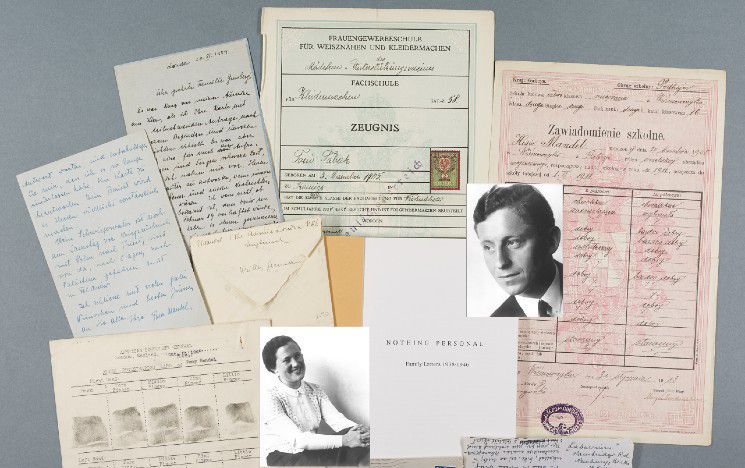
The twentieth century saw countless waves of refugees, but the ten thousand unaccompanied children who escaped to the UK from Nazi Germany on the Kindertransports were exceptional. They were part of a planned rescue operation, potential orphans in a country which was soon to be at war with their homelands. They built important bonds with each other and complex relationships with their adult rescuers and host families. There is a large amount of autobiographical material (memoirs, personal documents, video and audio interviews), but a striking lack of academic analysis, not least because of the difficulty of devising a sufficiently sensitive and at the same time thorough methodology. Hence this two-year pilot study funded under the British Academy Larger Grants scheme is seeking to document all autobiographical resources by former Kindertransport children in a database as well as carry out an indepth analysis of the categories identity, adaptation and trauma in relation to this specific group of refugees.
This two-year interdisciplinary pilot study was launched in autumn 2002 by Andrea Hammel as Research Coordinator and Professor Edward Timms as the Principal Investigator. However, research on former Kindertransport children has been a focal point at the Centre for German-Jewish Studies since June 2001, when we organised a workshop and a public forum for academics and former 'Kinder' (see report below).
Members of the Centre, including Andrea Hammel, also took part in an International Symposium on the Kindertransport organised by the Centre for Antisemitism Studies at the TU Berlin in July 2002. Andrea Hammel has been responsible for co-editing a volume together with Wolfgang Benz and Claudia Curio due to be published in German in July 2003 under the title Der Kindertransport 1938/9.Rettung und Integration by the Fischer Taschenbuch Verlag. This book will include an article in which she outlines her provisional findings about the adaptation process, as reflected in autobiographical narratives by former Kindertransport children. An English-language version will be published in the American journal Shofar in April 2004.
To aid further dissemination of the project, a research workshop is planned for 11 and 12 June 2003 at the University of Sussex. The primary sources are personal documents and autobiographical narratives produced by Kindertransport children. The workshop will explore the interrelationship between authorship, autobiographical materials, educational and archival strategies, and academic analysis.
In the first year of the pilot study Andrea Hammel will be responsible for planning a database of autobiographical resources by former 'Kindertransport' children. A wide-ranging call for information on autobiographical resources by former Kindertransport children will be launched in 2003.
For more information on the project, please contact Andrea Hammel at the Centre for German-Jewish Studies.
Kindertransport Workshop 2001
Between June 28 and July 1 2001 the Centre for German-Jewish Studies and the Centre for Research into Antisemitism at the Technical University Berlin launched a collaborative research project entitled 'The Acculturation of the Kindertransport Children' with a two-day workshop and a discussion forum at the Imperial War Museum in London. The aim of the project is to assess the manner in which the children who escaped Germany in 1938 and 1939 on the organised transports to Britain which have come to be known as the 'Kindertransports' adapted to a new culture, new society, and new language. The workshop, organised by Andrea Hammel, served as an opportunity for the exchange of ideas and for the discussion of methodological questions and long-term aims. It was attended by researchers from the Centre and by a group of five scholars from Berlin, led by Professor Wolfgang Benz. Participants listened an impressive range of papers on different aspects of the Kindertransport and the lives of the children who escaped Germany during the 1930s. These included a discussion of class as a factor in the adaptation of refugees by Susan Kleinman, analyses of autobiographical texts from Mona Körte and Andrea Hammel, an assessment of the traumatising effects of separation from parents by Ute Benz, an account of her experience of working with Kindertransportees and their families from the psychotherapist Ruth Barnett, and a report of the achievements and failures of the Refugee Children's Movement in placing and caring for the children after their arrival in Britain by Claudia Curio.
On Sunday the 1 July a discussion forum was held at the Imperial War Museum in London to which a number of former Kindertransport 'Kinder' were invited, along with researchers, representatives from official AJR Special Interest Section, a curator from the Museum, and a number of other interested parties. The aim of the afternoon was to facilitate discussion and the exchange of ideas, and to develop good relations and communication with members of the Kindertransport generation, so that the planned research project can receive appropriate input from the very people whose lives it proposes to study. We were very pleased to welcome guests not just from the London area but from across Britain. The afternoon was introduced by Professor Timms and Professor Benz, and James Taylor of the Museum spoke to participants about the Museum's collecting policies and its holdings relating to the Kindertransport. Following this, participants were privileged to be able to view a one-off screening of the 'rushes', which is to say out-takes and unedited sequences, from Sue Read's 2000 documentary about the Kindertransports, Children Who Cheated the Nazis. The film included interviews with former 'Kinder' in which they movingly discuss their lives following their escape from Germany. This provoked a lively discussion, in which there was general agreement about the traumatising effects of enforced emigration under the most stressful of circumstances. There was also consensus that the proposed research was long overdue. Some participants stressed the continuing relevance of the research, as refugee children continue to arrive, often unaccompanied, in Britain, whereas others expressed caution, and preferred to consider the children who escaped as lucky in comparison the many millions who died in the Holocaust. However, whilst acknowledging this fact, it remains the conviction of all involved with the project that the research should proceed, and indeed that now is the right time for it do so. The 'Kindertransport' generation, now aged between sixty-five and seventy-five, is now at an age in which it tends towards reflection, and it seems logical to encourage their contributions to this project.
For more information please contact Andrea Hammel at the Centre for German-Jewish Studies.