Print friendly page | Mobile site | Accessibility | Help | About S3 | Contact S3

Study Success at Sussex (S3)

Proofreading

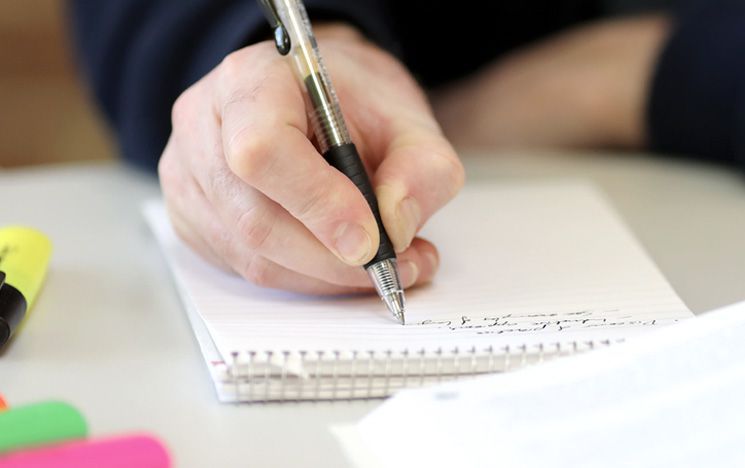
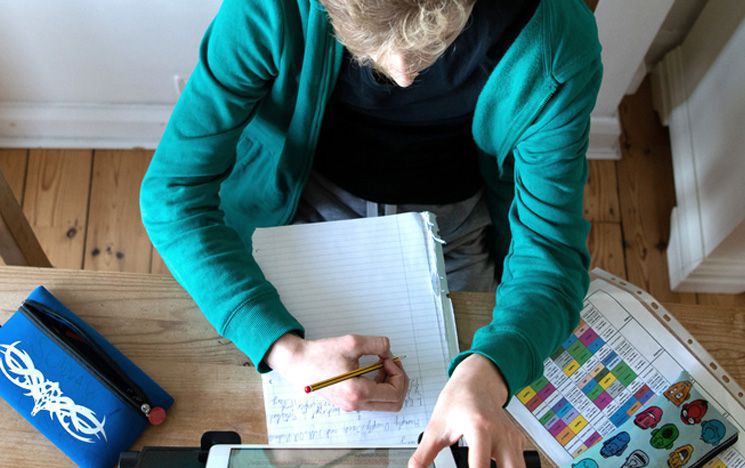
Proofreading your written work is an essential part of the writing process and you should make sure that you leave enough time for this. Often when you have been working for a long time on an assignment it is difficult to be objective about it. So it is helpful to take a break from your assignment before you start proofreading.

Do not rely on your computer's spell-check. Use a Dictionary to check usage and spelling. (You can access the Oxford English Dictionary via the web).

Read your assignment aloud to help sort out awkward, clumsy, muddled bits.

Get Flash to see this player.

<p>Transcript below</p>

Kalim Patel

Third Year English Literature student

View Kalim's student perspective

Transcript

Have you got any tips for writing essays at university?
Yeah, proofing - I always try and proofread a number of times if possible. There are still always things that you will miss and proofreading is really boring because you know you've read it before but you're just looking for little mistakes but you have to do it slowly otherwise there's no point doing it. That's really important, really important! You've got to proofread. In fact, what I want to do this year as well, is finish my essays with time to spare so as well as proofreading them I can try and forget about them a little bit and get out of the essay mind set or that essay mind set and then come back to it a few days later and read it with a fresh perspective because often you find things in essays that you've written in the past and you think I was too embedded in thinking about everything that I missed an obvious point or I missed that link or that was a silly point or something. But I think it's also good to read your essay with a very critical eye because often the tendency is to read your own essay and think ‘Oh yeah, that kind of makes sense because of that' and you're on your own side but I think it'd be great to read your own essay pretending that it's written by someone you don't like and you're trying to find gaps in their argument and then often you do find things and you think actually that's not really a very strong link and then if you've got time you can fix them.

Get Flash to see this player.

<p>Transcript below</p>

Donna Cox

Second Year Geography student

View Donna's student perspective

Transcript

How do you make time for proofreading?
It's quite good to try and set yourself almost a fake deadline so that you get the work done a week or so before it's meant to be handed in and then leave it a couple of days and go back to it, because if you're trying to proofread an hour after you've written it you've still got the ideas in your head and you don't read it properly, so it's good to leave a bit of time before you proofread it, so you can pick up all the faults.

Check that you have accomplished what you set out to accomplish.

Are the main points that you had in your plan the ones that you would pick out from reading your assignment? Does the order of the material reflect the stages in your argument? If your work is an extended essay or a dissertation, will it benefit from a contents page? If you do add a contents page, it will show clearly whether you have 'balance' or not and will also serve as a guide to the reader.

Check that your references and quotations are properly acknowledged

It is very important that you reference correctly for help with this, visit the S3 pages on Referencing. Make sure you include a bibliography (set out in alphabetical order) or reference list as required.

Make a final check of your punctuation and spelling.

In particular check the use of the apostrophe (for help, visit the S3 pages on Spelling grammar and punctuation). Make sure that you have given titles, names of authors and places correctly.

Make sure that your essay has been formatted correctly.

You may have very specific guidance from your tutor about spacing and alignment of text, typeface and margin size and you must follow this. If you do not have specific guidance think about legibility (double spacing your text allows room for your tutor to comment and font size 12 is usually easy to read).

Re-read it with 'fresh eyes'.

If you can, leave it for a day or two before you finally print and re-read your essay. You may notice that further corrections are needed. This will also give you some idea of the impression your essay will make on other readers.

Print out and hand in.

Remember that there are penalties for late submission for coursework so you must make sure that you plan your time well in order to meet all your deadlines. If you can, hand your coursework/ essay/dissertation in before the time your work is due.

Proofreading Checklist

  • Is my language plain, direct, simple, straightforward (as opposed to confused, muddled, unnecessarily complicated)?
  • Have I written concisely and with short sentences, varied with the occasional long one?
  • Does the essay read smoothly and easily?
  • Have I used active rather than passive voice ("I have handed in a brilliant essay" rather than "A brilliant essay was handed in.")
  • Have I consulted the dictionary before using any word I wasn't really sure about?
  • Have I avoided slang, abbreviations and phrases appropriate only for speech?
  • Have I avoided spelling mistakes?
  • Have I avoided punctuation and grammar mistakes?
  • Have I consistently followed the expected conventions in textual references, footnotes, quotations, bibliography, etc.?
  • Have I achieved the right tone - different from casual/personal communication but not overly formal?
  • Are the pages numbered?
  • Have I double-spaced the text?
  • Have I left plenty of blank space in the margins for ease of reading and for written tutor comments?
  • Are lengthy quotes indented?