Transcript
My name's Anna. I'm a third year Media Studies student.
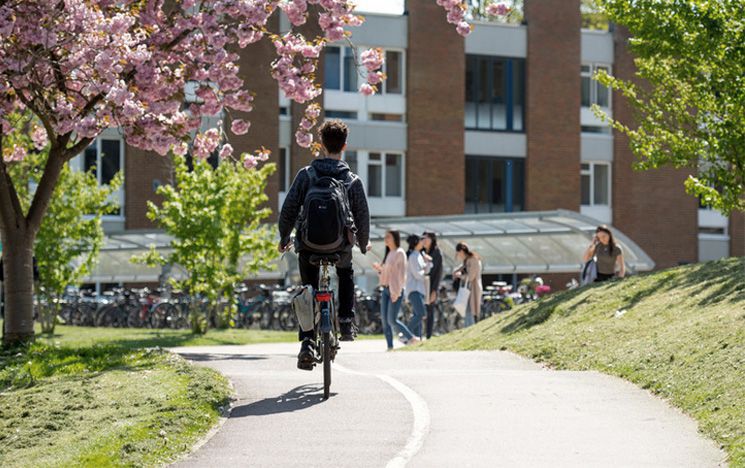
I chose to come to the University of Sussex because I was looking at Media Studies courses and Sussex seemed to offer not only the theoretical side but also the practical side of things. And I thought it would be good to combine the two so I would have a good academic degree but also have some experience of the technical side of filmmaking, web design, photography etc. But when I started to look into Sussex University in Brighton, which I never thought of before because I'm from Leicester and it's a bit off the map, I found out it is a campus university and we've got all these lovely surroundings which are really suitable for studying.
I went to sixth form college before coming straight on to university - I didn't have a gap year or anything. It is a very different lifestyle to going to sixth form in a secondary school. For a start you've got a lot less contact hours. So you're not having 6 or 7 hours of classes a day you're having one lecture or one seminar and on some days you don't have anything at all. So studying is a lot more in your hands and it takes quite a while to get used to.
Freshers' week, although it is very sociable and it does focus on the social side of things and meeting lots of people, also has academic inductions, study skills and just welcomes from your department and also I think from the Vice Chancellor, as well. It's really nice to be welcomed to the University like that.
The first year is a strange time because there is so much adjustment going on, not just the way you are studying, but also to your lifestyle. So for most people, 95% of people, you're living away from your parents for the first time. Some people have just come from a gap year and have been around the world etc or they've just come straight from secondary school or sixth form college and you're surrounded by people in the same boat which is nice for support because everyone is in the same situation. But it is quite an emotional time just because you feel like a fish out of water so it takes a while to settle in. If you're going to make mistakes with essays and stuff like that then the first year is the time when you do that. You learn from your mistakes and then by the second year you're all set up and ready to go because those results are going to count for your degree.
In my first year I stayed in Halls of Residence like most first years. I stayed in East Slope which I think is the cheapest accommodation on campus. It is very sociable but, as for studying, in my first year there was internet access through broadband but now there is wireless access to the internet that is campus wide so if you do have a laptop you can take it out onto the grass, you can take it into the library or you can study in your room so you pick up the internet wherever you are on campus.
It is not necessary to have your own laptop. There are plenty of computer clusters all over campus, in the library, for example, also York house. Basically every department has a big computer cluster where you can sign on to use the internet, use Word, PowerPoint or Excel or whatever you like.
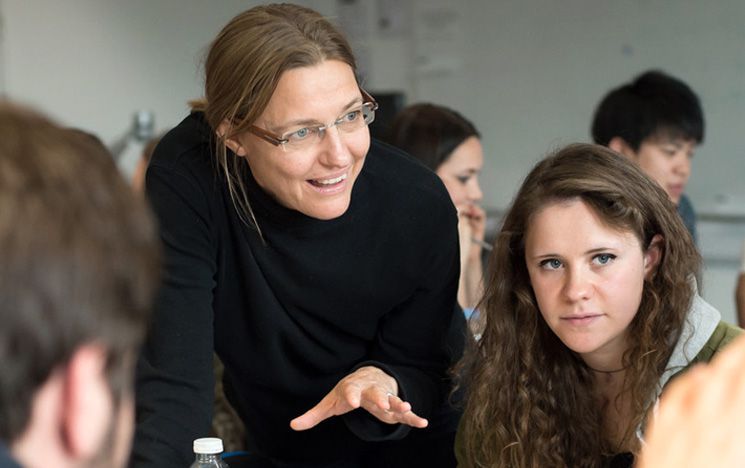
On my Media Studies course we are taught via lectures and seminars. Seminars are very interactive; the idea is that the tutor is a ring leader who is leading a discussion, putting some ideas out there and the idea is to get the students interacting, talking and to stimulate some brain activity, really. Lectures are a bit more formal in the sense that there is a tutor and the students and the tutor is doing all the talking and the students are making notes and listening. So two very different styles of teaching. In your first year you will have a lot of seminars and lectures and then in your second year and towards your third year you'll find that you're getting less and less contact hours as learning becomes more independent. Also, presentations, there are lots of opportunities for giving presentations during seminars. I personally really enjoy it. It is good for preparing you for the world of work.
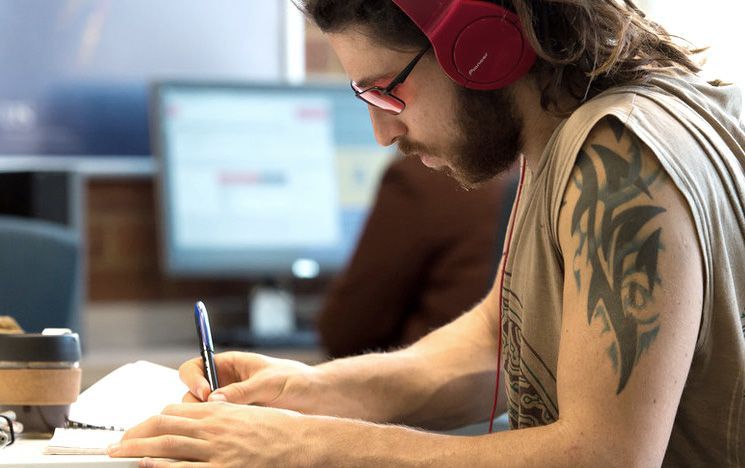
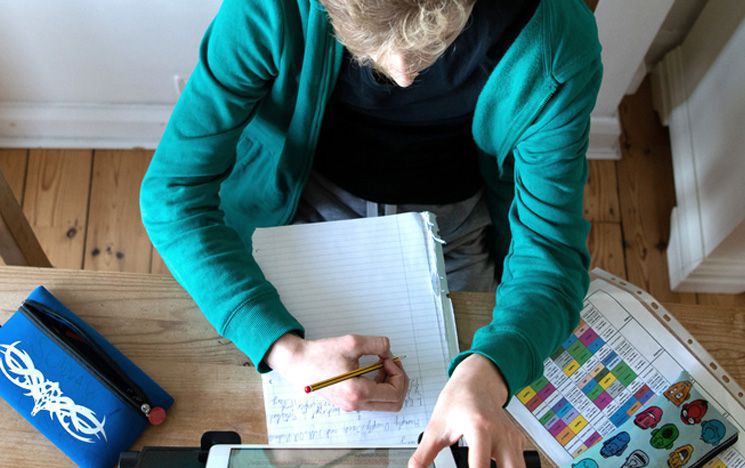
I find that I study best just after a seminar or a lecture in the morning because that puts me in the studying state of mind. So that will inspire me to go on to the library or to do some reading. I don't have a set time for studying every day but I just play it by ear really and when I feel inspired to do it I will take it up.
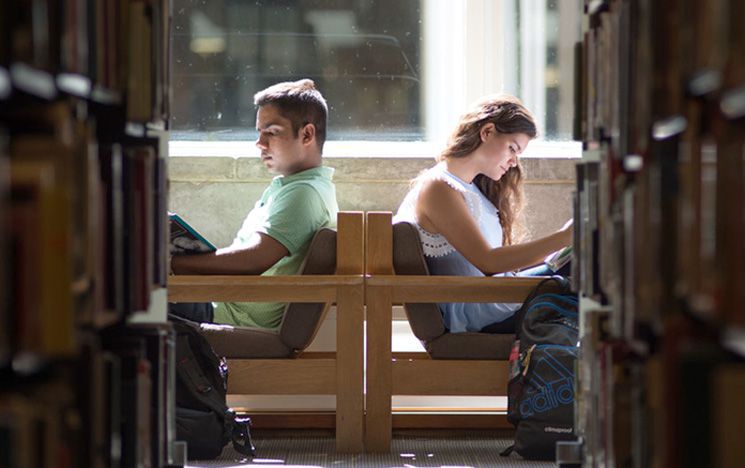
Personally I like to go to the library because it is a space designed for studying designed specifically for that purpose which your bedroom isn't. In your bedroom you are going to find so many distractions - facebook, for example. It's just there are so many things around you that can distract you; your mobile phone, other things in your bedroom, maybe a television. In the library you're surrounded by books, you are surrounded by other people, other students studying so it is really the perfect environment for studying.
It is important to organise your time properly. If you are doing paid work you need to make sure that it doesn't take over your life because studying should really be your priority.
The support network is really good and there are plenty of resources available including Student Advisors. It is their job to help you with academic matters or emotional, social etc
As for preparing for presentations, I'd say to not leave it to the last minute. Give it some thought beforehand. A lot of the time you're working with 2 or 3 other people, sometimes you are working alone but it is good to meet up a week in advance or 2 weeks in advance to discuss how it is going to take place. You should write some bullet point notes and practise beforehand and feel confident about what you're saying. Make sure you understand what you are saying and then you should be fine.
Get Flash to see this player.
<p>Link to video perspectives for Chloe and Donna.</p>Get Flash to see this player.
<p>Add alternative content here...</p>Get Flash to see this player.
<p>Link to Kalim Patel video perspective</p>Get Flash to see this player.
<p>Link to video perspectives for Jess Higgins</p>Get Flash to see this player.
<p>Link to Sebastian Weidt video perspective</p>Get Flash to see this player.
Link to Yasu Hamada video perspectives.Get Flash to see this player.
<p>Add alternative content here...</p>Get Flash to see this player.
<p>Link to video perspectives for Veronika Eder</p>Get Flash to see this player.
<p>Link to Charlie Refoy video perspective.</p>Get Flash to see this player.
Get Flash to see this player.
Link to Anna Reuben video perspectives.Get Flash to see this player.
<p>Tayo Oladele</p>Get Flash to see this player.
Link to video perspectives for Aron WillisGet Flash to see this player.
<p>Link to video perspectives for Milan Jayasuriya</p>Get Flash to see this player.
<p>Add alternative content here...</p>