

News
Oriel, Cofnas and the question our sector can no longer avoid
By: Bud Johnston
Last updated: Wednesday, 18 November 2026
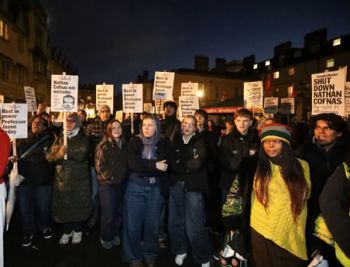
protestors at Oriel college
On the evening of Tuesday 17 November, Oriel College, Oxford, hosted a talk by Dr Nathan Cofnas titled An Evening with Nathan Cofnas: Is DEI Undermining Higher Education? Outside, hundreds of students, staff and local residents gathered in protest. Many carried placards bearing the name of the late Professor Jason Arday.
What happened
The event was organised by the Oxon Universities' Reform Society, a student society that supports Reform UK, and booked into Oriel's Harris Lecture Theatre for 6pm. Dr Cofnas holds a DPhil from Oxford and is a postdoctoral researcher at Ghent University. He describes himself as a "race realist" and has written that Black people are, on average, less intelligent than other groups. He rejects the charge of racism and says his views are misunderstood. Earlier this year he made numerous public plagiarism allegations against Professor Arday.
In the weeks before the event, an open letter signed by Oxford campaign groups, academics and alumni urged Oriel to withdraw its facilities, or to pause the event until it had published a risk assessment and guaranteed safeguards for Black students and staff. Cambridge Students' Union signed the letter. Oxford SU and the Conference of Common Rooms condemned the invitation, nearly 50 Oriel academics opposed it, and a petition backed by Stand Up to Racism passed 30,000 signatures. On 12 November, protesters placed a Ku Klux Klan hood and a "racists welcome here" sign on the Cecil Rhodes statue above the college entrance.
More than 170 academics publicly backed Oriel's decision to let the event go ahead on free speech grounds.
Oriel said it has a statutory duty to uphold freedom of speech within the law, citing the Higher Education (Freedom of Speech) Act 2023. It also said that hosting the event did not mean endorsing the speaker's views, and that it is committed to preventing discrimination and harassment, including racial discrimination.
Protests organised by Oxfordshire Stand Up to Racism and others filled the High Street, Oriel Square, Merton Street and Magpie Lane, and briefly stopped traffic. Speakers and supporters included Jolyon Maugham of the Good Law Project and the photographer Misan Harriman. Thames Valley Police attended, and their presence grew through the evening. Some protesters blocked entrances to the college, and the student newspaper Cherwell reported that the talk was delayed.
The talk did go ahead, to a small audience. The Times estimated 26 people and The Guardian about 40. Dr Cofnas used a microphone to be heard over the chanting outside, and a student inside told Cherwell that the organisers asked him to finish early. During the Q&A he was asked whether he would apologise to Professor Arday's family. He declined.
Why this matters to us
Professor Jason Arday became Cambridge's youngest ever Black professor in 2023. He resigned in August after weeks of public allegations about his academic work, which he denied. He was found dead on 14 August, aged 41. Police said his death was not suspicious, and the inquest has not concluded. There has been no official finding about what caused it, and although we make no claim about that here, many have judged this a 'modern day lynching'. His family has spoken of a sustained campaign of abuse against him, and Cambridge has opened an independent investigation into the circumstances of his appointment.
His passing was delicate and sesnitive subject at this year's Black at Sussex Conference. The key question remains: what does a university owe its Black academics, researchers, staff and students when they come under sustained public attack? Yesterday's events in Oxford have put that question back in front of the whole sector.
What happened at Oriel was painful to watch, whatever view you take of it. Black students at Oxford saw a platform given, in their own college, to someone whose published views on race many of them find deeply hurtful, and to someone closely linked to the treatment of Professor Arday. People who came to listen faced blocked doors. Staff were caught between a legal duty to protect lawful speech and a duty of care to the students in front of them. The college has said it was doing what the law requires. The protesters said it was failing the people it is meant to protect.
The question for the sector
Universities in England now work under two sets of duties that can pull in opposite directions. The Higher Education (Freedom of Speech) Act requires them to secure lawful free speech and academic freedom. The Equality Act 2010 and their own duty of care require them to prevent harassment and discrimination and to protect the wellbeing of their students and staff.
For too long, the sector has left individual colleges, students' unions and event organisers to resolve that tension case by case, often under intense media pressure and at the last minute. Oriel won't be the last institution to face this choice. If universities don't set out clearly, ahead of time, how they will meet both duties, Black students and staff will keep finding out where they stand only when a crisis has already begun.
What is clear is that the sector can't keep avoiding the harder questions:
- What does a credible risk assessment look like when an event touches directly on the safety and dignity of Black students and staff?
- What visible, practical support do institutions put in place for those students and staff before, during and after such events?
- How do universities protect academics, especially Black academics, who become targets of sustained public campaigns, while still allowing legitimate scrutiny of their work?
- How can peaceful protest and the right to hear a lawful speaker both be protected on the same evening?
We'd like to see sector bodies, university leaders and Black-led organisations answer these questions together, and in public.
At Sussex
Black at Sussex exists to celebrate Black culture, to build partnerships with Black-led organisations and to make Sussex a place where Black students and staff can do well. Moments like this test all three aims. If yesterday's events have affected you, please talk to us, and make use of the University's wellbeing and support services. We'll keep this conversation going, including with colleagues across the sector.