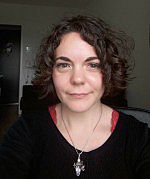
Dr Julie Billaud
Biography
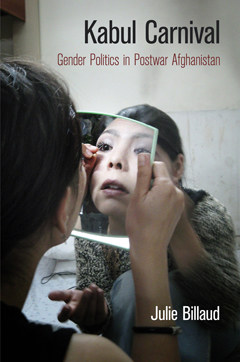 I am an anthropologist with a keen interest in Afghanistan, Islam, international governance, gender and human rights. My doctoral research, carried out at the University of Sussex and Ecole des Hautes Etudes en Sciences Sociales (EHESS) in Paris, focused on gender politics in 'postwar/reconstruction' Afghanistan and the politics of humanitarianism and legal reform in the new Islamic Republic. My first monograph 'Kabul Carnival: Gender Politics in Postwar Afghanistan' came out in March 2015, with the University of Pennsylvania Press (The Ethnography of Political Violence Series).
Since then, I have worked on several research projects. One focused on Islam in Europe and the contemporary transformations of the European public sphere through its encounter with Islamic difference. This work was started in the context of an ERC project at EHESS, and was further continued with a Postdoctoral Fellowship of the Forum for Transregional Studies (Humboldt University, Berlin) and a research position at the Max Planck Institute for Social Anthropology (Halle, Germany). The research documents everyday practices of Islamic law in Britain and highlights how state interventions participate in contradictory ways in the making of a legal field which is both embraced for its commercial potential and contested due to its supposed discrimination against women. More generally, the study explores notions of morality, citizenship and multiculturalism from the standpoint of these emerging religious claims.
My second research project was carried out in collaboration with Jane Cowan (Univ. of Sussex) and consisted in an ethnographic study of the Universal Periodic Review (UPR), a new mechanism of human rights monitoring within the UN Human Rights Council in Geneva. After having studied the local reception of human rights discourses in Afghanistan, this research gave me the opportunity to look at the central machinery in charge of promoting human rights worldwide: the UN Human Rights council.
From February 2016 until February 2018, I was hired by the International Committee of the Red Cross (ICRC) in Geneva to carry out an ethnographic study of its ‘diplomatic culture’. The research explores the ways in which this 150-year old humanitarian organization implements its international mandate as ‘guardian of International Humanitarian Law’ on the frontlines of conflicts.
I am also the co-founder and editor of the anthropological blog Allegralaboratory.net.
Role
Lecturer in Social Anthropology
Convenor of the MA in Human Rights (Spring term)