

News
Spotlight on Researchers: Robin Choudhary
Posted on behalf of: Sussex Researcher School
Last updated: Wednesday, 8 April 2026
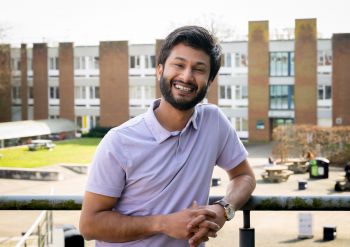
The Journey to a PhD
Initially I followed the conventional academic path that was expected of me. At school I studied science, largely due to social expectations, even though I sensed it did not align with my interests. I went on to complete a BSc in Electronic Science and began an MSc in the same field. However, during this period I found myself increasingly drawn toward questions of inequality. Coming from a marginalized Dalit community, I had witnessed how the Indian caste system operates subtly and overtly within everyday life and educational institutions.
My personal experiences and observations of structural barriers faced by marginalised communities sparked curiosity in me. I realised that I wanted to understand the social realities shaping people’s lives, not circuits and systems. Within two months of my MSc, I made a decisive shift and moved into an MA in Social Work.
This transition marked a turning point in both my academic and personal journey. As I progressed academically in the social sciences, I gained the intellectual tools to critically examine the structures I had experienced. I became more aware of the structural marginalisation faced by Dalit and Adivasi communities.
Before beginning my PhD, I spent two years working in a conflict-affected region in central India, which had a profound impact on me. I worked in Gadchiroli, Maharashtra, with teachers and headmasters to strengthen school leadership and community engagement. Working closely with the people from these communities exposed me to the everyday realities of structural disadvantage in tribal regions.
My own educational journey was made possible through scholarships. For many students from marginalised communities, scholarships are not supplementary support but the foundation which makes higher education accessible. Without sustained financial assistance, continuing education would have been extremely difficult for me.
The Research
My research investigates the intra-caste inequalities within the Dalits, administratively called Scheduled Castes (SCs), of Haryana. This is a dimension of caste stratification which remains largely overlooked in mainstream scholarship and policy debates. While much of the existing literature examines disparities between the broader SC category and other social groups, my work focuses on the uneven socio-economic positions of individuals within the SC umbrella.
Dalit communities do not have generational wealth, land ownership or social capital resources to improve their livelihoods. Affirmative action policies, particularly reservations in public-sector employment, have been one of the few institutional mechanisms enabling upward mobility. However, there are persistent implementation gaps, including large backlogs in reserved vacancies and irregularities in employment. These issues raise critical concerns about whether these policies are functioning as intended. As an essential option for upward mobility to Dalits in India, it is important to understand and study the pattern of employment reservations.
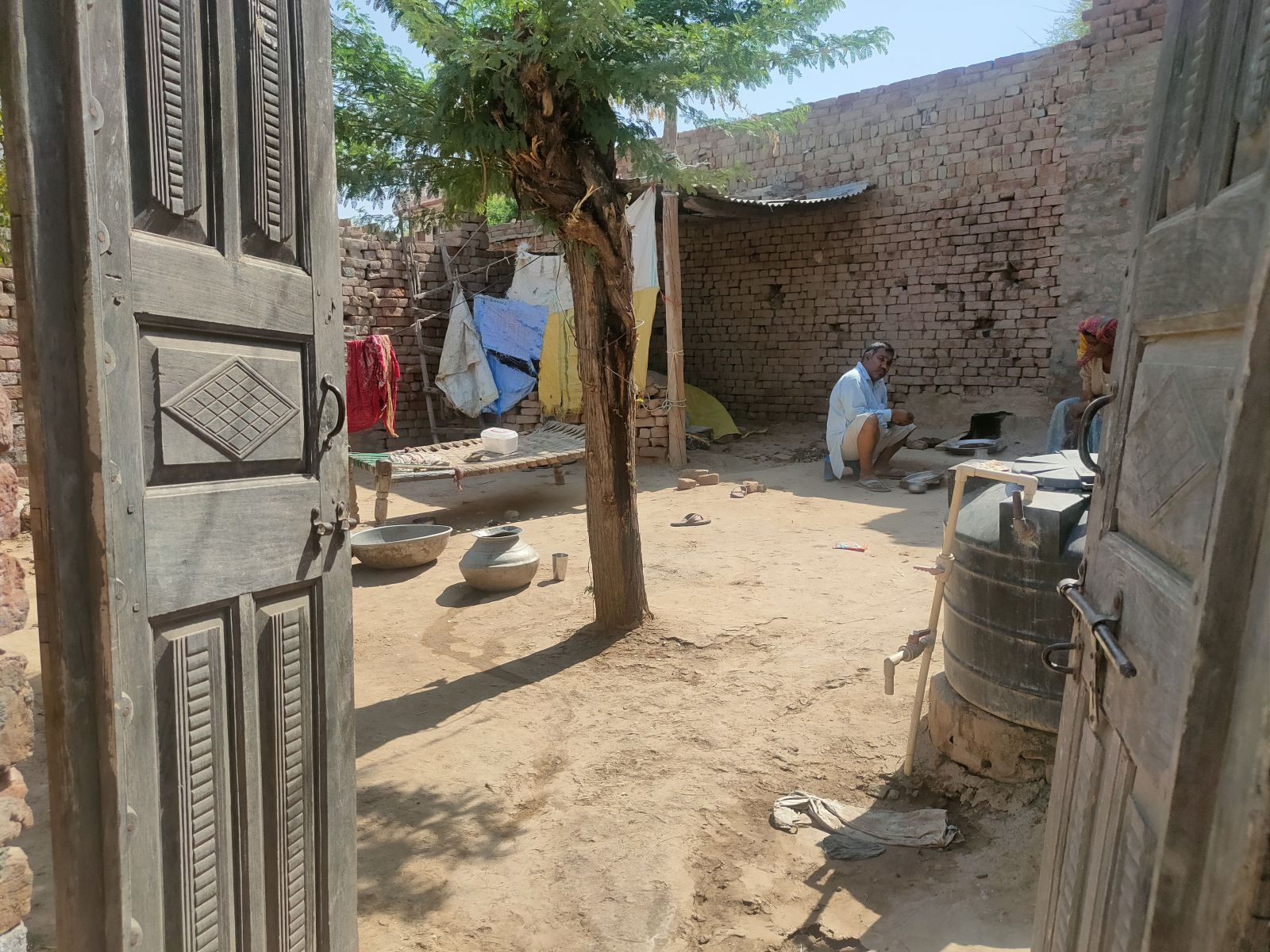
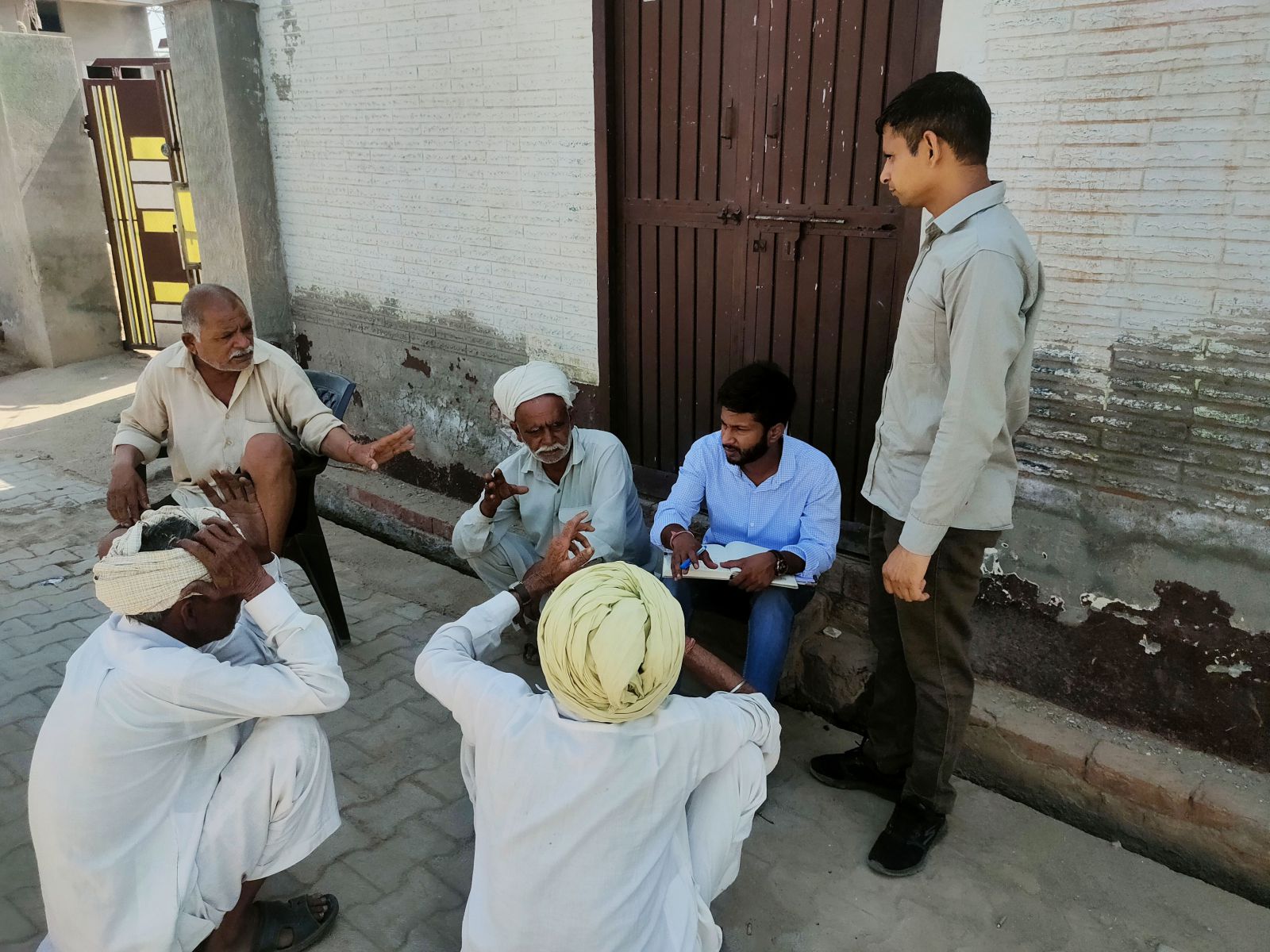
Researching caste is inherently sensitive. Discussions around intra-caste inequality can be politically and socially charged, particularly when they question existing benefit structures. There are also methodological challenges, as caste operates both as a structural category and as a lived experience. Capturing its complexity requires moving beyond statistics to carefully document narratives of dignity, stigma, aspiration, and exclusion, often in contexts where participants may feel hesitant to speak openly.
Through my fieldwork, I documented patterns of land concentration and labour dependency. Dalit households often rely on daily wage work while land remains concentrated among dominant castes. Alongside this, research participants shared testimonies of discriminatory practices that continue to shape their social interactions and opportunities.
Seeing their resilience and aspirations, even in contexts of severe marginalisation, has left a strong impression on me. Despite structural barriers, many individuals and families invest deeply in education and mobility. However, I have also been struck by how subtle and institutionalised forms of discrimination, especially in higher education institutes, continue to persist even within spaces that formally promote equality.
My research has direct policy relevance. As debates around sub-categorisation within the SCs gain momentum in India, evidence-based analysis becomes crucial. By combining quantitative data from households with qualitative narratives, my work provides an evidence-based critique of current policy frameworks. I argue for more comprehensive and socially informed metrics beyond the representation in public employment. Meaningful social justice requires recognising not just the inequality between castes, but the inequality within castes, a corrective that is urgently needed in both scholarship and governance.
Achievements and the Future
I was awarded a University Grants Committee Fellowship and a Commonwealth Fellowship. The Commonwealth Fellowship is a split-site fellowship, so alongside my PhD at Sussex, I am also enrolled as a research scholar at the Centre for Social Work, Panjab University, India. These fellowships have enabled me to pursue doctoral research and strengthened my academic trajectory by providing international exposure and recognition.
I really value the interdisciplinary environment at Sussex. The University has a great network that has enabled me to reach out to scholars who have been working on the same topics. The opportunity to engage with scholars working on race, caste inequality, development and social theory has broadened my analytical framework.
Last year I published a paper “Restructuring Dalit identity: Intra-caste dynamics and psycho-social reflections on subcategorisation in rural Haryana”. I have also contributed to sub-categorisation debates at various conferences. These include presented my research at academic conferences focusing on caste inequality and social justice. These have been organized by the Association of Academics for Social Justice (AASJ), in collaboration with the Indian Institute of Dalit Studies (IIDS). I have also presented at the “Pre-Congress of World Anthropology Congress” and “Annual National Conference of Indian Society of Professional Social Work”.
My aspiration is to contribute to global debates on inequality, particularly by bringing South Asian perspectives into broader conversations on race, caste, and structural exclusion. In the long term, I hope to build an academic career that remains engaged with communities on the ground.
Interview by Shona Clements, Sussex Researcher School
Read more Spotlights in the series.
Are you an PGR and like to be featured in the series?
If so Apply Here