News
Spotlight on Researchers: Emily Whelan
By: Shona Clements
Last updated: Thursday, 28 May 2026
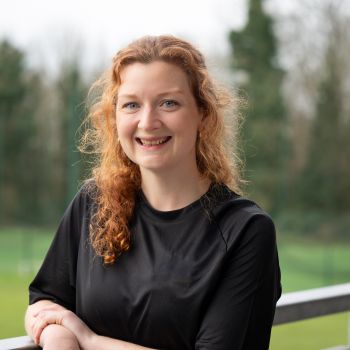
The Journey to a PhD
I've always loved both science and the arts, so my path to a PhD has involved a significant proportion of the two. Growing up in New Zealand, I did joint undergraduate degrees in Health Sciences and Arts at The University of Auckland. This was an eclectic mix of Health Sciences modules alongside double-majors in Psychology and Spanish.
After my degree I worked as a research assistant at Auckland’s Cognitive Psychophysiology laboratory and taught Public Health modules at the medical school. Following this I moved into doing medico-legal work at the Health and Disability Commissioner's Office.
My trajectory took an unexpected turn when a band I was playing in got invited to perform at UK summer festivals. I came over and fell in love with the UK’s music scene. This inspired me to apply for a Master's in England and I was accepted onto an MSc in Psychological Research at Oxford. This kept me rather busy and the balance shifted away from slappin’ the bass full-time towards psychological research.
After my Master’s I worked as a researcher at King's College London on a large-scale neuroimaging study of infants with a family history of autism (AIMS-2-TRIALS/BIBS). Subsequently, I worked as a senior cognitive behavioural therapist and researcher on a major joint clinical trial run by University College London (UCL) and Great Ormond Street Hospital (GOSH). The project, MICE - Mental Health Intervention for Children with Epilepsy, focused on children and young people with epilepsy and co-occurring mental health difficulties. During this time, I continued to make music when I could and trained as a Neurologic Music Therapist.
After several intense years working on the UCL/GOSH trial, during COVID-19, I wanted to return to something more open-ended and exploratory. I decided that pursuing a PhD would broaden the range of career directions available to me, and that the clinical foundation I’d built would continue to inform my work.
Research felt, to me, like the more creative path – which brought me to Sussex! Being fascinated by unusual phenomena and things that seem to defy our tidy frameworks is what led me to study psychology in the first place. Synaesthesia, where people experience a mixing of senses, like tasting words or seeing colours, sits right in that category. Sussex's reputation for consciousness science, one of very few universities with an entire school dedicated to it, made it feel like exactly the right place to ask those questions.
The Research
I use a variety of methods to investigate what synaesthesia can teach us about perception, memory, and how the brain ages. Outcomes from my research are showing that synaesthetes tend to more accurately see and remember the world around them, and that their brains look significantly different from non-synaesthetes’ as they age.
Synaesthesia was once dismissed as strange or even fabricated, but it tells us something fundamental about the range of human experience. I think it is important to recognise that we genuinely cannot assume that any two people are perceiving the same thing at any given moment. My work reinforces this and highlights the significance of taking people's perceptual experiences seriously rather than dismissing them.
Studying rare phenomena presents very particular practical challenges. Synaesthesia affects around 4% of the population so finding older synaesthetes, or their non-synaesthetic relatives, is difficult. The work is important precisely because these groups are under-researched, but that also makes them harder to reach.
The practical applications of my work have surprised me. I'd assumed synaesthesia research would be quite blue-sky - interesting, but perhaps not immediately applicable. I didn't anticipate that I would have collaborations with medical teams at Washington University, in St. Louis, who specialise in dementia and with software developers at CrossSense. This has revealed that my findings are translatable to practical applications.
I've been working with CrossSense, where some of the principles from synaesthesia research are being applied to multisensory therapeutic interventions. CrossSense develop augmented reality tools for people living with dementia, allowing them to stay independent for longer.
I have found that individuals with synaesthesia tend to have excellent memories and their brains have a different organisational structure compared to most people. A practical implication of my work is regarding older adults with synaesthesia who present at memory clinics. Standard memory tests with a GP or at a memory clinic, which apply population norms to them, could mean that memory decline is missed. Synaesthetes are likely to still do well on the tests and their brain anatomy is harder to read for signs of ageing.
Achievements and the Future
At every stage of my career I have received scholarships, including a four-year studentship from the Swiss National Science Foundation which is funding my doctoral studies. I’m so grateful for these scholarships, as my siblings and I grew up in a single parent household where self-funding an education would never have been possible.
The team that I am part of won the £1 million Longitude Prize for Dementia Research. This internationally acclaimed prize was awarded to CrossSense, who I have been working for as a consultant researcher alongside completing my PhD.

I am a co-author for the work on the UCL/GOSH clinical trial that has been published in The Lancet. The main outcome was that tailored, CBT-informed psychological interventions effectively reduced emotional and behavioural difficulties in young people with epilepsy and co-occurring mental health conditions.
Personal moments have stayed with me from the clinical work I have done. Having patients tell me that the work we did together had saved or made a real difference to their lives was incredibly special.
Longer term, I'd like to pursue a blend of research and clinical work and continue working with rare populations. While I anticipate this taking the form of a post-doctoral fellowship or other academic post, I'm also open to industry-adjacent research. My work with CrossSense has shown me that if you find like-minded individuals, outside of university or NHS settings, the work can be just as meaningful, flexible and rigorous.
Independent research underwritten by practical altruism is the goal, I want my work to stay connected to real people.
Interview by Shona Clements, Sussex Researcher School
Read more Spotlights in the series.
Are you an PGR and like to be featured in the series?
If so Apply Here